
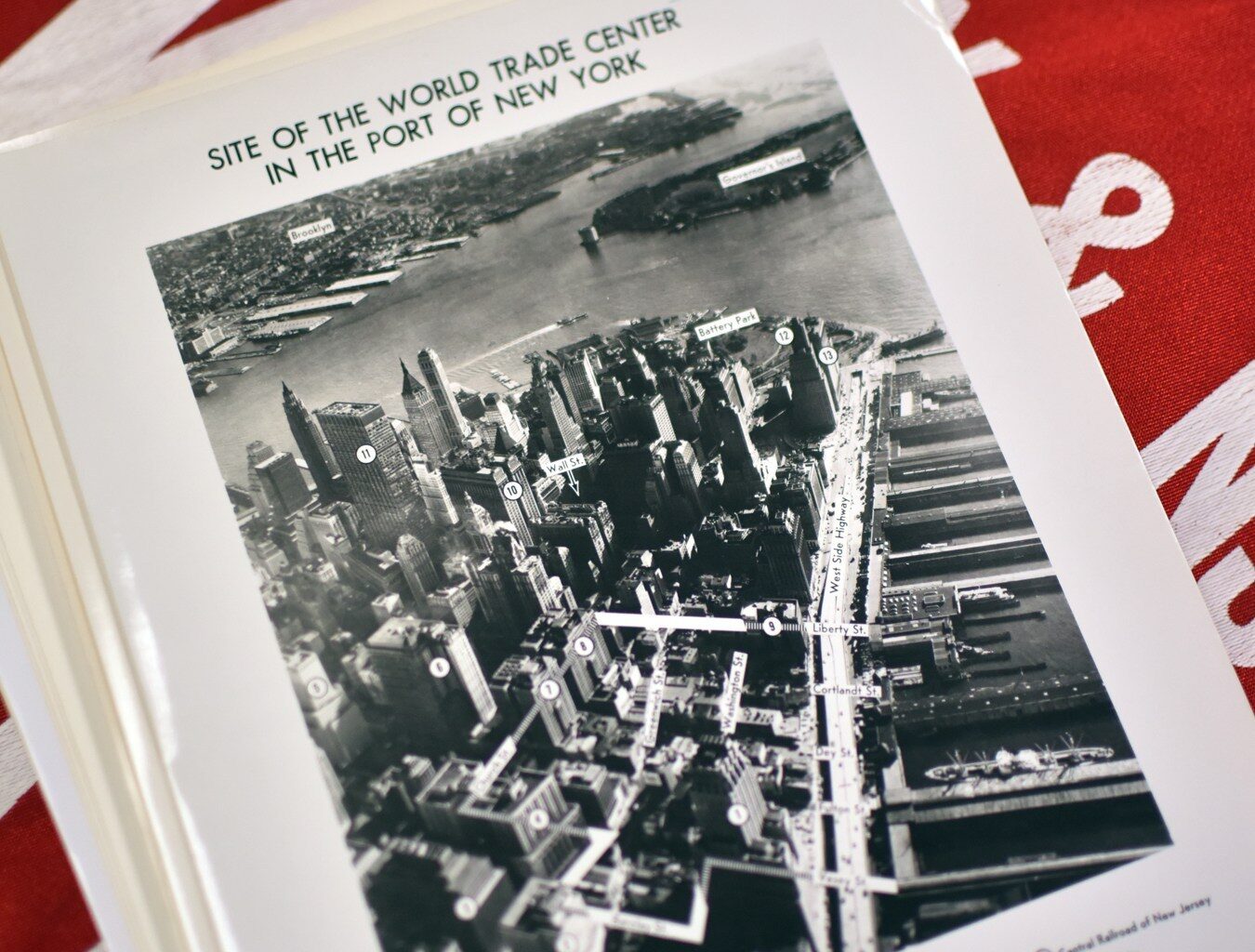
Overwhelmed with work and planning her wedding in just a few weeks, Deirdre Kamber Todd decided to postpone a series of important meetings scheduled for Sept. 11, 2001, with clients of her law firm headquartered on the 52nd floor of the World Trade Center’s north tower.
She was getting ready to head to her law firm’s satellite office in Mineola instead, when news stations reported that a plane had hit her workplace, which she could see in the distance from her Long Island apartment.
“What was so strange, I’m watching it on the news but I’m looking out the window, literally watching it in real time in both places,” Kamber Todd said.
Twenty-five years later, Kamber Todd, now living in Slatington, and other Lehigh Valley residents shared their memories of that day with The Morning Call.
‘Everybody came together’
Kamber Todd drove to her satellite office and watched in horror alongside her colleagues as reports rolled in of the second plane hitting the south tower, and both structures collapsing within hours.
Her decision to postpone the meetings Sept. 11 saved her, her clients and her colleagues’ lives, but they were not spared from the ensuing chaos and trauma that plagued the city for months after the attacks.
She recalls dust lingering in the air for months following the attack, driving by piles of rubble throughout the city and attending funerals where loved ones had nothing to bury but personal belongings, because their bodies could not be recovered.
But she also remembers the unprecedented and enormous efforts to help in the aftermath of the attack, like thousands of first responders pouring in from neighboring states to help with rescue efforts.
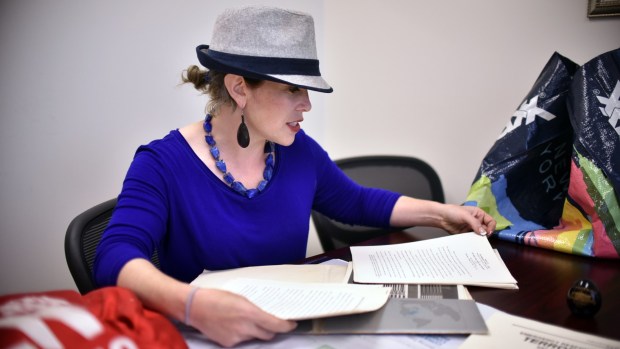 Attorney Deirdre Kamber Todd has spent years collecting World Trade Center memorabilia from before and after 9/11. (ADDISON GEORGE / SPECIAL TO THE MORNING CALL)
She went forward with her wedding just four days after the attacks, and donated food and money from canceled contracts to rescue efforts.
Kamber Todd, who relocated to the Lehigh Valley in 2002, founded the organization World Trade Center Connect, which collects photos and memorabilia from the World Trade Center and educates about the attacks and history. She also hosts annual memorial events that raise money for first responders in the Lehigh Valley.
“The one thing I knew after that was this was going to be — honoring first responders was going to become a mission for me,” Kamber Todd said. “Just because I saw everyone come together to deal with this insane terrorist attack. … Nobody cared if you were Republican, Democrat, green, yellow, purple, it didn’t matter. Everybody came together to do what needed to be done, with so much love and kindness and charity.”
— Lindsay Weber
Watching from afar
It was getting toward evening in Abu Dhabi when Ward Follette and his colleagues settled in at the bar in the Crown Plaza Hotel to have a few pints of beer with dinner and watch sports.
All at once, the televisions around the bar flipped to the same image of the World Trade Center, with smoke billowing out of one of the towers.
“Some plane went and made a wrong damn turn,” Follette remembered saying. He didn’t think any differently until a second plane crashed into the other tower. The bar, a popular spot for expatriates from the U.S., Britain and Canada, went deathly silent.
Abu Dhabi is one of two large cities in the United Arab Emirates, along with Dubai. It’s a Western-friendly nation and U.S. ally. Follette, a Bethlehem resident and now-retired chemical engineer with a New Jersey company, was there to help oversee the upgrading of a refinery.
As an American, he had always felt comfortable in the city but admitted to a bit of trepidation in the days following the attacks. He and his colleagues kept out of sight in the hotel through the weekend.
“We didn’t know what we should do as far as should we stay in the Emirates or book the first flight out of Dodge, so to speak,” Follette said.
They sought advice from the American Embassy, which advised them to pack “go bags” in case they had to leave in a hurry.
As it turned out, there were no protests, no unrest, no cheering that America had finally taken a devastating punch after decades of deeply resented influence in the Arab world. Instead, Follette recalled, “all the nationals came to us apologizing for the actions of a fringe group.”
— Daniel Patrick Sheehan, freelance writer
‘Everything came to a standstill’
Barry Schaffer, now 71, started his morning in Easton’s Central Fire Station ahead of a 24-hour shift. The now-retired Palmer Township resident recalled chatting with his fellow firefighters over a cup of coffee, just like they did every morning.
The crew had begun maintenance on the trucks and the station when a co-worker alerted everyone that a plane had hit the World Trade Center.
“Everything came to a standstill,” he said. “We all ran in and circled the TV.”
He said their hearts sank when the towers fell, knowing that they had likely lost members of their New York City counterparts.
Schaffer said that when firefighters go into a rescue, they “think of the job at hand. You don’t think of yourself, you don’t think of your family. It’s something that you learn how to do.”
New York City Fire Department is “the pinnacle of the fire service,” Schaffer said.
“They had a job to do, and they performed it admirably,” he said of the firefighters who responded to the attack.
Afterward, the firehouse went into a lockdown. Schaffer said the firefighters on the 24-hour shift struggled to go to bed that night.
“We were glued to the TV probably until close to midnight,” he said.
The next day, a crew of Easton firefighters went to Ground Zero to help in the rescue and recovery.
Schaffer said in the immediate aftermath of the attack, firefighters’ status was “elevated.”
“Until something catastrophic happens, people don’t realize what our job is and what we do,” he said.
He remembered seeing an image of a firefighter walking up the stairs during the attack as others were running to safety.
“It’s not like anything they could have possibly trained for,” Schaffer said.
— Isabella Gaglione, freelance writer
Walking ‘through the pain’
Several blocks away from the twin towers, Maribel Rivera de Napoleon, now of Bangor, worked at the Guardian Life Insurance Co. of America in dental insurance. Staring out her 22nd-floor window was a daily routine, with a prime view of the towers.
On 9/11, Napoleon saw office papers fly through the air, which she mistook as confetti for a ticker-tape parade.
“One of them came floating, almost like a feather coming down, and the edges of it were burnt,” she said. “That was obviously strange. Almost exactly at that time, somebody started screaming from the back of the building, and we all ran over there and looked.”
She saw a gaping hole in the north tower, and later watched Flight 175 slam into the south tower.
“You don’t know if you’re the next person, the next group, the next building to be hit,” said Napoleon, who was told by her employer to shelter in place. Terrified, she and her co-workers evacuated two hours after the north tower collapsed, walking through dust and ash to find her mom.
The effects of 9/11 led Napoleon, now 61, to move to the Lehigh Valley, where she’s lived ever since. Her supervisor relocated her to the organization’s Bethlehem office.
There are still scars of 9/11 in Napoleon’s life; she avoids high-rises and the new World Trade Center complex. In recent years, she developed nodules in her lungs and thyroid, and while stable, she believes it to be a Sept. 11-related illness that could worsen.
“I’m kind of a ticking time bomb,” she said. When registering for the Sept. 11 health program, she was told her former Manhattan coworkers had developed similar symptoms.
Decades later, she feels more comfortable opening up about the attacks, acknowledging having to “walk through the pain to be able to heal.”
— Andreas Pelekis, freelance writer