
by Olivia Young
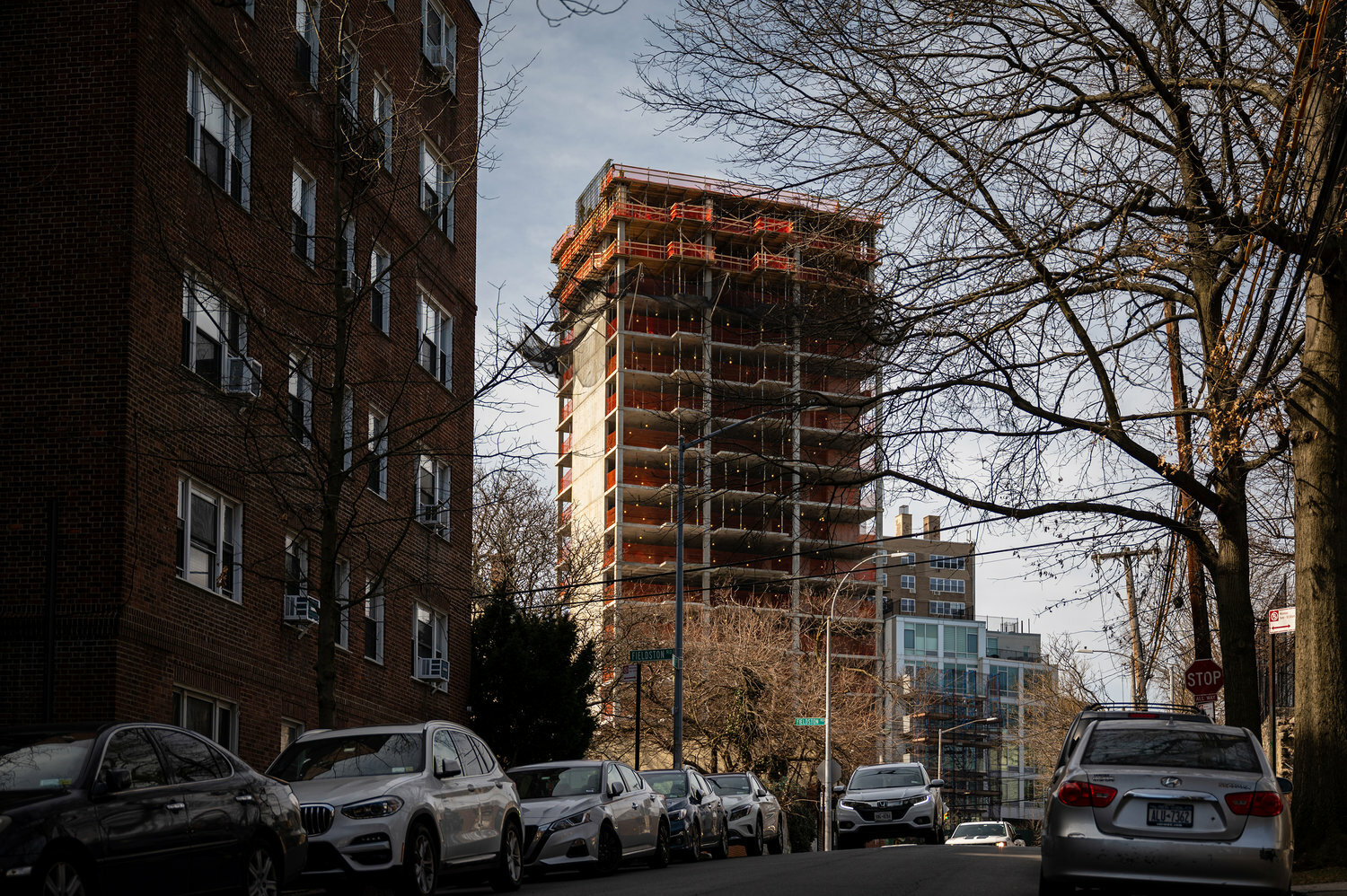
A new housing plan aims to bring 4,075 housing units to greater Riverdale in the next five years — a jump for a neighborhood that produced less than 60 percent of that amount in the last 15 years, according to data from the New York City Department of City Planning.
The New York City Department of Housing Preservation and Development and the department of city planning released a draft report Aug. 19 called the “Fair Housing Growth Strategy.” It detailed the city’s need for housing and provided a framework for how each neighborhood can do its part to provide. This included a five-year unit production target for every community district, identifying what the city needs long-term and what obstacles are hindering progress toward fair housing.
The city council passed a law in 2023 requiring the departments create this plan and publish regular housing reports, according to the departments.
Fair housing means all New Yorkers have a choice about where they live that is not influenced by discrimination and unnecessary barriers, according to the report. Black and Hispanic residents, older adults and those with disabilities disproportionately live in poorer housing conditions, the report stated.
In 2025, Riverdale and Spuyten Duyvil had a net gain of two units, according to data from the department of city planning. Both units already existed but were renovated so people could live in them. Kingsbridge Heights and Van Cortlandt Village showed a similar pattern. There was a net gain of 70 units across the neighborhoods, but only 8 of those were new. Kingsbridge and Marble Hill, on the other hand, had a net gain of 167 units, all of which were new, according to the department.
Between 2016 and 2025, Bronx Community District 8 — containing Riverdale, Spuyten Duyvil, Kingsbridge, Marble Hill and part of Kingsbridge Heights — produced 2,036 new units, according to Michael Sandler, deputy commissioner for neighborhood strategies at the city’s department of housing preservation and development.
The highest producing neighborhoods citywide — Long Island City, Sunnyside and Woodside, all in Queens — produced ten times more housing than greater Riverdale did, Sandler said.
This put the district in the medium growth rate cohort, according to the Fair Housing Growth Strategy report. This level of production was similar to Bronx Community District 7, which includes Fordham and University Heights, and Bronx Community District 12, which includes Williamsbridge and Wakefield. Greater Riverdale was considered an area that had low enough rents to be affordable to median-income New York City households, according to the report.
Of greater Riverdale’s 4,075-unit target 1,020 units should be “affordable,” 305 units should be “deeply affordable” and 155 units should be for those experiencing homelessness, the report said. As of 2025, the district had a total of 46,585 units.
Housing is considered affordable if it costs a third or less of a household’s annual income, according to the city’s department of housing preservation and development. This number differs between households based on where it falls on a measure called Area Median Income. AMI is set by the federal government yearly as a way to gauge the middle income of New York City and outer suburbs.
For 2026, the New York City region’s AMI was $152,700 for a three-person family. A single person bringing in $83,160 a year is considered low-income on the scale — or 70 percent of the region’s AMI — and affordable rent for a studio apartment would be $1,984.
Deeply affordable falls at a lower percentage on the AMI scale. According to the New York City Council, deeply affordable units are for those who make below 40 percent of the area median income, which would be an annual income of $47,520 for a single person, coming to an affordable rent of $1,134 for a studio.
A lack of housing production in greater Riverdale is mostly due to restrictive zoning set decades ago that prevents the development of multi-family housing, Sandler said. The district includes some of the few parts of the city with zoning that allows only for single-family homes, according to Sandler.
Community pushback can also factor into a lack of development since changes are voted on by a community board before moving up the city’s land use review process. Development has long been a debated topic in greater Riverdale, with recent discussions sparked by an influx of micro units in Van Cortlandt Village, as well as a century-old house on Oxford Avenue set to be demolished for a proposed six-story apartment building.
City officials have previously responded to community opposition by emphasizing a strong need for more housing.
According to the report, only 1.41 percent of apartments citywide are available to rent, a result of decades of underproduction that have led to one of the tightest housing markets in New York City’s history.
A total of 290,000 units are needed citywide to improve the vacancy rate, provide for those experiencing homelessness, reduce involuntary overcrowding and give options to adults who want to move out of their parents’ dwellings or live without roommates, according to the report. Over the next 10 years, once population growth and market shifts are factored in, the number will add up to 700,000 units, the report said.
Like most New York City neighborhoods, greater Riverdale is shaped by a legacy of redlining, racially restrictive zoning and racial covenants, Sandler said. Community districts are scarred by that history, he said, and today’s demographics reflect it.
According to data from the city’s department of housing preservation and development, 45 percent of white residents in Bronx Community District 8 are rent burdened — meaning more than a third of their income goes toward rent — compared to 60 percent of Hispanic residents and 63 percent of Black residents.
Similar disparities are reflected in median household incomes. White and Asian households’ median incomes exceeded $100,000, according to department data on the district, while Black households earned a median amount of about $69,000 and Hispanic households of about $59,000.
“Accelerating housing production and then also shifting its geographical distribution is fundamental for our city’s future to reverse patterns of segregation, improve housing affordability and expand access and opportunity,” Sandler said.
The final Fair Housing Growth Strategy report will be published in October, but a draft is available for New Yorkers to provide feedback. Residents can schedule one-on-one chats with the project team or submit a written comment at nyc.gov/wherewelive through Sept. 19.
Keywords
greater Riverdale housing,
4,
075 housing units,
Fair Housing Growth Strategy,
New York City housing,
Bronx Community District 8,
Riverdale,
Spuyten Duyvil,
Kingsbridge,
Marble Hill,
Kingsbridge Heights,
Van Cortlandt Village,
affordable housing,
deeply affordable housing,
housing development,
NYC Department of Housing Preservation and Development,
NYC Department of City Planning,
housing production,
housing shortage,
zoning,
affordable apartments,
Area Median Income,
AMI,
Bronx housing,
housing targets,
fair housing,
Michael Sandler