
A Trump administration that calls its political enemies “terrorists.” License plate readers that track us everywhere we go. An NYPD with spying capabilities that would make some authoritarian governments green with envy. A hyper-militarized battalion of masked ICE agents who use facial recognition, social media monitoring, and other invasive tools to separate families and intimidate protesters.
The seeds for each of these dystopian realities were planted by federal, state, and local government officials in the aftermath of the attacks on September 11, 2001. A quarter of a century later, these are just some of the many harmful consequences of the policy response to that historic tragedy.
The NYCLU’s offices are just blocks from Ground Zero. We saw the heroic efforts of first responders, shared the trauma, and witnessed the immeasurable grief of the families of nearly 3,000 people who died in the attacks. That day changed all of us.
September 11 marks a before and after for nearly every facet of our society. In the months and years following the attacks, a newly emboldened Bush administration waged forever wars, birthed new, metastasizing government agencies, and provided cover for law enforcement across the nation to dismantle existing civil rights and privacy protections.
Governments across the country were soon using tools allegedly created to prevent terrorist attacks much more broadly, invoking the specter of “terrorism” to dramatically escalate all sorts of criminal investigations – and punishments.
This legacy has not just continued but snowballed, producing previously unthinkable outcomes. Here are just a few.
The NYPD’s 9/11-Inspired Surveillance State
In New York City, home of Ground Zero, supposed “counterterrorism” efforts eat up a huge amount of the city’s resources and have seeped into the everyday lives of New Yorkers.
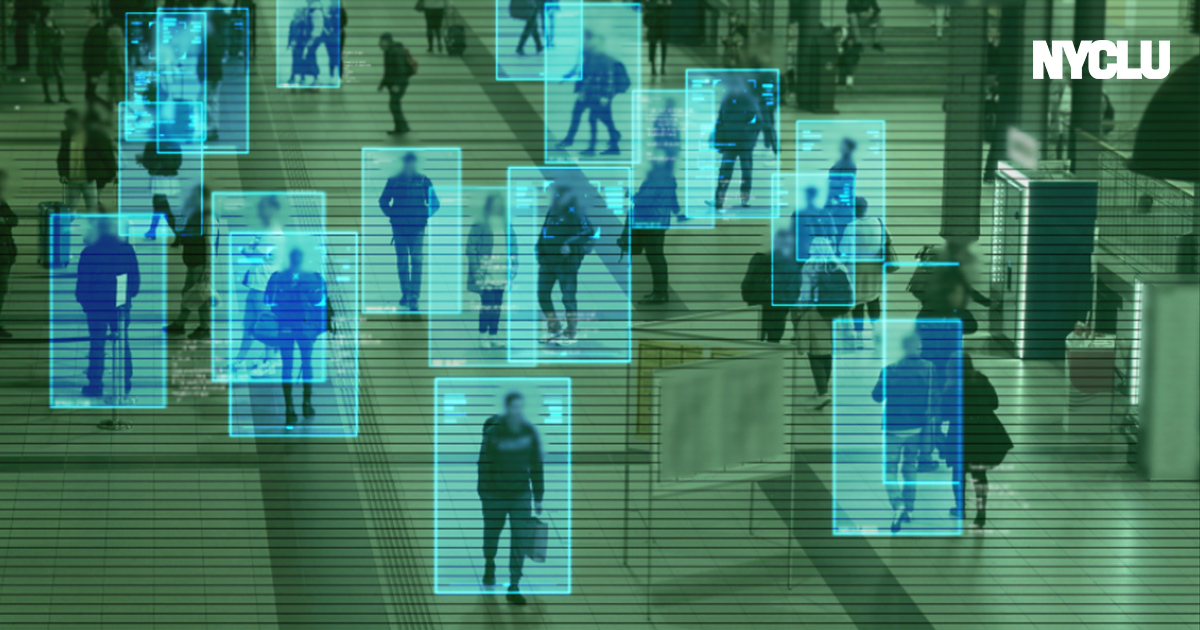
One direct descendent of the post 9/11 rush to surveil is the NYPD’s Domain Awareness System, a vast network of cameras, license plate readers, sensors, and databases used to track New Yorkers’ every move. The system is funded in part by the Department of Homeland Security – which was founded in 2002 in response to 9/11.
Mission creep has expanded the Domain Awareness System’s focus well beyond threats of terrorism. It now focuses its all-seeing eyes on New Yorkers who have never even been suspected of terrorism. You don’t have to take our word for it.
“The technology, having been inspired and engineered with a sense of urgency after 9/11, has obvious applications to conventional crime fighting,” Paul Browne, then-chief NYPD spokesman, said in 2013.
The system has gone from a tool justified by 9/11 to a key element of the NYPD’s decades-long focus on minor offenses that continues today, and focuses disproportionately on people of color.
To be sure, it’s not just the NYPD that heavily invested in and built out surveillance post-9/11. Police departments across the state and around the country did the same.
License Plate Readers Track Our Every Move
Automatic license plate readers (ALPRs) like those operated by Flock are currently the subject of a nationwide firestorm. People across the country are alarmed by ALPRs’ ability to not only scan every car that passes by, but to create a detailed picture of our daily lives. While ALPRs have been around for decades, they received a big boost in interest after 9/11 when the Department of Homeland Security invested in the technology, purportedly to fight terrorism. The NYPD and other police departments quickly did the same.
Federal agents have also used ALPRs to find and track immigrants as part of the Trump Administration’s ceaseless efforts to carry out the largest mass deportations in American history. This effort is fueled by a bevy of surveillance technologies, some of which we could have only dreamed of 25 years ago.
Thankfully there is fierce pushback both nationwide and here in New York, where many municipalities have ended their contracts with ALPR companies or are pursuing legislation to enact guardrails. The NYCLU is in the courts and in state and local legislatures fighting back against this invasive technology with deep roots in the post-September 11 surveillance creep.
An Ever-Expanding Definition of Terrorism
The rhetorical definition of terrorism has always been slippery. In the wake of 9/11, War on Terror proponents used it to villainize Muslims. That alone is dangerous and wrong, but as civil libertarians and groups like the NYCLU and ACLU warned from the beginning, that rhetorical definition has gradually morphed and broadened to encompass many political actions taken by a broad range of people in America and abroad.
The latest chapter of this predictable story came last year, when President Trump issued a National Security Presidential Memorandum (NSPM-7) called “Countering Domestic Terrorism and Organized Political Violence” with chilling implications for political speech in America. Through this memorandum, the President signaled his administration’s intent to crack down on activists and non-profits. And based on the list of political views the document targets, we and many others warned the Trump administration would likely use NSPM-7 to go after those it simply disagrees with.
Under the logic of NSPM-7, the Trump administration categorizes views it equates with “anti-Americanism,” “anti-Christianity,” “extremism on migration,” “extremism on race,” “extremism on gender,” or opposition to what it regards as “traditional American views on family, religion, and morality” as domestic terrorist threats.
It didn’t take long for fears to become reality. This summer, protesters connected to a demonstration outside the Texas Prairieland ICE detention center were sentenced to decades in prison, even though only one was accused of shooting an officer and many reportedly weren’t even at the protest when the shooting happened. A person was sentenced to 30 years simply for transporting a box of literature. These are the first cases in which prosecutors said they were applying NSPM-7.
As the Intercept reported: “… federal guidelines calling for harsher sentences for all [the protesters] because of links to terrorism … meant that all the defendants faced long prison terms.”
Here too, New York is implicated. Central to Trump’s effort to “dismantle left wing terrorism,” as Trump’s homeland security advisor Stephen Miller puts it, are Joint Terrorism Task Forces (JTTFs). JTTFs, as the ACLU’s National Security Project Director Hina Shamsi explains, are “FBI-operated task forces that are intended to work with state and local law enforcement agencies to conduct counterterrorism investigations.”
The NYCLU and ACLU have long raised concerns about JTTFs and fusion centers, which are notoriously opaque and unregulated, and pose serious risks to our civil liberties. But Governor Hochul has long touted JTTFs and dramatically increased their funding by millions of dollars over the last several years.
Surveilling Us All, But Not Equally
While everyone in America has felt the impacts of the post-9/11 government power grab, it has taken an especially hard toll on people of color, including in New York. The War on Terror’s first victims were Muslims, including those in New York City whom authorities rounded up in the days after 9/11 despite no evidence of wrongdoing.
The NYPD targeted innocent Muslims through a mass surveillance program, in which officers and informants routinely monitored restaurants, bookstores, and mosques. This program was exposed by the Associated Press and curtailed through a lawsuit brought by a legal team including the NYCLU and ACLU.
And as the tools and tactics originally justified to fight terrorism were expanded, New Yorkers of color have been disproportionately targeted, surveilled, and arrested.
As gloomy as the post-September 11 landscape is when it comes to the ways in which governments have eroded our civil liberties over the last 25 years, there is still hope. We can find it in the mass revolt over license plate readers, the calls to defund ICE – which was formed shortly after 9/11 – and in people’s unextinguished desire to reclaim their privacy and their rights.