
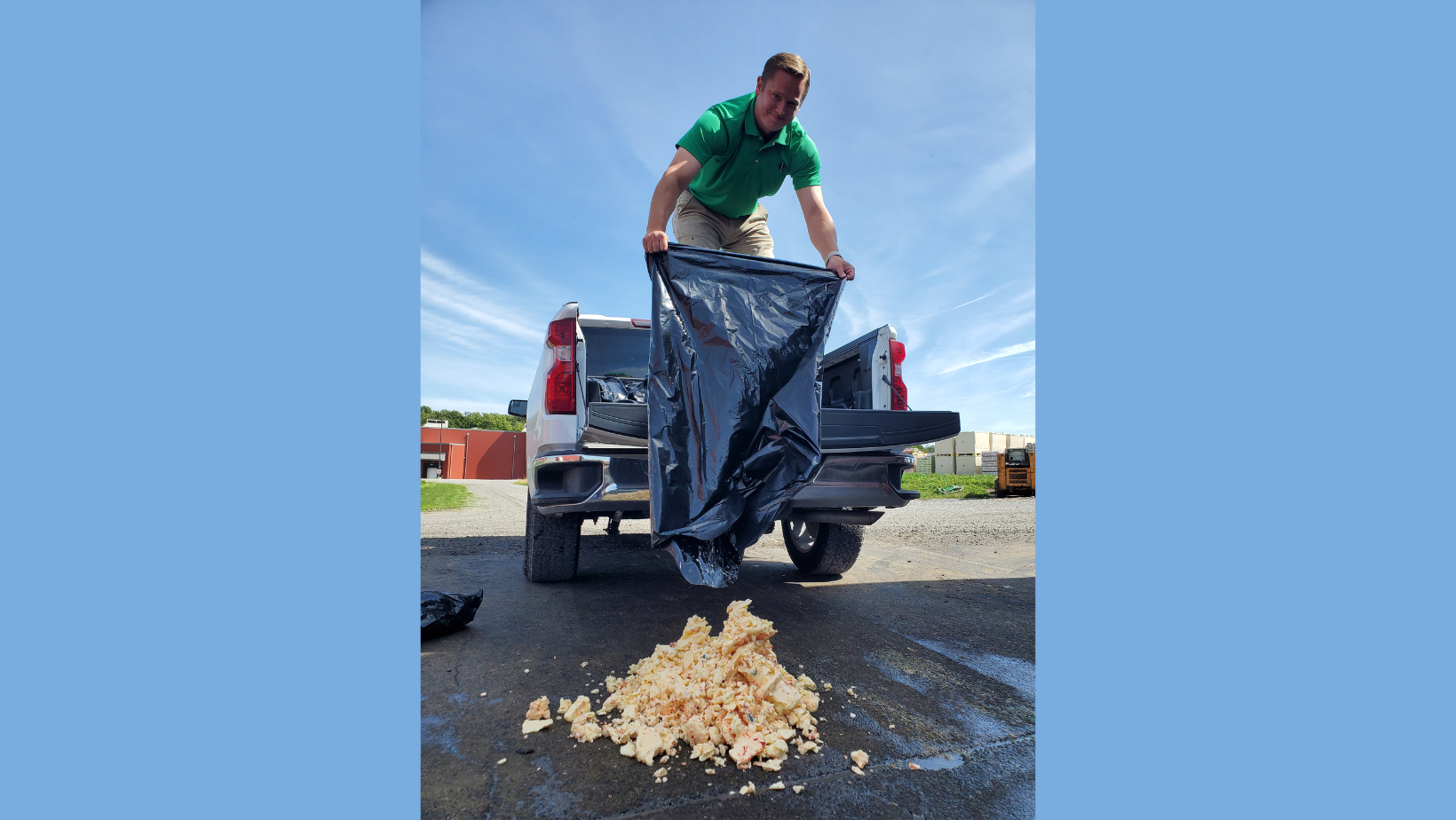
The Great New York State Fair has officially ended, but what happens to the 800 pounds of butter used to create the famous Butter Sculpture at the Dairy Building?
It won’t go to waste. All 800 pounds of butter will be recycled and turned into energy at a farm in Western New York.
According to the American Dairy Association North East, the energy generated from 800 pounds of butter is enough to power one home for three days. The butter will be processed at Noblehurst Farms in Pavilion, N.Y., where it will be combined with other food waste and manure in the farm’s anaerobic digester.
The digester breaks down the materials and converts them into electricity. Noblehurst Farms collects food waste throughout the year from local grocery stores, cafeterias and manufacturers. The resulting energy powers the farm, its on-site creamery and more than 600 homes.
The American Dairy Association North East, along with Cornell Cooperative Extension Master Gardeners and Noblehurst Farms, dismantled the 800-pound sculpture at the New York State Fairgrounds. The butter was supplied by O-AT-KA Milk Products in Batavia, N.Y. Because it was unsuitable for sale or consumption for a variety of reasons, the butter will be recycled rather than used as food.
After being dismantled, the butter will make its way back to Western New York — less than 15 miles from where it originated.
“We’re proud to give this butter a second life,” said Jack Klapper, co-owner of Noblehurst Farms. “It may have started as part of an 800-pound sculpture at the Fair, but it will end up helping power homes and businesses right here in New York. It’s a great example of how dairy farms can turn what might otherwise be waste into something useful.”
Last year marked Noblehurst Farms’ 10th consecutive year recycling the butter sculpture. Over the past decade, the farm has recycled 8,000 pounds — or four tons — of butter through its digester.
In a typical year, the 800 pounds of butter can generate enough electricity to power one home for three to five days.
Noblehurst Farms has also gained national recognition in recent years for its sustainability efforts and partnerships aimed at keeping food waste out of local landfills.
When the farm began its food-waste recycling program in 2015, it was recycling about 500 tons of food waste per month. Today, with the help of a modern recycling system, Noblehurst Farms recycles more than 100 tons per day and has more than doubled its electricity production.
“Dairy farmers have always been resourceful, and this is a great example of that,” Klapper said. “Focusing on how we can be sustainable and being environmental stewards is very important to the team at Noblehurst Farms.”