
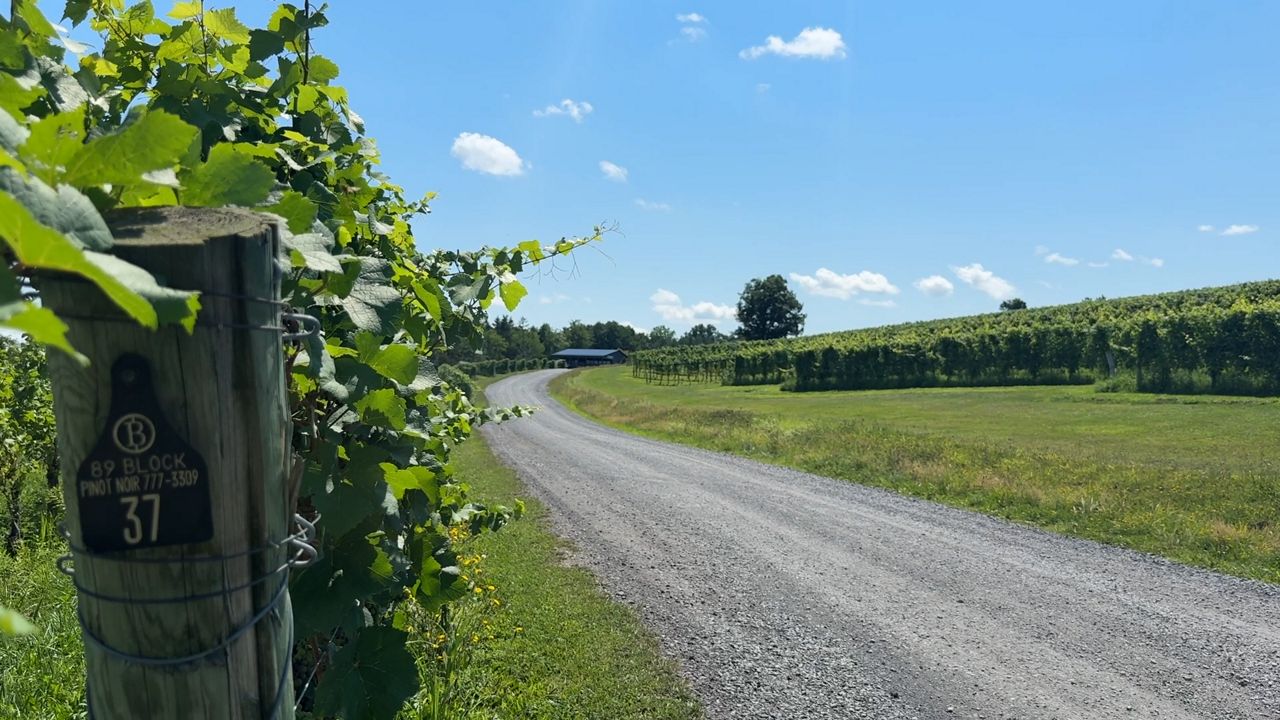
ROCHESTER, N.Y. — It’s a walk that’s become part of Dave Pittard’s daily routine through this section of his vineyard.
Pittard first noticed the invasive species last year. While he hasn’t seen any yet on the vines, they’re around his property.
“We’ve seen two this year in what we call the nymph stage, so young little ones,” says Pittard. “Nothing we would consider damage-worthy yet, but we imagine those days will come.”
Experts first noticed the spotted lanternfly in Pennsylvania in 2014. Since then, they’ve started making their way into New York and farmers noticed their appetite for grapes. They say the spotted lanternfly doesn’t affect the grapes, instead they say the sugar on the vines is what they’re after.
Hans Walter-Peterson works with Cornell Cooperative Extension as a viticulture specialist. He helps vineyards in the Finger Lakes region, like Six Eighty Cellars, track and manage spotted lanternflies.
For the last decade, researchers have been studying the best ways to reduce the risk for the invasive species. Walter-Peterson says they’re looking at natural ways, like planting different fungi that can be harmful to spotted lanternflies. But the primary way seems to be using insecticides, something many vineyard owners turned away from using. Pittard hasn’t used it on his grapes since buying the property in 2020.
Spotted lanternflies mature around this time of year. Because they can hang onto vines, it can present challenges once harvest season approaches.
For Pittard, he plans to keep checking these vines but understands that dealing with invasive pests are part of the job as a grower.
Researchers say spotted lanternflies are great hitchhikers. To help stop the spread, they recommend checking around your car or other belongings for any hiding if you were in an area where they’ve been reported.