
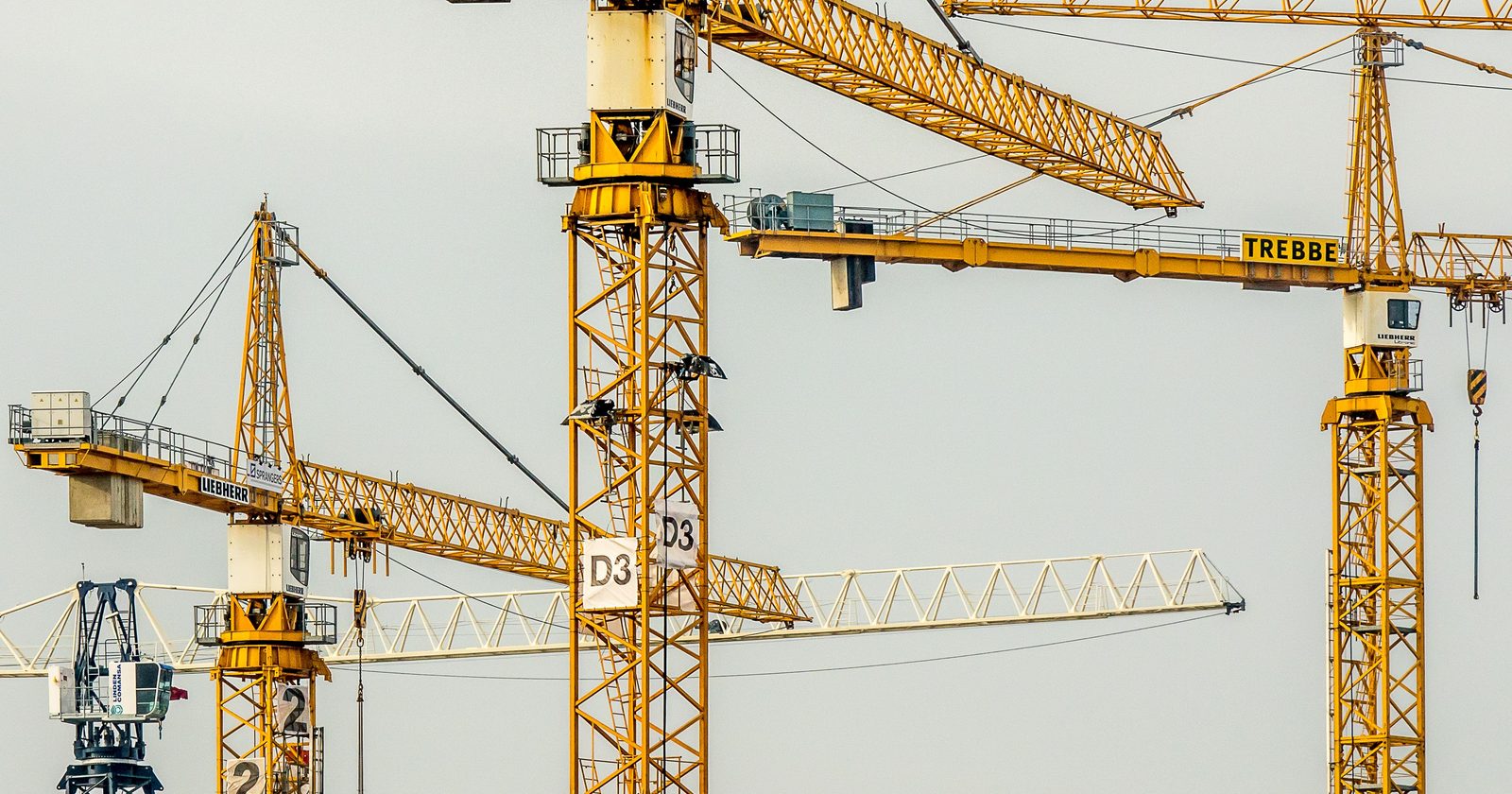
In July 2023, a tower crane hundreds of feet above Midtown Manhattan caught fire and dropped its 165-foot arm onto the street. A city investigation traced the fire to a single failed hydraulic hose. New York now requires fire detection and suppression systems on every diesel-powered tower crane in the city.
Earlier events should have been a warning. A Favelle Favco tower crane collapsed in Sydney in 2012 and one in Melbourne in 2016, and the manufacturer later issued a safety bulletin recommending voluntary fixes. According to the forensic investigation New York commissioned, none of those measures had been done on the crane that failed in Manhattan.
What follows is a plain walk through what went wrong at 550 10th Avenue, why a hydraulic line becomes a fire hazard, and what the city changed.
What actually happened at 550 10th Avenue
On the morning of July 26, 2023, crews at a 45-story tower going up at 550 10th Avenue were pouring concrete using a Favelle Favco diesel-powered tower crane. The crane was lifting a 14,000-pound load when a fire broke out on the crane’s deck, roughly 500 feet in the air.
The hydraulic hose failure
The city ran a multi-year investigation with its Department of Investigation and the engineering firm Gilsanz Murray Steficek. Their 968-page report concluded that the fire was likely caused by a hydraulic hose connection near the engine. The hose came loose from its fitting and sprayed a fine, flammable mist of hydraulic oil onto a hot surface, which set it alight.
The report says the fire was likely caused this way, not proven beyond doubt, and we’ll keep that hedge. It also noted that, “Required inspections that could have identified signs of defects in the hydraulic oil hose were not performed.”
Buildings Commissioner Jimmy Oddo was more confident, saying “we now know why this incident happened, and we have already implemented new changes to help prevent it from happening again.”
The boom collapse and the damage next door
Once the deck was burning, the fire climbed. It reached as high as 900 degrees Celsius and damaged the luffing rope, the line that holds the boom at its working angle. With that rope gone, the 165-foot boom fell onto 10th Avenue, hitting the neighboring 555 10th Avenue building on the way down.
The human toll could have been far worse. About 11 people were hurt, mostly with minor injuries.
Why a hydraulic line is a fire risk in the first place
This is the part that surprises people who don’t work with heavy machinery. Hydraulic oil under pressure isn’t a slow, dripping fluid. When a pressurized line lets go, the oil comes out as a fine spray, almost like an aerosol. Land that mist on a hot enough surface and it catches easily. A diesel-powered crane has plenty of hot surfaces around the engine, which is exactly where this connection failed.
The other ingredient is age. A company mechanic told investigators the failed hose had last been replaced in 2011, although investigators found no written record of that replacement. The report says the hose may even have been original to the crane.
Rubber hoses and their fittings don’t last forever, and the point of regular inspections is to catch a hose that’s wearing out before it fails under pressure. When those inspections don’t happen, a part with a limited lifespan keeps running past it.
What the DOB investigation changed
The most direct result is a new equipment standard. The city now requires new fire-safety measures on every diesel-powered tower crane in New York, built around fire detection and suppression.
Detection is the first half. At 550 10th Avenue the fire started on a deck hundreds of feet up, where someone on the ground has almost no chance of spotting it early. A detection system is meant to flag a fire fast, while seconds still matter and the boom’s key lines are still intact.
Suppression is the second half, aimed at exactly what happened here: a fire near the engine feeding on sprayed fuel and oil. The rule is written for diesel-powered tower cranes specifically, because that mix of a combustion engine, hot surfaces, and pressurized flammable oil is what turned a hose failure into a boom collapse. Deputy Mayor for Operations Jeff Roth called the whole episode “a stark reminder of the need for constant vigilance and improvement in our safety standards.”
That mandate wasn’t the only change. The DOB also tightened licensing for smaller lifting equipment, requiring operators of devices rated 2,000 pounds or more to hold a DOB license with over 3,000 hours of experience. It also issued a violation to the crane’s user, Cross Country Construction. As the Buildings Department and Department of Investigation frame it, the findings have already informed improved crane safety protocols.
We’re not safety engineers or crane inspectors, and this is reporting on a public investigation, not guidance for your site. If you need to know how the requirement applies to a specific crane or job, the Department of Buildings’ own materials on the case are the place to start, along with whoever holds your equipment’s inspection records.
Follow Science Blog on Google
Add us as a preferred source to see more Science Blog reporting in Google.