
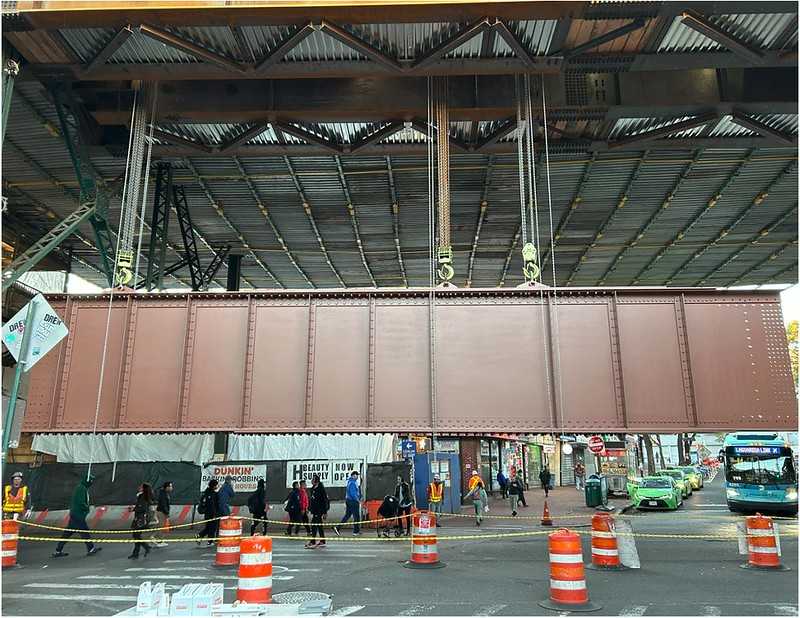
MTA Construction and Development President Jamie Torres-Springer said a major undertaking to replace the station’s over a century-old steel girders supporting the tracks and platforms with new ones should be finished by May 2027. He said the work is necessary to ensure the deteriorating structure is able to continue standing for decades to come.
“The elevated 7 line, it’s got a lot of challenges from being really old, and so it’s meant that we need to do platform replacement,” Torres-Springer said of the project. “When we do that, we find that the steel, the big girders, all of the major units that are holding up the station and the platform are in severe disrepair. So in order to make sure that the line stays standing, we are not avoiding that work.”
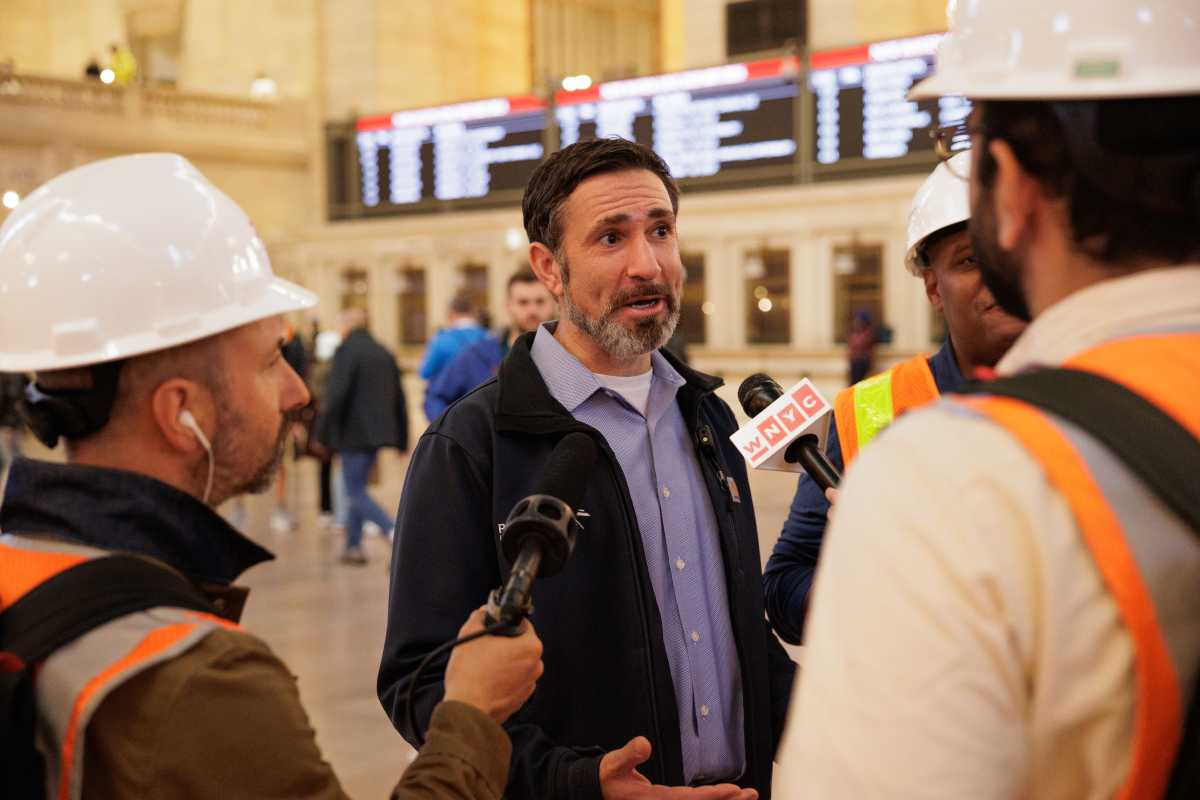 Jamie Torres-Springer, president of MTA Construction & Development.Photo by Paul Frangipane
The May 2027 date marks a two-year delay from when the project was initially slated to be finished in May 2025 — a change the agency said was necessary due to its discovery of major structural issues at the station that it did not anticipate.
The additional girder replacements also drove the project’s price tag up by nearly $30 million — increasing from $315 million to $343 million, amNewYork previously reported.
“That situation where steel girders are found to be in poor condition…[is] so incredibly complex, which meant that it had taken longer to get it done than we initially anticipated,” Torres-Springer said in an interview.
“These steel members deteriorate over time because they’re exposed to the elements, to salt, which causes corrosion,” he added. “Steel rusts and corrodes, and if you don’t take good care of it and make sure that you address the defects, there’s real potential for danger.”
Progress on the 7 line
The MTA will be restoring Flushing-bound service at the station, which it had to suspend to conduct the work, once construction is complete, Torres-Springer said. He added that Flushing-bound 7 trains are also on pace to begin stopping at the 52 St and 69 St stations, which they are also currently bypassing, once again come next May.
Torres-Springer said the agency already completed work on the Manhattan-bound side of the 61 St-Woodside station in May as well as at the other two and that “now we are on track to complete that Flushing-bound work by May of next year.”
The MTA is overhauling all three stations as part of a broader effort to modernize nine stops up and down the 7 line, which runs through several dense Queens neighborhoods such as Sunnyside, Woodside, Jackson Heights, and Corona.
“This is a very big, comprehensive state of good repair investment that we’re making on the 7 train at nine stations at once,” Torres-Springer said of the broader project. He also noted that the effort includes accessibility upgrades to bring the stations into compliance with the Americans with Disabilities Act (ADA), which includes the installation of elevators at at least three of them.
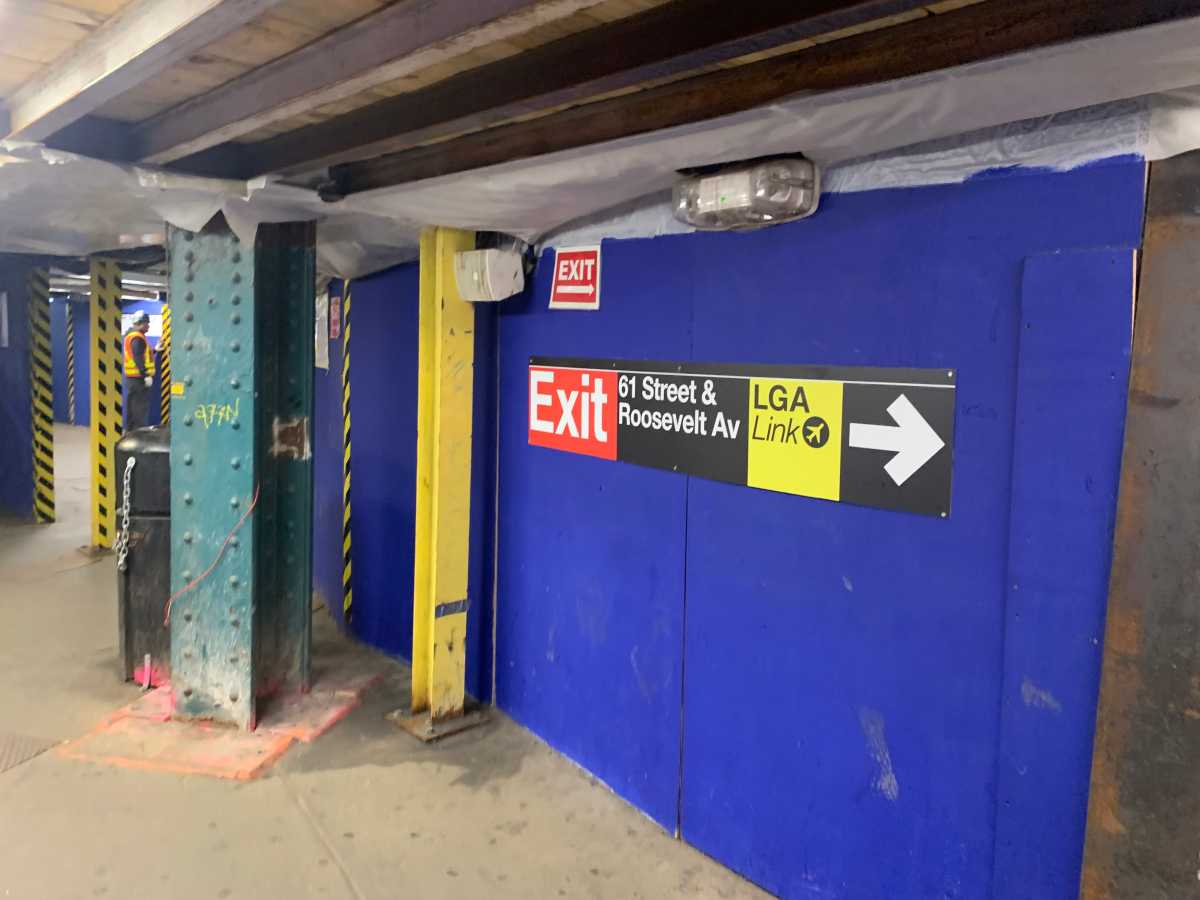 Construction inside the Woodside-61st St. station in May 2026.Photo by Gerard Lennon
In addition to the structural and accessibility work, the undertaking aims to improve the rider experience along much of the Flushing line, Torres-Springer said. It comes after the MTA improved 7 train service by making it one of the first lines to get modernized Communications-Based Train Control (CBTC) signals.
“This is a major effort to have the customer experience, meaning what it’s like at each of these stations and the accessibility of the stations, catch up to the reliable, safe, and frequent ride that people are getting on the 7 train after the introduction of Communications Based Train Control,” he said.
Work at another station on the line — 103 St-Corona Plaza — was recently completed with Flushing-bound service resuming last week, the MTA said. The restoration ended an over a year period of the 7 bypassing the station.
Similar to 61 St, MTA work crews used the bypasses to replace decaying steel girders upholding the elevated tracks, according to the agency. Construction workers demolished the old platform and replaced the girders underneath with over 40,000 pounds of new steel supports.
They then rebuilt the platform to be ADA-accessible, while also installing new rain canopies, lighting, and communications systems.
Torres-Springer said the Manhattan-bound side of the station will get the “same treatment,” along with the installation of elevators, sometime during the next couple of years under the MTA’s 2025-2029 Capital Plan.
The MTA construction boss said that due to the sprawling nature of the construction projects across the 7 line, he could not provide an exact timeline on when it would all be done. But he said that in addition to the May 2027 date, another major milestone to track is when the agency is expecting to complete the installation of elevators at 33 St-Rawson St and 46 St-Bliss St late next year.
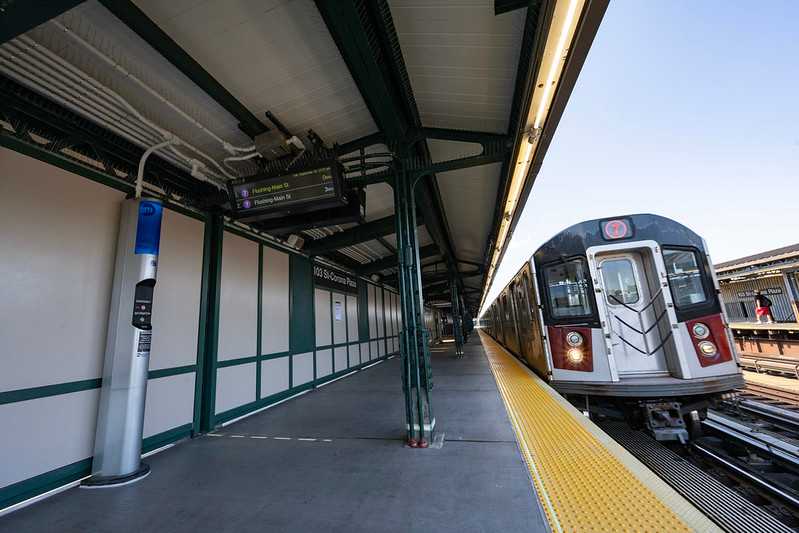 The refurbished platform at the 103 St-Corona Plaza 7 train station.Credit: MTA/Trent Reeves
In addition to station bypasses, the long-term work along the line has meant a slew of other service adjustments, including the suspension of express 7 service at several stations where temporary platforms were constructed to provide access in both directions.
However, Lisa Daglian, executive director the Permanent Citizens Advisory Committee to the MTA and a frequent 7 train rider, said she understands the service disruptions are necessary to make the line safer in the long term.
“When you start peeling back layers and layers and layers of hundred-year-old paint, you find what’s underneath it, and there were some serious issues that needed to be addressed and I think they found more than they bargained for,” Daglian said. “That is what they’re focusing on: is making sure that the fixes that they make, are structurally sound for a long time to come.”