
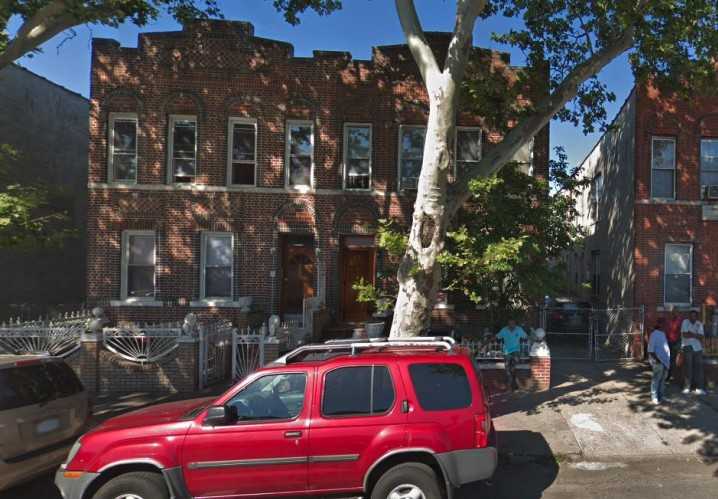
New York City announced an agreement on Monday to pay $60 million in a federal settlement in response to a class action lawsuit which claimed that a city program aimed at taking away distressed buildings from delinquent landlords had, in practice, unconstitutionally looted homeowners’ equity.
Homeowners’ attorneys argue the city program known as “third-party transfer,” which has allowed the city to seize buildings from landlords with outstanding property taxes, utility bills, and housing violations, systematically targeted Black and brown communities by focusing on areas like Central Brooklyn.
The attorneys filed the lawsuit in March 2019, during the de Blasio Administration, after receiving complaints in late 2018 from property owners who allegedly found notices informing them they no longer owned their homes.
In many cases, the homeowners found themselves targeted because the city’s Department of Housing Preservation and Development (HPD) used a part of the statute that has become known as the “block pickup” policy, which lumped lesser-distressed properties into seizures if they were on the same block as a property that had originally attracted the city’s attention.
“These were Black and Brown property owners, sometimes first-time property owners who, for the most part did not have a mortgage, and were diligently paying their tax bill or getting into installment plans to pay their tax bills and very prideful of their properties and the city took their property for this program without any notice,” said Yolande I. Nicholson, who represented the homeowners.
The lawsuit claimed that the city ended up seizing properties worth significantly more than the outstanding taxes and municipal charges owed and returned none of the surplus equity to the prior property owners.
The settlement only extends to the 64 properties affected by the tenth “round” of the seizures the city undertook through the TPT program since the program began in 1996, but their attorneys argued that there are about 500 more properties affected by the program that are yet to be litigated.
“We’re very pleased that we have obtained this favorable result for the round 10 class members, and we’re going to keep moving forward in litigation on behalf of the round one through nine class members, and we hope we can do as well or better for them, but that’s up to the court system,” said Matthew Berman, Valli Kane & Vagnini.
$1 million per seized property
The settlement averages out to about $1 million per property, making it one of the top civil rights settlements against NYC in the past decade, Berman and Nicholson claim. Notably, the result does not return property titles to owners, but offers a part of the equity value the homeowners lost.
“The City maintains that the transfer of properties did not violate the former property owners’ rights, but the City is settling to resolve this longstanding litigation,” wrote an HPD spokesperson in a statement that emphasized the settlement comes from a previous iteration of TPT under a previous mayoral administration.
The agreement has yet to be approved by a federal judge. The city has not seized more properties under TPT since 2019, but the move to settle is likely to intensify recent discussions over whether Mayor Zohran Mamdani and the City Council should reform the program as a tool to crack down on negligent landlords.
A new version of the program has been proposed in the City Council that supporters say would be more specifically targeted to landlords with a clearer record of back taxes and violations. HPD told amNewYork Law that the Mamdani administration is working with the City Council “to update and strengthen TPT in a way that addresses the concerns outlined in these suits and that better serves New Yorkers and our goal of creating and preserving safe, stable housing for tenants.”
But the homeowners’ attorneys argue new proposals still fall short. They assert that many of the issues that they deemed to be unconstitutional are still present in the recent policy proposal. Nicholson asserted that the window to challenge third-party transfer cases is still too short to provide a “reasonable chance” to landlords to pay what they owe and keep their property.
“We’re lawyers; we’re not policymakers. We can’t tell the city what to do, but if they violate the Constitution, there’s going to be somebody injured,” Nicholson said.