
The New York City Council on Thursday asked a Manhattan judge to dismiss Mayor Mamdani’s lawsuit to block $10,000 bonuses for public school paraprofessionals.
At issue is whether the Council’s legislation, which was passed to address a perennial shortage of special education teacher aides, ran afoul of New York state labor law that require pay raises to go through collective bargaining.
“Our legislation was passed unanimously by the Council and provides a narrow, temporary workforce stabilization payment to address this emergency while fully preserving the collective bargaining process,” Council Speaker Julie Menin (D-Manhattan) said in a statement.
“We are confident in the Council’s authority to enact this law and will vigorously defend it so that our paraprofessionals receive the support they deserve and our students have the professionals they need in their classrooms.”
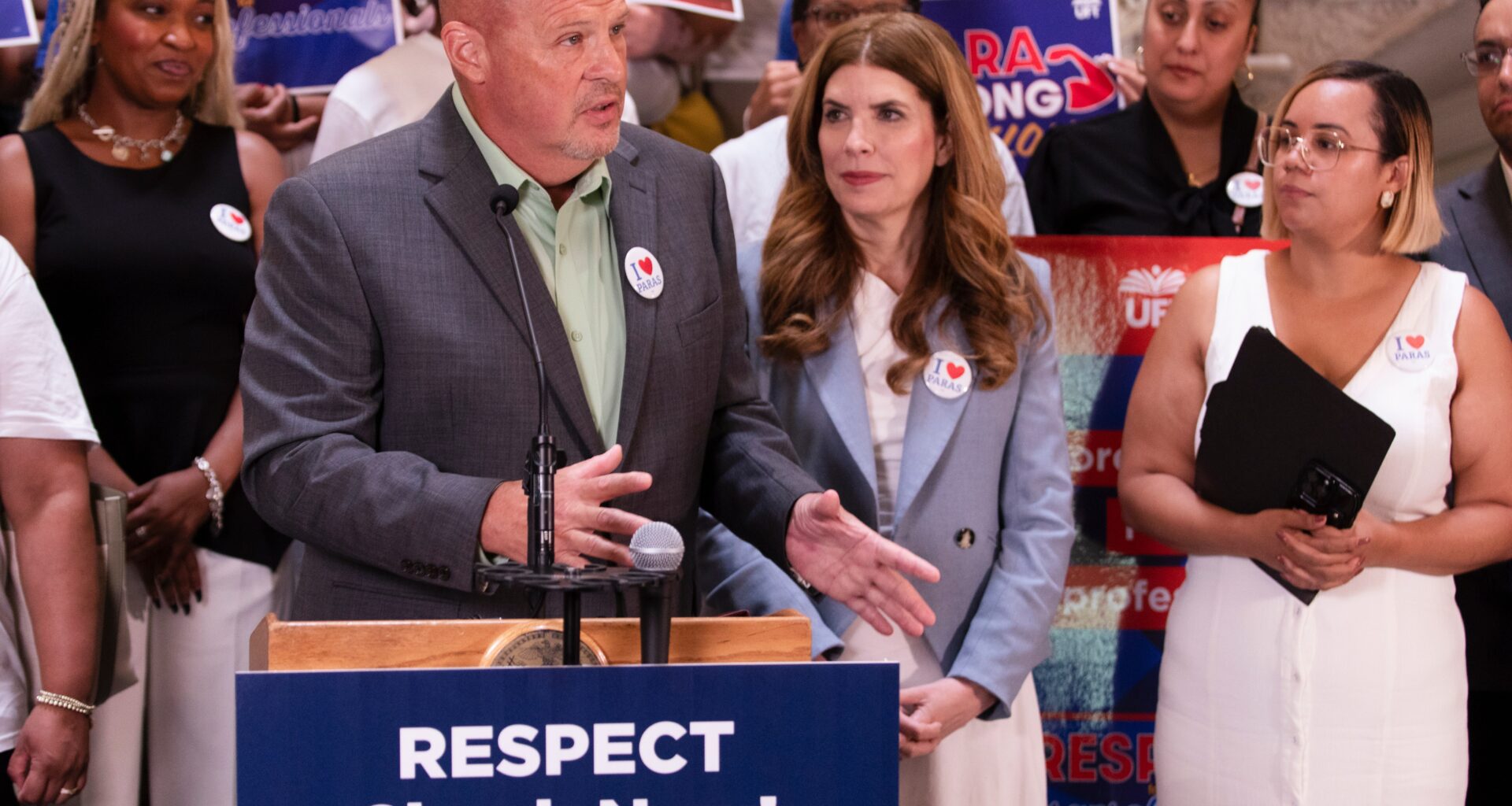
The Council and the United Federation of Teachers, which represents the unionized paraprofessionals, plan to hold a news conference on the City Hall steps late Thursday morning.
The Council’s response, filed in a state trial court, requested the judge either decline to hear the mayor’s case or find the legislation not in violation of the Taylor Law.
“In the face of this educational and fiscal emergency, the Mayor asserts he has the exclusive power to end this crisis, through collective bargaining. But he hasn’t made it happen,” wrote the Council’s general counsel, alongside attorneys at the law firm Emery Celli.
“Instead, he has filed this legal challenge to Local Law 129, hoping that the Court will give him legal and political cover for his failure to address the problem.”
The lawyers argued the Taylor law did not intend to “remove local legislatures’ pre-existing powers to pass laws improving public employees’ wages or working conditions.” The 1960s Taylor Commission itself, which recommended giving public workers the right to bargain collectively, “expressly recognized that it was ‘possible’ under the Taylor Law for a union to negotiate a contract and ‘then to seek further benefits through changes in … legislation in the locality.’”
In the decades since, lawyers for the Council wrote that public workers have won occasional “legislative victories” that “secure benefits outside of the bargaining process.” The legal filing gives the examples of a 2001 local law requiring the city to pay for health insurance and a recent state law enacting “longevity bonuses” for police officers.
Mamdani supported the bonuses on the campaign trail, but changed his tune in office. Rather than veto the legislation, which the Council had the votes to override, the mayor opted last month to allow the bill to lapse into law — and filed his lawsuit later that day.
The Council estimates the pay bump will cost $325 million in 2027 over two fiscal cycles — a price tag the Mamdani administration has warned could rise if other municipal workers seek bonuses too.
The first of four installments, totaling $10,000, is scheduled for January. Paraprofessionals have an annual starting salary of $33,000.
Both Mamdani and the UFT have expressed optimism about how talks are going to permanently raise paraprofessional salaries in the next round of collective bargaining.
Michael Mulgrew, the UFT president, said a recent teachers union survey found thousands of paraprofessional vacancies, which are either are left unfilled or rotated through by substitutes — a lack of consistency that could harm students with disabilities.
“Instead of solving this crisis we are fighting it in court,” Mulgrew said in a statement. “Make this make sense.”