
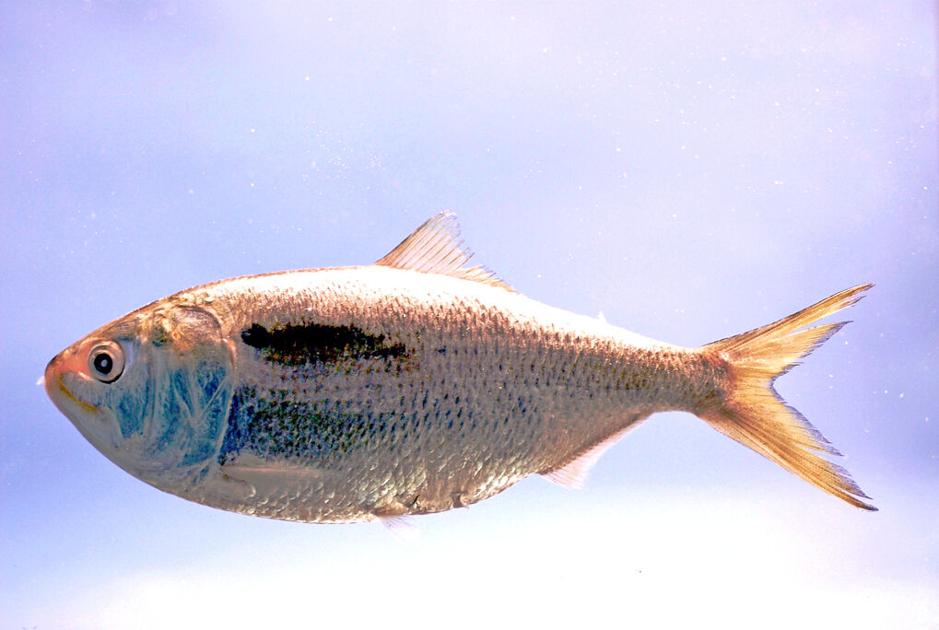
City Councilmember Joann Ariola (R-Howard Beach) is calling on the federal government to push commercial menhaden fishing farther from New York’s coast, arguing that large-scale harvesting of the small forage fish could be contributing to changes in Jamaica Bay’s ecosystem.
Ariola sent a letter Monday to U.S. Commerce Secretary Howard Lutnick asking the federal government to begin rulemaking that would establish a 12-nautical-mile coastal buffer for what are called “industrial menhaden reduction vessels.”
Menhaden, also known as bunker, are eaten by ospreys, striped bass, bluefish, sharks, whales and dolphins.
Ariola said declining schools around Jamaica Bay and the Rockaway peninsula have coincided with a poor nesting season for local ospreys and reports of larger predators moving closer to shore.
“Menhaden may be a small fish, but they hold an enormous part of our coastal ecosystem together,” Ariola said. “When industrial vessels remove them by the millions, the consequences travel all the way up the food chain.”
New York law prohibits taking menhaden with purse seines — walls of netting — in the state’s marine district, except under limited emergency circumstances. State waters generally extend 3 nautical miles offshore, while federal waters run from 3 to 200 miles.
Ariola’s request follows what area experts describe as an alarming osprey nesting season around Jamaica Bay.
Don Riepe, Jamaica Bay guardian for the American Littoral Society, said roughly 25 nesting pairs were documented in the area, but only five chicks survived.
“Most wildlife managers I speak with all agree that it’s because of the overharvesting of menhaden, their main food source,” Riepe said.
Dan Mundy Jr., president of the Jamaica Bay EcoWatchers, said, “Menhaden are not simply a commercial resource. They are a fundamental component of the coastal food web. Field observations should be considered alongside the scientific and commercial data being used to manage this fishery.”
The Atlantic States Marine Fisheries Commission, which coordinates management of Atlantic menhaden among East Coast states, lists the coastwide stock as not overfished, based on its 2025 assessment. The commission is considering additional menhaden management changes this year and is scheduled to hold its annual meeting in November.
Ariola asked Lutnick to take action under the Atlantic Coastal Fisheries Cooperative Management Act before that meeting.
“This is about restoring balance before the damage becomes irreversible,” Ariola said.
The U.S. Department of Commerce did not respond to a request for comment by deadline Wednesday.