
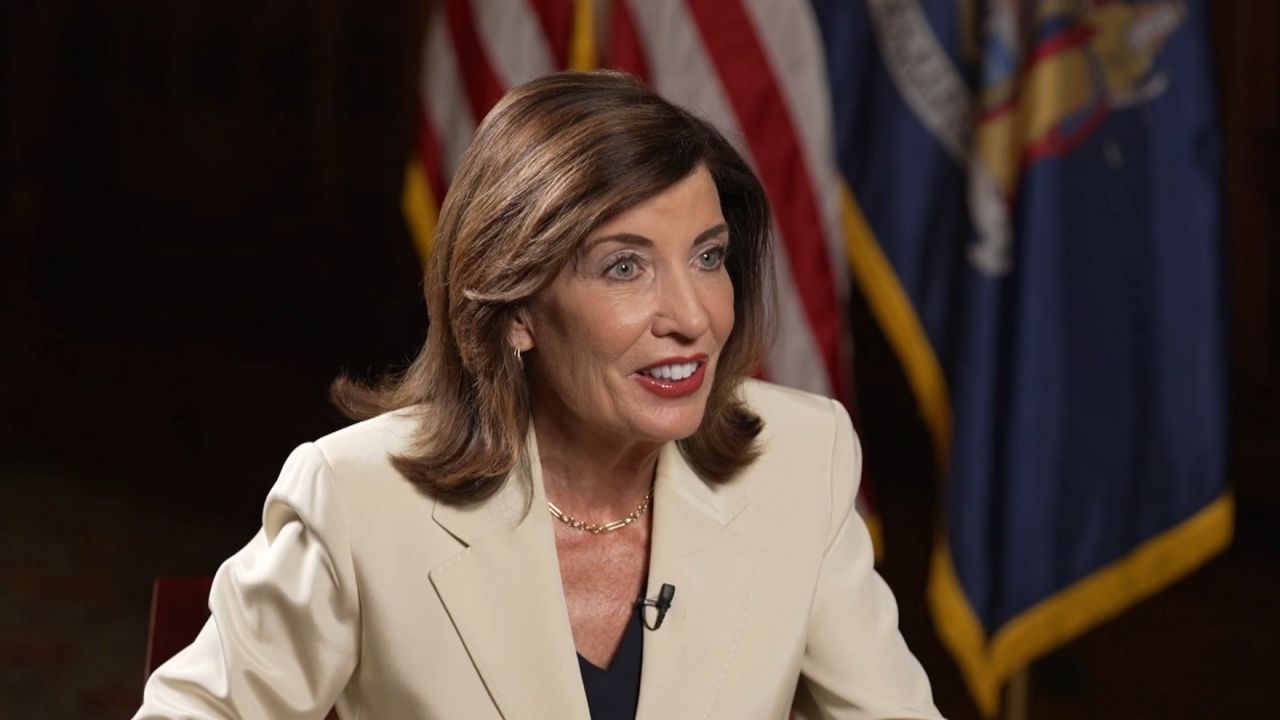
As part of her community investment framework, Gov. Kathy Hochul announced protections for communities from exploitative data center development this week.
This is in the wake of the executive order she signed in July establishing a one-year moratorium on new data center development in the state.
As part of the newly announced framework, Hochul is “pursuing legislation to repeal sales tax exemptions for massive data centers across the state.”
Some business leaders don’t agree with her approach.
“Repealing equal tax treatment for data centers is actually discrimination against data centers. It’s a more complex, it’s an unfair tax policy that will throw New York into a competitive disadvantage,” said Pete Sepp, president of the National Taxpayers Union. “Any New Yorker who is concerned about inflation right now should be very concerned about the governor’s proposal. It will guarantee higher prices for all kinds of goods and services.”
Sepp said, “Sales tax exemptions of raw materials and equipment are a longstanding feature of most state tax codes.”
If they’re repealed for data centers in the Empire State, that could discourage future business.
Sepp adds while the focus is on AI data centers, he said data centers support “so much more,” including “everything from the groceries we buy and the credit cards and social media we use.”
“These kinds of things are very important goods and services to New Yorkers that are going to get a lot more expensive if Gov. Hochul starts applying an inconsistent tax policy towards data centers,” said Sepp.
On Tuesday, Hochul introduced the framework. She said her approach is to protect communities who are interested in hosting a data center.
“If you come here, you’re going to pay the community,” she said during an interview on NY1’s Inside City Hall.
Under the framework, a 50-megawatt data center would carry a recommended community investment level of $50 million. The framework also recommends ongoing transparency once a facility is operating including through annual reporting to host communities on metrics such as employment, water and utility usage and energy demand.
“It’s upstate New York that’s vulnerable,” said Hochul. “In fact, I have 30 applications for hyperscale data centers – the big guys – on the books right now. So, I needed to take a pause and slow it down, but my job is not to just be first in the nation with the moratorium, but the first in the nation to get it right.”
Hochul said she wanted to provide the framework especially for smaller, rural communities who don’t have big staffs to negotiate with the data centers.