
As the colors of fall begin to emerge and we settle into the familiar rhythms of work and school, I am pleased to update the legal community on the work of the Appellate Division, First Department.
The Court’s influential jurisprudence is attributable to our outstanding justices, whose adherence to the rule of law and commitment to timely decision-making again enabled us to begin the September term with zero pending appeals. Our efficiency is reinforced by the exceptional administration of Susanna Molina Rojas, Clerk of the Court, whose work, together with our devoted legal and non-legal staff, strengthens our adjudicative process and the work of our auxiliary agencies.
Our Court’s docket reflects the constellation of issues and challenges affecting life and business in New York and Bronx Counties, and we have maintained the excellence and productivity which distinguish our appellate court. In 2025, we disposed of thousands of appeals and motions, resolved numerous attorney discipline matters, and admitted scores of new attorneys to the New York bar.
I remain deeply grateful to my fellow justices, the Court’s superb staff, and the dedicated attorneys and professionals in our Pre-Argument Conference Program and auxiliary agencies: the Committee on Character and Fitness, the Attorney Grievance Committee, the Office of Attorneys for Children, and the Mental Hygiene Legal Service (MHLS). Together, we deliver justice to New Yorkers and all who do business in our Court.
In addition to resolving appeals and related issues, we have begun new programs to educate the next generation of lawyers and the community. In August 2026, we welcomed two recent law graduates as our inaugural Hon. Harold A. Stevens Fellows. These Fellows will continue to strengthen skills that will serve them throughout their legal careers as they assist in researching, writing and deciphering legal issues.
Justice Stevens was the first Black justice to serve in the Appellate Division, including as Presiding Justice, and on the Court of Appeals. We are confident the Fellows will honor Justice Stevens’ legacy by helping ensure that the law advances equality and bestows respect and dignity on every person. We are delighted to include them in our court community.
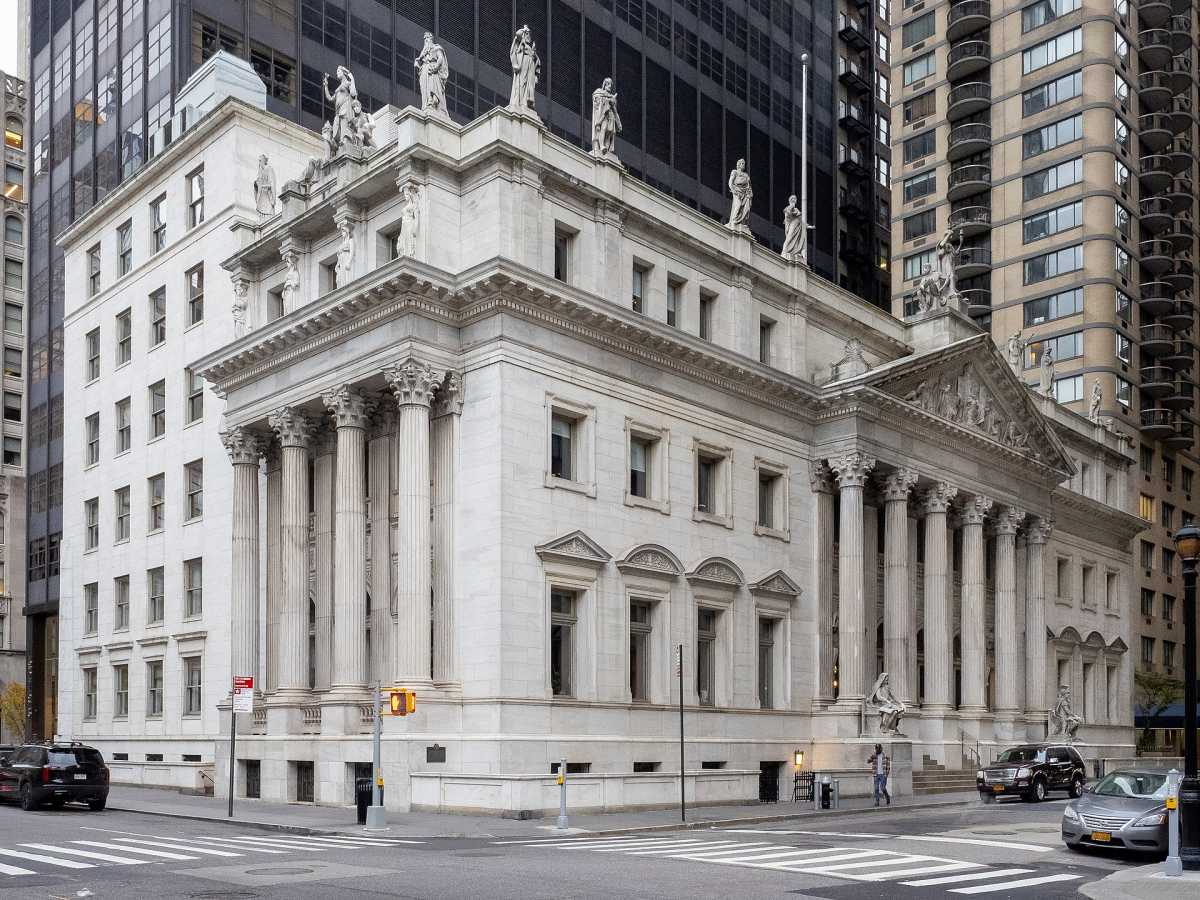
Our majestic courthouse in which we hear appeals is a temple to the rule of law. In addition to its primary use for the adjudication of disputes, the courthouse is a forum for the Justice Forward Initiative, which, since 2024, has brought community education and civic programming into our historic space.
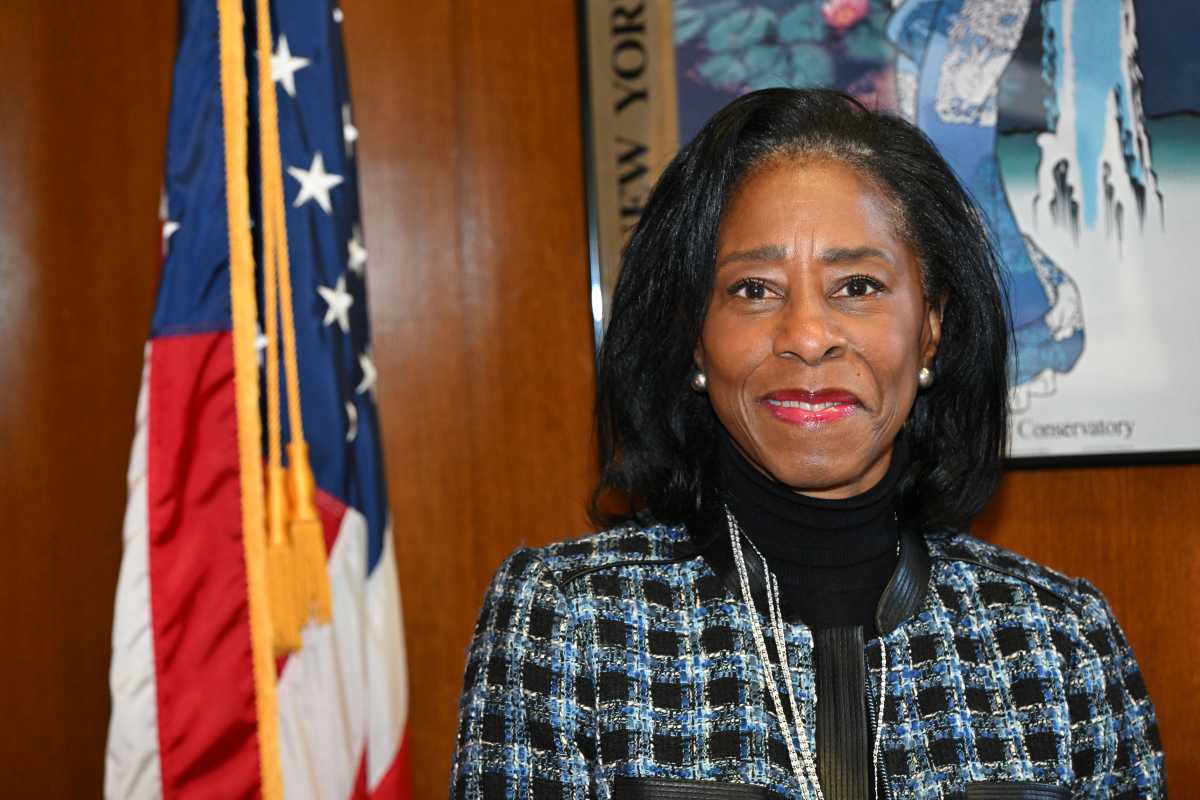 Presiding Appellate Division Justice Dianne T. RenwickPhoto by Ramy Mahmoud
Nearly 450 students from approximately 20 high schools have visited our Court for civics programming conducted on Law Day and monthly throughout the school year. Students participate in a career panel, a review of the three branches of government, a resume writing workshop, and an interactive ‘You Be the Judge’ discussion of a previously decided appeal.
The response from educators and students has been overwhelmingly positive. One student remarked “I had no idea that there were so many jobs one can do and feel like they are part of the justice process.” Another noted that seeing women judges, including women of color, expanded their sense of what is possible to achieve.
Our Representation of Justice Initiative continues to contextualize the courthouse’s architecture and art. With support from the Initiative’s Advisory Panel, we installed NOW by noted artist Shahzia Sikander on the courthouse roof, placing, for the first time, a woman on equal footing with the otherwise all‑male lawgivers.
The Advisory Panel also made possible the installation of Judge Constance Baker Motley’s name in the courtroom’s stained-glass dome, making her the only woman among the eight legal dignitaries honored in the dome’s top tier, and the first woman of color represented anywhere in our historic courtroom. These artistic enhancements promote a welcoming courthouse where the rule of law is advanced not only through jurisprudence but through aesthetics and education.
Our evening programs form another pillar of our community education work. These thought‑provoking events—often held in observance of heritage days or months— illustrate how the law serves as an instrument of change through the application of constitutional and statutory principles.
The Court’s historical reenactments—University of Mississippi v. James Meredith, The Amistad, and Fred Korematsu and His Fight for Justice—have been especially moving. Audience members describe the power of seeing history come alive as judges and Court staff portray civil rights pioneers and legal luminaries, including Constance Baker Motley.
Judge Denny Chin and Kathy Hirata Chin, in cooperation with the Center on Asian Americans and the Law at Fordham Law School, developed these poignant reenactments, each a “profile in courage” advancing the cause of justice. Our Amistad program featured a spectacular performance by the Bella Voce Choir of the Celia Cruz Bronx High School of Music, under the direction of Jacqueline Bergland. Their a cappella spirituals elevated the collective experience.
In addition to reenactments, we have presented award-winning documentaries and stimulating conversations. Screenings have included Abacus: Small Enough to Jail and My Name Is Pauli Murray. Our programs have featured engaging discussions with retired Court of Appeals Judge Albert M. Rosenblatt about his book, The Eight: The Lemmon Slave Case and the Fight for Freedom, and with Fordham Law School Dean Emeritus John Feerick about his role in drafting the 25th Amendment.
2025 also marked the 50th anniversary of the Willowbrook Consent Decree. We commemorated this milestone with the program, Remembering Willowbrook: Ensuring Justice, Dignity & Inclusion for Individuals with Intellectual & Developmental Disabilities, exploring the historical and legal context that led to the shuttering of the inhumane Willowbrook State School and the reforms that now prioritize residential housing, community integration, and dignity for differently abled individuals.
An MHLS attorney panelist described the comprehensive services MHLS provides, including free legal assistance to individuals hospitalized for mental-health reasons, routine visits to every inpatient mental‑health facility in Manhattan and the Bronx, and representation for residents of supportive community housing.
Marvin Bernstein, who recently retired as Director of MHLS, devoted 57 years to ensuring that individuals with mental disabilities, including people living in psychiatric hospitals, mental health units, and other institutional settings, received the due process and legal protections guaranteed to them. As Director, he established policies, supervised all MHLS operations, and led attorneys, social workers, and support staff across ten field offices in Manhattan and the Bronx. He also handled complex legal and legislative matters, developed MHLS’s annual budget, and represented the agency before government bodies and stakeholder groups.
Under Mr. Bernstein’s leadership, MHLS achieved important improvements in the quality of life for institutionalized individuals. One notable recent accomplishment, achieved through collaboration with city and state agencies, created outdoor‑access spaces for residents of mental health units who had gone more than a year without being able to go outside, allowing them once again to feel sunlight and breathe fresh air.
The Court extends its sincere gratitude to Marvin Bernstein for his decades of dedicated service and unwavering commitment to protecting the rights and dignity of individuals with mental disabilities. His legacy and leadership have strengthened MHLS and will continue to guide its mission moving forward.
MHLS is fortunate to now welcome Steven J. Harkavy as Director. Having joined MHLS in 1980 and served as Deputy Director since 1986, Mr. Harkavy brings over four decades of experience to this leadership role. His background includes extensive trial and appellate work, including class‑action litigation aimed at improving conditions in state hospitals. He also conducts trainings for judges, doctors, and attorneys. Mr. Harkavy’s deep expertise in mental health law and longstanding involvement in MHLS operations make him exceptionally well prepared to lead this vital agency.
In February, Justice Cynthia Kern retired after nine years of distinguished service at the First Department, and in June, we welcomed Justice Matthew Parker‑Raso following his appointment by the Governor to our bench. With a heavy heart, we will bid a fond farewell to Justices David Friedman, Ellen Gesmer, Peter H. Moulton and John R. Higgitt, who will retire from the bench this year.
We will miss their friendship, integrity, intellect, collegiality and commitment to the law and our Court.
]It is a privilege to serve alongside the dedicated individuals of the Appellate Division, First Department, who are deeply committed to justice and our community. In the 2026-2027 Court Calendar year ahead, I again look forward to working together and strengthening the values that guide our Court every day.
Hon. Dianne Renwick is the presiding justice for the New York State Appellate Division, First Department.