
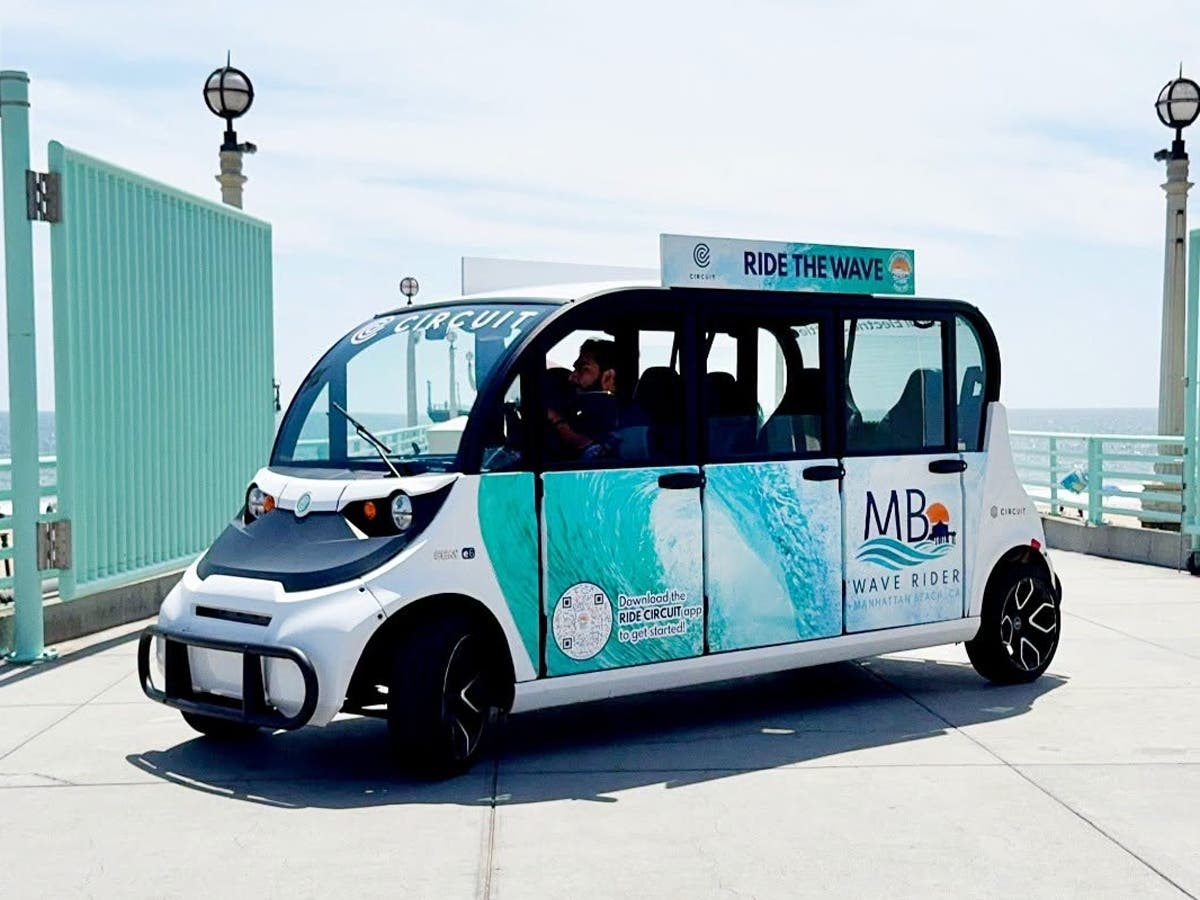
After fares and $1,000 in monthly vehicle-wrap advertising revenue that began in August, the city’s current net operating cost is $78,162 per month, according to the staff report. The city calculates the current public subsidy at about $35.23 per passenger. Staff examined several alternatives aimed at “right-sizing” Wave Rider around periods of greatest demand while reducing operating costs and idle vehicle time.
The three-vehicle, 30-hour schedule selected by the council has a projected seven-month operating cost of $214,438. The city anticipates collecting $36,750 in fares and $7,000 in advertising revenue during the extension, leaving a projected net operating cost of $170,688. If those projections hold, the subsidized cost would fall to $17.94 per passenger, roughly half the current figure.
The city primarily funds Wave Rider through Proposition A Local Return funds, generated by a Los Angeles County sales tax and restricted for transportation purposes. The same funding source also supports Manhattan Beach’s Dial-a-Ride and medical transportation programs. City staff determined that as much as $242,851 in currently unallocated Proposition A money could be used toward a seven-month Wave Rider extension.
Searching For More Revenue
Advertising and sponsorships could further reduce the city’s cost. Manhattan Beach began receiving $1,000 per month in August from advertising wrapped around one Wave Rider vehicle through an arrangement involving Manhattan Village Shopping Center.
Under the city’s agreement with Circuit, the company retains 50 percent of revenue generated through marketing and advertising services. Circuit told the city it had turned down more than $50,000 in potential advertising revenue because the prospective advertising involved alcohol, which Manhattan Beach has not authorized on the service.