
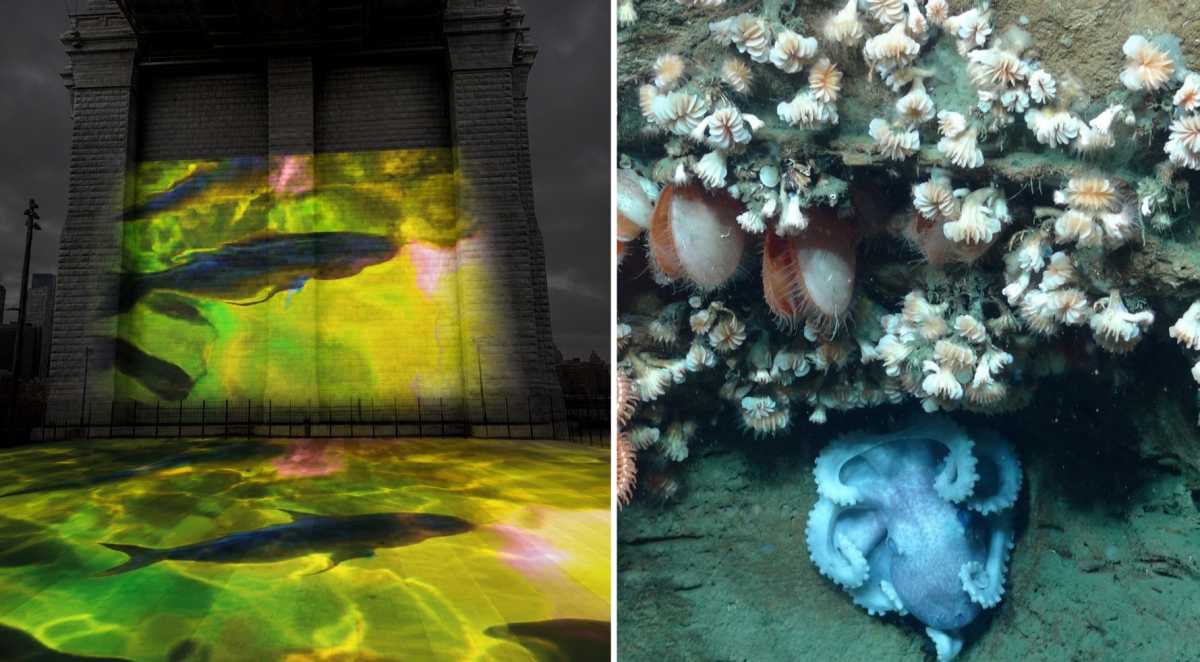
An immersive art installation will plunge the Brooklyn Bridge deep below the surface of the sea and into a critical marine ecosystem on Sept. 25 and 26.
Artist Anita Glesta’s piece “AQUA COSMOS: The Hudson Canyon,” an 18-minute “hybrid documentary” projection, will bathe the bridge with the sights and sounds of the canyon, as captured by artists and scientists over the last century.
“I’ve spent much of my life exploring what lies beneath the surface — of memory, of the body, of the landscapes we live in,” Glesta said in a statement. “When I learned that an extraordinary marine ecosystem exists just beyond New York City, it felt like another one of those revelations.”
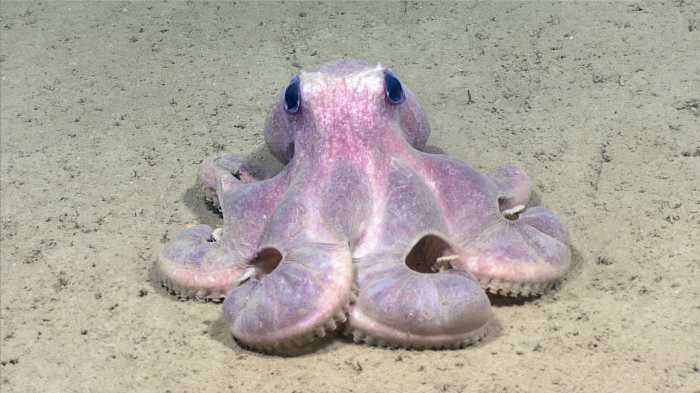 The canyon is teeming with marine life, from whales to the deepwater octopus. Photo courtesy of NOAA
Just 100 miles southeast of the city, the underwater canyon is longer and deeper than the Grand Canyon and teeming with life, from blue whales and sea turtles to tuna, crabs and deep-sea coral.
But not many people know about the Hudson Canyon. Glesta, who has been an environmental activist and artist for years, learned about it during a presentation by WCS’ Noah Chesnin.
“He actually asked the audience, ‘How many people here have ever heard about the Hudson Canyon?’” she recalled. “It was in New York City, and nobody raised their hand.”
Glesta was “blown away” to learn about the canyon and the diverse wildlife that call it home, and asked to meet up with Chesnin to learn more about it. That was when he told her about the Arcturus expedition, a 1925 research expedition led by William Beebe and supported by the New York Zoological Society, which would later become WCS.
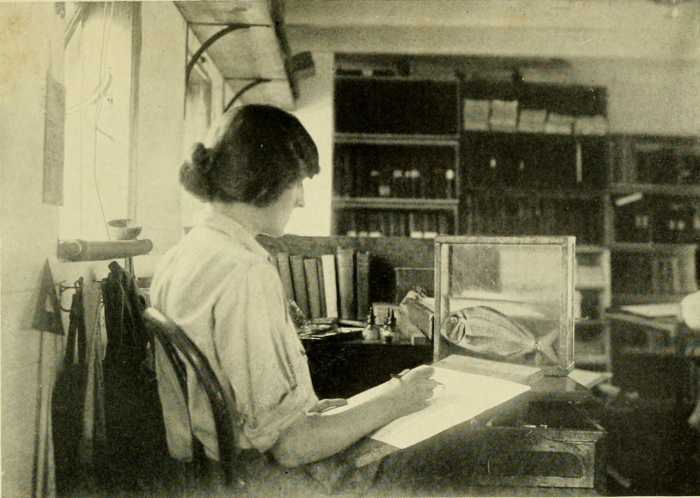 Science artist Isabel Cooper on board the Arcturus. Photo from “The Arcturus Adventure,” via Biodiversity Library
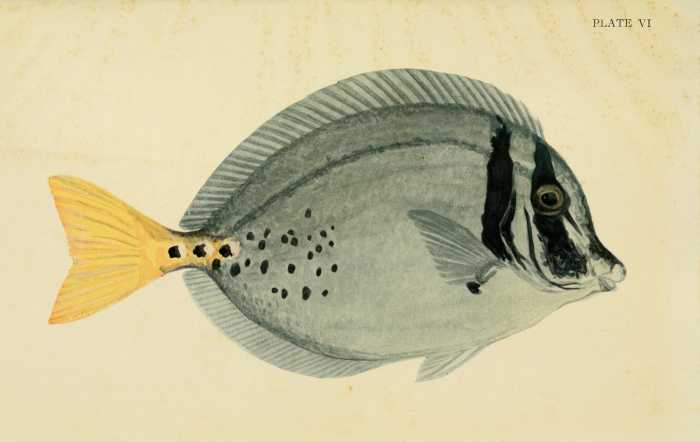 One of Cooper’s drawings from the expedition. Image from “The Arcturus Adventure,” via Biodiversity Library
It was the first time Hudson Canyon was explored, and the crew included six women, scientists and artists. At the time, there were no cameras that could capture underwater species — they had to be drawn and painted.
“The women on board were the artists who were, I like to say, translators of the science,” Glesta said. “They were the ones whose role it was to depict accurately the … marine life that they discovered. They had this really important role in this, and I felt like that’s another layer of meaning that is so extraordinary about this story.”
She knew immediately she wanted to create a piece about the canyon and its history. Now, in partnership with WCS and ArtW, Glesta will bring the canyon to Brooklyn Bridge Park. “AQUA COSMOS: The Hudson Canyon” uses multiple projectors to fill the pedestal of the Brooklyn Bridge and the plaza below life.
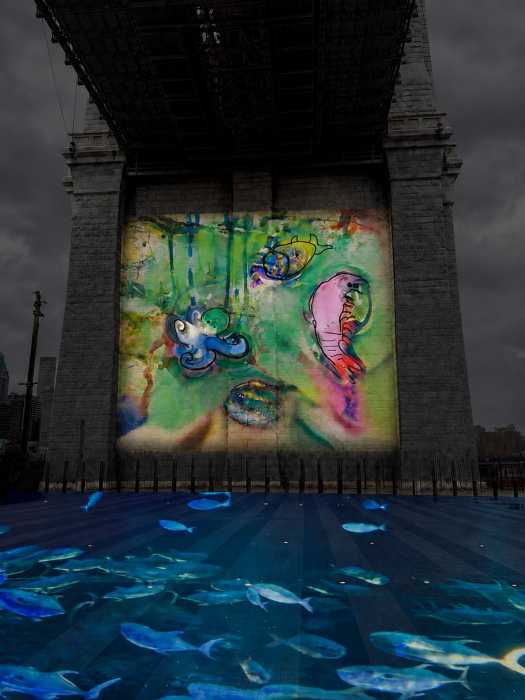 The show will fill the bridge pedestal and plaza with images of the canyon and its sea life. Image courtesy of the artist, Anita Glesta
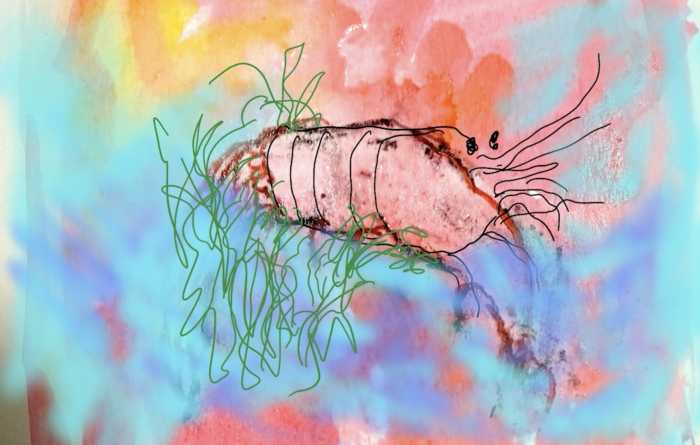 A screenshot of one of Glesta’s hand-drawn illustrations featured in the show. Anita Glesta, Still from AQUA COSMOS: The Hudson Canyon, 2026
The piece uses video footage captured by WCS during a trip to the canyon last year with the “beautiful drawings” from the Arcturus expedition and Glesta’s own hand-drawn animations.
Glesta said she thought viewers would be “mesmerized” by the piece, which will play on a loop at Emily Warren Roebling Plaza from 7-10 p.m. on Sept. 25 and 26.
“I’d like to say that seeing something helps you understand what you actually otherwise can’t see, which is this canyon,” she said. “By seeing it, and understanding it, I think people will feel more likely to want to preserve what is so precious about it.”
The canyon is critical for local wildlife and economies, and WCS has been trying to get it designated as a National Marine Sanctuary since 2016. A designation would support conservation of the canyon and its inhabitants and expand monitoring of the sensitive ecosystem, per WCS, while expanding opportunities for education and engagement.
Glesta, who hopes to expand the piece and continue to show it around the city in the future, said it’s “wonderful” to know that New York City sits so close to an “Atlantis-like world.” More and more often, marine life is straying into the New York Harbor, she noted.
“And we need to be very mindful of their behavior and respectful that they’re there, and we are coexisting with this marine life, even though we can’t see them,” she said. “It’s an extraordinary, extraordinary gift that we are having to coexist with them.”