
Albany city leaders are considering a major overhaul to how residents vote, joining a movement that has already reached New York City and cities across the country.
The Common Council’s Law Committee held meetings this week on ranked choice voting, a system that could reshape city elections, after a grassroots group delivered more than 3,000 petition signatures to the city clerk in an effort to put the question before voters.
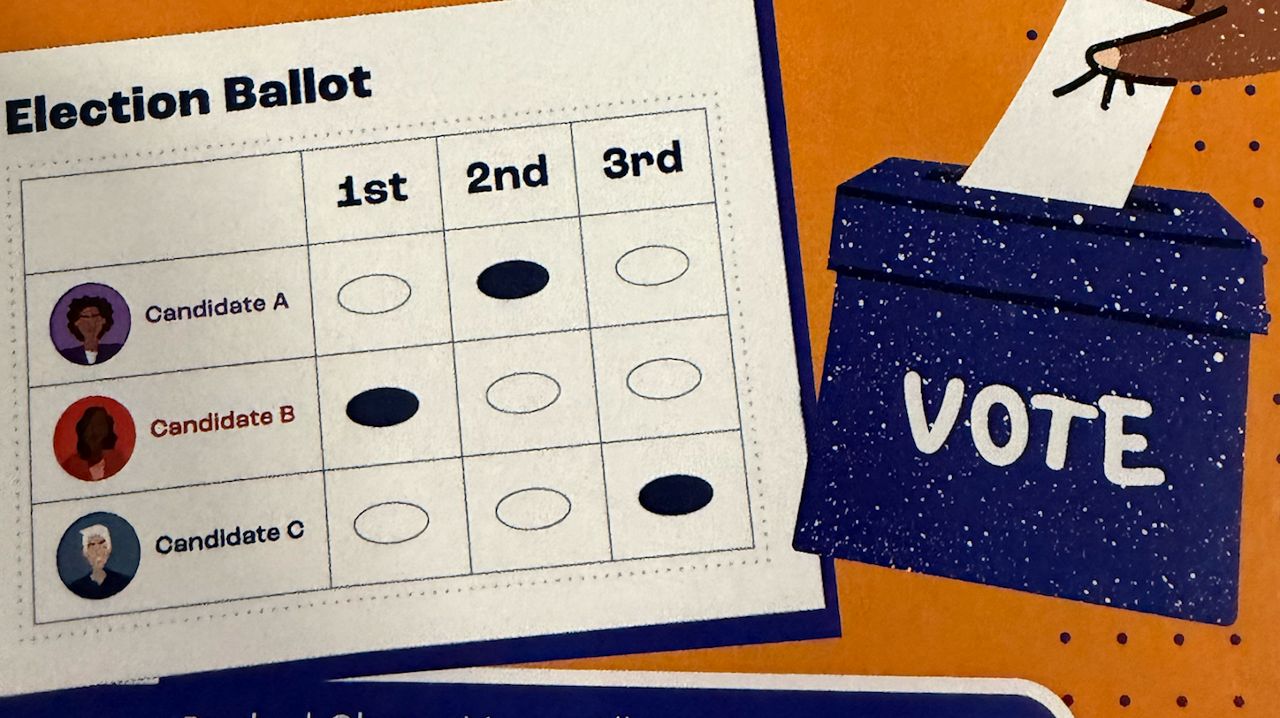
Under ranked choice voting, voters rank candidates in order of preference instead of choosing just one. If no candidate wins a majority in the first round, the last-place finisher is eliminated and those votes shift to whichever candidate each voter ranked next. The process repeats until one candidate crosses 50%.
Supporters say the system guarantees that the winner has genuine majority support. Critics counter that it complicates the process of determining a winner on election night.
Dorian Solot, co-chair of Ranked Choice Voting Albany, said the change would eliminate the so-called “spoiler effect” and tends to increase the share of women and candidates of color who win office.
“We really want to be sure that everyone, regardless of how they’re registered to vote, everyone gets a say in our elections,” Solot said.
Albany County Legislator Mark Grimm, a Republican, opposes the switch, arguing it undermines the simplicity of the current system.
“The person who gets the most votes may not win the election. That’s the first problem with it,” Grimm said. “With all the confusion we have and controversy over the election process, we want to add more confusion? I don’t think that’s a good idea.”
One of the biggest points of contention is the proposal’s elimination of party primaries. Longtime Albany voter Dale Getto argued that change is essential.
“Over 25% of voters in Albany aren’t registered with a party,” Getto said. “So we go to the polls in June at the primary and elect our municipal officers. And then come November, my neighbors and I all go to the polls, but the decision has already been made.”
Grimm said he sees a different solution to low voter engagement.
“The way to get more people to turn out is to inspire and motivate them,” he said. “That’s what we should be focused on.”
Peter LaVenia Jr., co-chair of the Green Party of New York and a political science professor at SUNY Oneonta, disagreed, saying ranked choice voting tends to boost civic engagement.
“Ranked choice, when it is implemented, has tended to expand democratic choice, has tended to expand the kind of involvement and interest in elections, people coming out to vote in greater numbers,” LaVenia said. “That seems to be a good sign for democracy.”
No decision has been made. The Law Committee’s public comment period wraps up next week, after which the committee will decide whether to advance a proposal. If the Council declines to act, organizers say they can force the question onto the 2027 ballot by collecting roughly 1,200 additional signatures.