
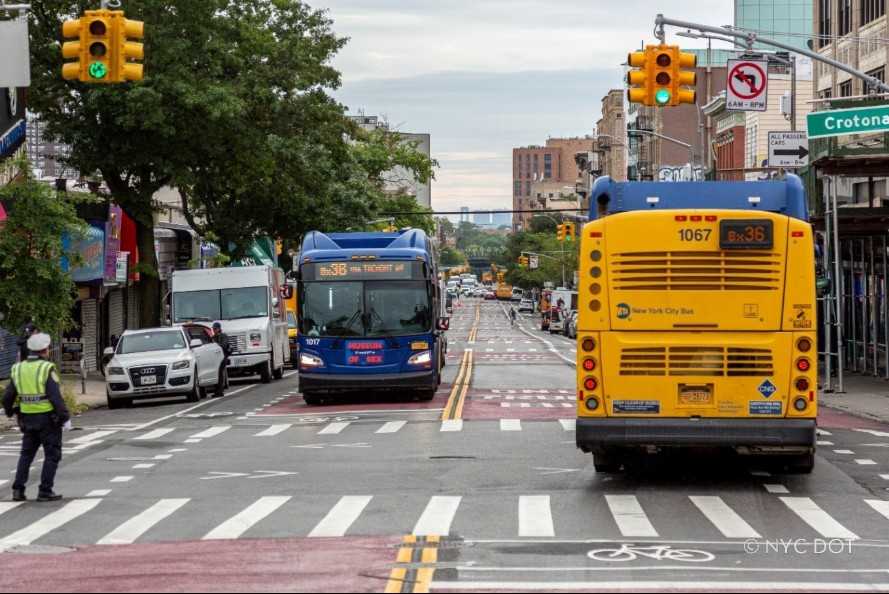
Nearly 40,000 bus riders will now have the chance to move around the Bronx faster with the city’s completion of the borough’s first busway.
Mayor Zohran Mamdani’s office announced Wednesday that the city’s Department of Transportation has finished construction on the once-stalled project to add busways to Tremont Avenue — one of the borough’s essential crosstown thoroughfares.
DOT completed the project a little over a month after first breaking ground on it and nearly two months after committing to restart it. Tremont was one of 50 “priority” bus lane projects that Mamdani’s administration announced it would advance in its “Next Stop” bus plan, which it released in collaboration with the state and MTA in early July.
Mamdani resurrected the project a year after the city was originally set to begin construction on it. That was until former Mayor Eric Adams’ administration pumped the brakes and shelved it indefinitely.
“Two months ago, we announced that the City would finally move forward with the Bronx’s long-delayed busway. Today, it’s officially up and running,” Mamdani said in a statement. “For 39,000 daily riders, that means less time stuck in traffic and more time getting where you need to go. This is what it looks like when we build a city that respects New Yorkers’ time and makes our streets safer for everyone.”
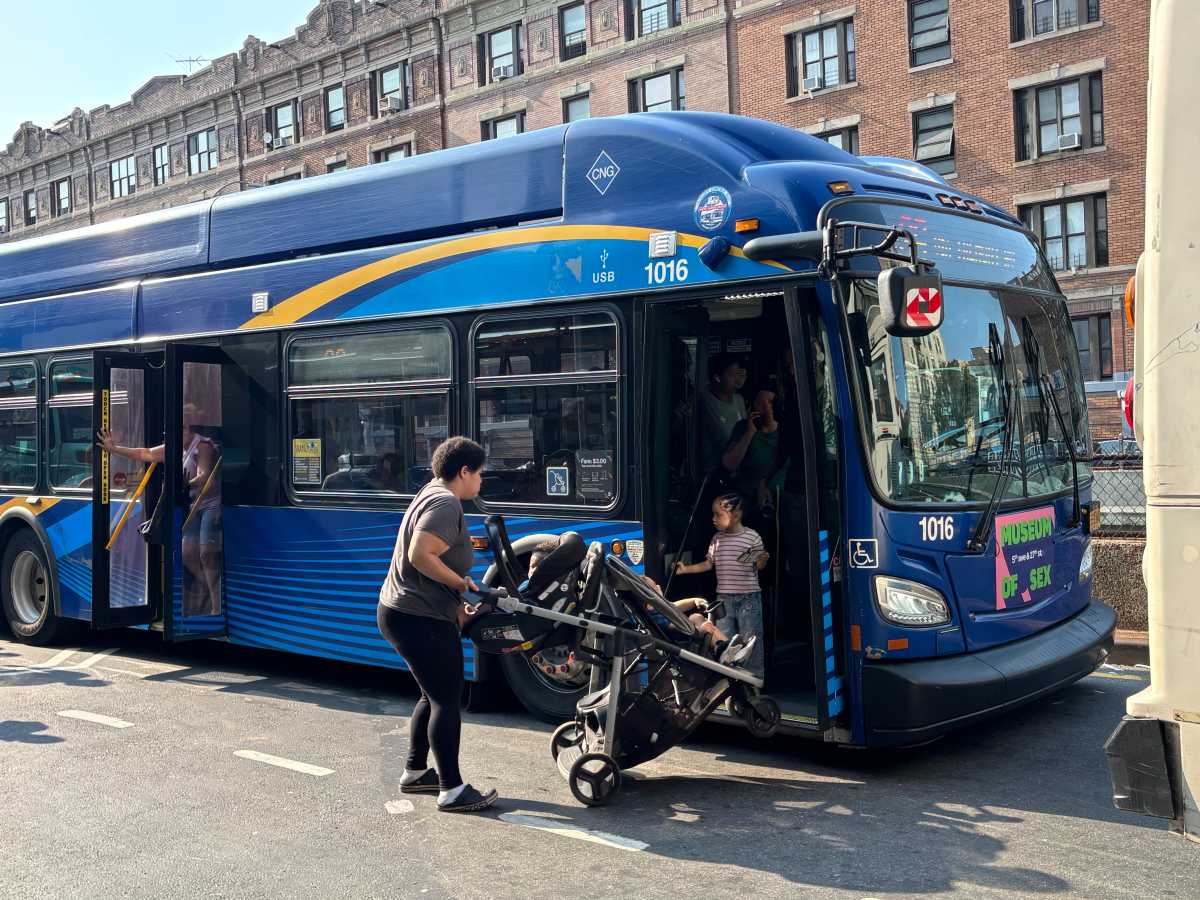 A Bx36 bus on Tremont Avenue. Wednesday, Aug. 12.Photo by Ethan Stark-Miller
The newly painted lanes are designed to boost bus speeds by restricting most vehicular traffic along a one-mile stretch of the road. The route that traverses Tremont — the Bx36 — can move as slowly as five miles per hour during peak times, leading to sluggish commutes for its 39,000 daily riders.
The busway will be transformative for Bronx residents, who depend on the bus more than residents of any other borough, said Riders Alliance’s Policy and Communications Director Danny Pearlstein.
“Bronxites depend more on buses than other New Yorkers, yet for too long have lacked the state-of-the-art in bus priority treatments,” Pearlstein said in a statement. “Now, the Mamdani administration has put bus riders first on Tremont Avenue, speeding commutes up and down hills, across the borough and to healthcare jobs and appointments in Washington Heights.”
With the project’s completion, Tremont now has an eastbound busway running between Third Avenue and Southern Boulevard and a westbound busway from Southern Boulevard to Belmont Avenue. It also has an offset shared bus and bike lane along a 0.26-mile eastbound portion between Webster and Third Avenues.
Busways are engineered to make buses faster by clearing most other vehicular traffic on the roads where they are installed. The Tremont busway will be active seven days a week between 6 a.m. and 8 p.m.
When busways are in effect, only those behind the wheels of buses, emergency vehicles, trucks with six or more wheels, and Access-a-Ride paratransit vans have full access to the road. Private vehicle drivers are only permitted local access from side streets and must exit at the next available turn.
Busways are enforced by stationary cameras, bus-mounted Automated Camera Enforcement (ACE) cameras, and the NYPD.
Tremont, along with a portion of the Cross Bronx Expressway, is also one of five roads where Mamdani’s administration identified in its bus plan as sites for bus rapid transit designs.
“We look forward to building off the success of this busway to deliver true world-class, bus rapid transit upgrades in the future,” DOT Commissioner Mike Flynn said in a statement. “We will be starting the public outreach process soon to share with the community how we can take this design to the next level with upgrades to streets, sidewalks and bus stops to bring comfortable, reliable and convenient transit options to Bronx residents.”
The finished redesign also includes a slew of safety upgrades as DOT identified it as one of the most dangerous in the Bronx, where an average of two injuries a day occurred between 2020 and 2024.
The upgrades, installed across eight intersections and nearby streets, include painted sidewalk extensions, which are intended to slow traffic and shorten crossing distances. Those are reinforced with flexible delineators, granite blocks, and bicycle parking.