
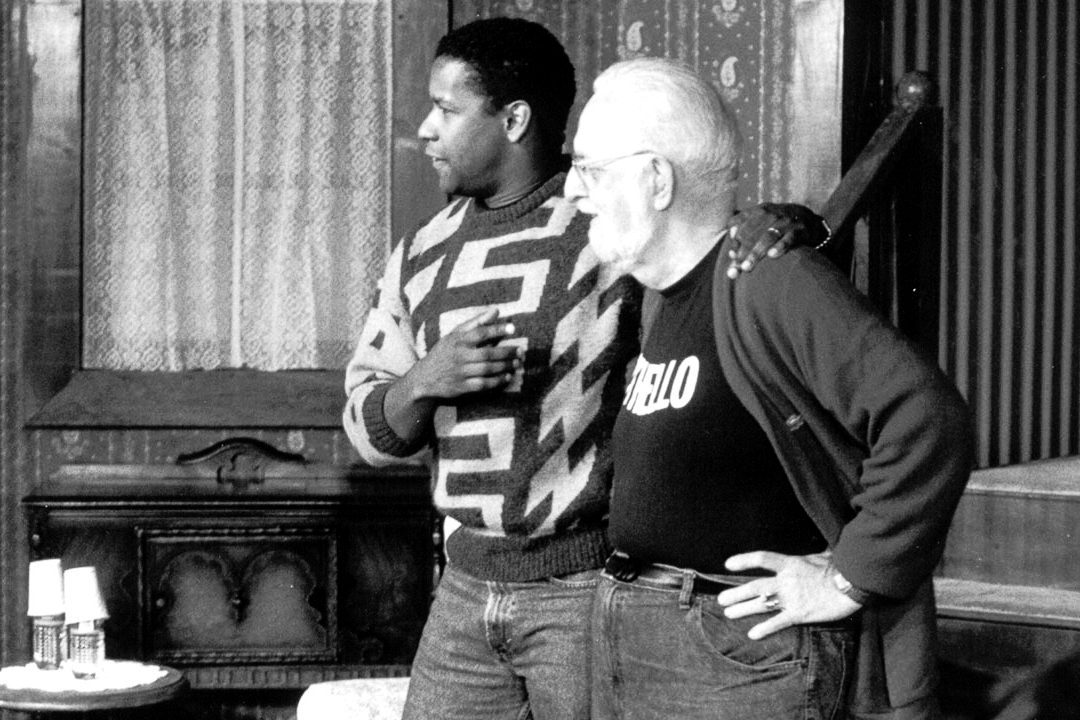
Anthony “Doc” Carter, Fordham College at Rose Hill ’76, returned to Fordham University on Sept. 10, joined by longtime friend and fellow alumnus Denzel Washington, Fordham College at Lincoln Center (FCLC) ’77, in Pope Auditorium for a conversation about Carter’s debut memoir “This I Know: Principles for a Life of Faith and Optimism,” which features an introduction written by Washington.
The evening began with a blessing from George Drance, S.J, Artist-in-Residence at FCLC, who welcomed Washington and Carter back to campus.
“We ask God of love and life, we thank you for gathering us together this evening to open our hearts to the wisdom that you have given these two friends,” Drance said.
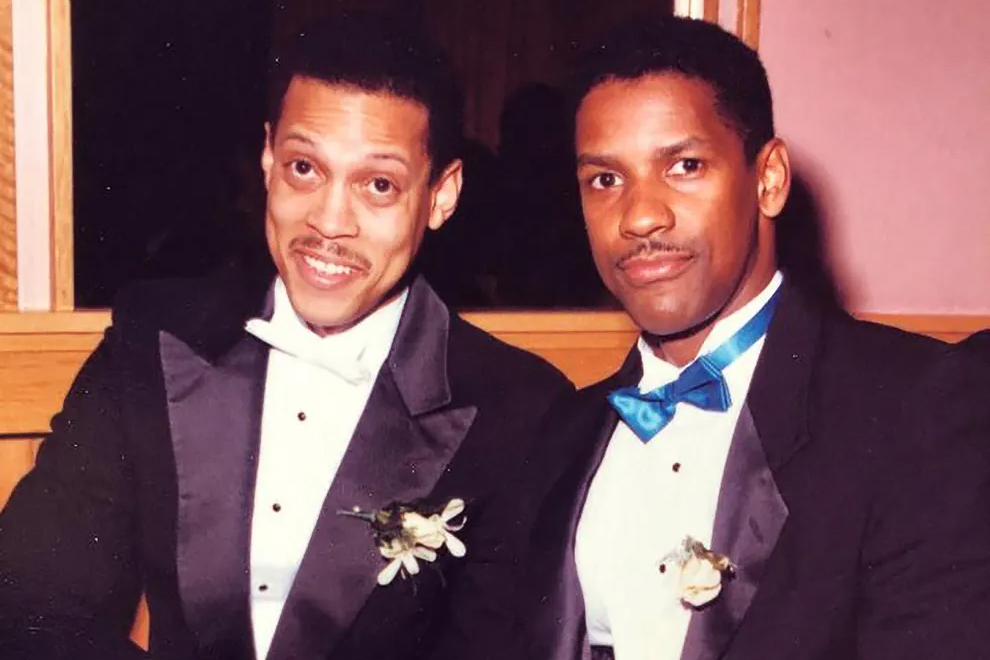 Both Carter and Denzel share much in common: their commitment to faith, their background in Fordham and their careers in communications. (COURTESY OF ANTHONY CARTER/MY CENTRAL JERSEY)
University President Tania Tetlow moderated the event, taking the two men back to where their friendship began: Fordham. Both Carter and Washington arrived at the university as first-years in 1972, where they first crossed paths in a biology lab.
“So Doc, you both came here to Fordham as freshmen in 1972. How did you meet?” Tetlow asked.
Carter said he could not think of the exact moment when he and Washington first met, but recalled that they quickly connected as they both initially planned to pursue medicine. Carter gained the nickname Doc after trying and failing to dissect a fruit fly in a biology lab. Their paths eventually diverged.
“Doc stayed with me, but the MD degree was never achieved,” Carter said.
“My first show was a musical. I found out I couldn’t sing.” Denzel Washington, FCLC ’77
Washington spent two years at Fordham’s Rose Hill (FRH) campus in the Bronx before transferring to the Fordham Lincoln Center (FLC) campus in 1975. He ultimately transferred into the theater program at FLC after discovering his interest in acting while working at a YMCA camp. Following a performance for campers, one of his fellow counselors encouraged him to consider becoming an actor.
“My first show was a musical. I found out I couldn’t sing,” Washington said.
He later played Othello as a senior at Fordham in March of 1977.
Washington recalled that an English professor at Fordham, Robinson Stone, also played an important role in encouraging him to pursue theater. Stone had previously worked professionally in theater and, according to Washington, once performed in “Othello.”
“(Stone) believed in what he saw of me when I was here,” Washington said.
At the start of his career, Carter worked as Press Secretary for former New York City Mayor David Dinkins.
As for Carter, after moving away from science, he pursued journalism, hosting a show on WFUV (Fordham’s public media station) and writing for both The Fordham Ram and The Paper. At the start of his career, Carter worked as Press Secretary for former New York City Mayor David Dinkins.
The pair said their shared work in communications gave them another way to support one another.
“That’s when we started to explore this whole arena of communications, but most importantly, how we could impact people,” Washington said. “During that time we were supporting each other, and I think it erased away this concept of failure.”
As their friendship grew, Carter became more connected to Washington’s family.
“I got to meet his mom, I got to meet his brother, his sister, his family, (and Washington) got to meet some of mine, and then it felt like family,” Carter said. “We looked out for each other.”
As both men built their own families, their friendship extended to the next generation. Carter became the godfather to Washington’s son, while Washington is godfather to Carter’s daughter. Carter drew on these experiences while writing his book.
“I lived it more than I read it, you know. I know Anthony Carter.” Denzel Washington, FCLC ’77
Carter retired from corporate America in 2015 after 13 years as Vice President of Global Diversity & Inclusion and Chief Diversity Officer for Johnson & Johnson. He initially envisioned writing a book centered around the corporate world. The project became more personal over time. The book centers around the life lessons Carter has learned and his dedication to his faith, family and relationships.
Tetlow then turned the conversation to Washington’s role in the book, asking how he connected with Carter’s story enough to write the introduction.
“I lived it more than I read it, you know. I know Anthony Carter,” Washington said.
Carter said writing about his life required him to examine experiences he had not previously discussed publicly. The process was difficult but ultimately meaningful, particularly because of his family’s support.
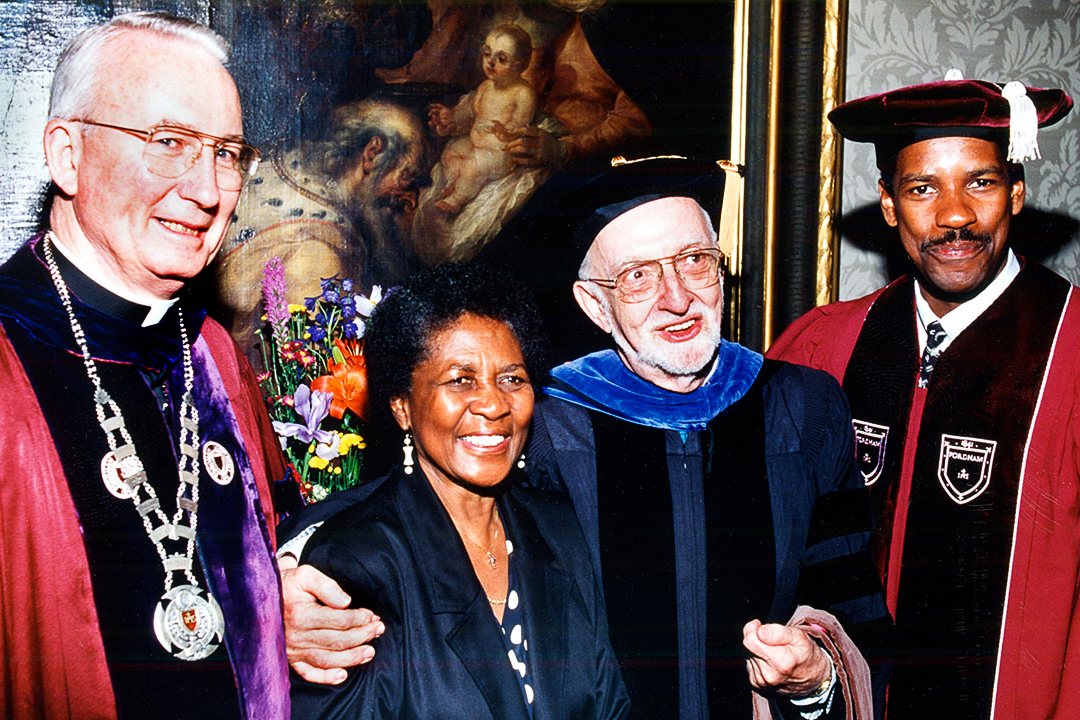 Washington is an actor and producer known for his roles in “Malcom X” and “The Equalizer” series.
He credited his editors, notably Gary Jansen of Loyola Press, for encouraging him to explore those personal experiences rather than limiting the book to just his professional career.
Tetlow pointed to one of Carter’s central questions in the book: “What do you do for others that gives you a purpose-driven life?”
Washington’s answer turned the question back on itself.
“What you do for others gives you purpose in life,” Washington said.
Carter echoed this sentiment.
“I learned to live a life of purpose but not knowing always what the purpose was,” Carter said.
Tetlow brought up Carter’s previous work as Chief Diversity Officer for a Fortune 500 company. She asked how he was able to remain hopeful while working on issues involving diversity, equity and inclusion.
Carter responded by saying he focused on his commitment to work and to improving outcomes for others, such as health care disparities.
“If we’re going to solve problems, we all need to hold hands and do that,” Carter said.
Carter also described the role prayer played in his writing. He prayed before beginning to work on his novel each day, asking for guidance and patience. Carter described his Catholic faith as the foundation for finding his purpose and emphasized the importance of using one’s life to serve and uplift all.
“Faith for me is not certainty,” Carter said. “Faith is the ability to choose God in the middle of uncertainty.”
Washington, a Pentecostal Christian, spoke similarly of his experiences with faith as not a single defining moment, but as something that constantly shapes one’s life. He emphasized that discovering one’s purpose is an ongoing process: “Finding yourself is not a moment.”
Washington’s ties to Fordham have been shaped by his longstanding involvement with and support for the university’s theater program.
Two years ago, over 90 students from the Fordham Theater Program had the opportunity to attend a special performance of “Othello,” followed by a talk with Washington, co-stars Jake Gyllenhaal and Kimber Elayne Sprawl, and stage manager Narda E. Alcorn.
Both Carter and Washington previously served on Fordham’s Board of Trustees. Washington also established an endowed chair in the theater arts (a faculty position) and a scholarship for Fordham Theatre students. In 2017, Fordham gave Carter an Honorary Doctorate of Humane Letters for his work in social justice and social work.
Tetlow finished the conversation by thanking the men for “embodying the Fordham mission with your lives, your characters, your work, (and) your inspiration.” segueing into the question and answer portion of the evening from the audience.
Carter and Washington wanted to hear directly from Fordham students. Audience members asked questions ranging from career advice and how to face tough rejections to what inspirational figures inspired the two to get where they are today.
One student asked Carter a question about public speaking, specifically referencing four principles he mentioned in his book: honesty, honor, humility and humor. She asked how someone who is comfortable writing, which involves so much revision, can become confident speaking without preparation.
“It’s a compact book with a lot of impact, but it’s revealing … I can spend all day trying to figure out what’s the right thing to present to people … Communications and writing and those four principles have been what has guided me throughout my journey,” Carter said.
“There’s no time limit on success.” Denzel Washington, FCLC ’77
Another student asked Washington a question regarding how he found the courage to pursue acting despite the uncertainty surrounding the profession. Washington challenged the idea that people must achieve success by a particular age.
“There’s no time limit on success,” Washington said.
Washington compared the journey into adulthood to a relay race.
“Parents can only go so far … and when they hand you the baton, you don’t look back to get it because you’ve got somewhere to go, you grab it and you go forward,” Washington said.
As the event concluded, Carter encouraged students to see themselves as people capable of shaping the future, rather than taking the world for granted.
“I mean this for everybody: The world that you have been given does not mean you cannot change it when you’re in control,” Carter said.
More than five decades after their friendship began in the Fordham biology lab, Washington and Carter returned to the university to discuss careers they had not originally planned, a friendship that developed alongside them, and the faith and purpose that continue to shape their lives.