
“Energy. Impact. Action.” Is the official theme for Climate Week NYC 2026.
It comes as new research may provide a clearer picture of what it could cost to adapt the state of New York to deal with climate change.
According to Rebuild by Design, which is located at New York University, the price tag is more than half a trillion.
“We did a really deep dive over six to eight months and looked at 700 different reports and projects to try and figure out how much New York state is going to be spending to adapt to climate change,” said Amy Chester, director of Rebuild by Design.
Chester says Paying for Resilience in NYS is a “first-of-its-kind inventory” created in partnership with The NYS Adaptation Practitioners Network, which puts the price tag to adapt to climate change in New York at approximately $26,000 per person in various forms including “tax increases, medical bills, and home repairs” and $519 billion collectively.
The research found “the most substantial costs include culvert replacement, sewer and stormwater upgrades, and coastal defense.”
“What we really found is that most communities don’t even have plans, and they don’t know what it’s going to cost,” said Chester.
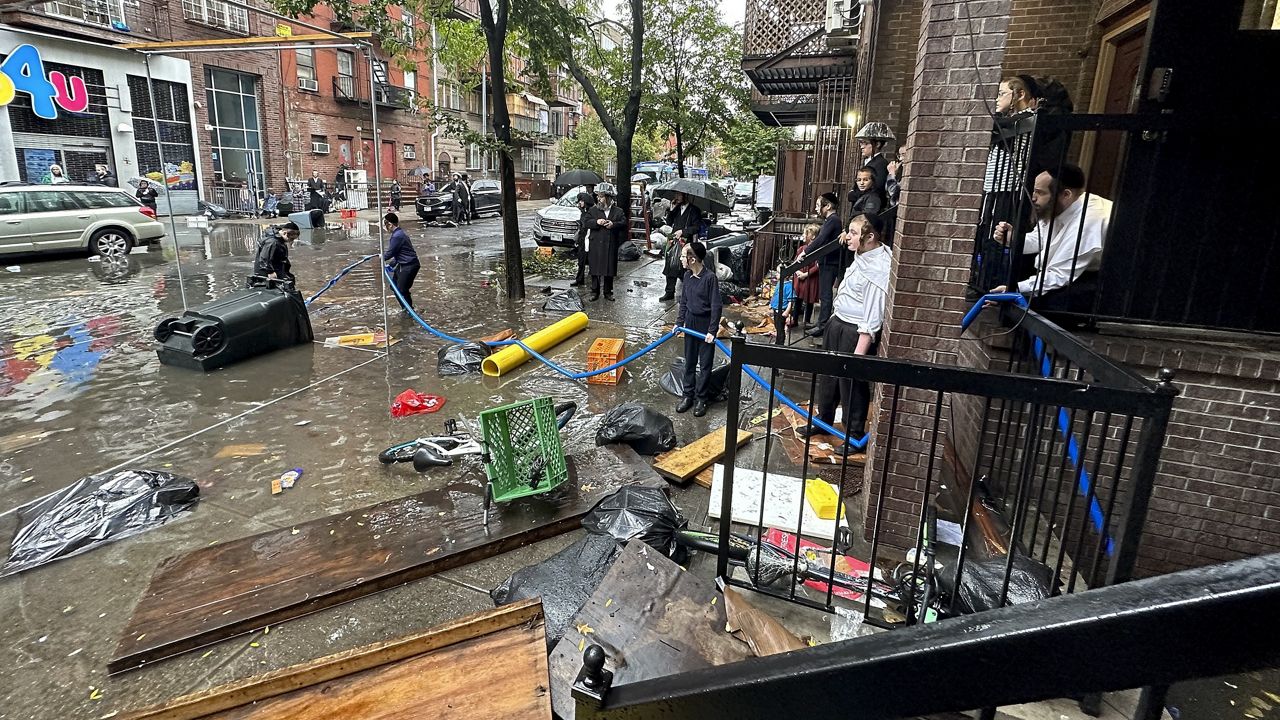
Chester says communities are dealing with “more extreme weather events.”
She points to an increase in major rainstorms.
“It really shows in one place why we talk about the enormous cost to New Yorkers of not dealing with climate,” said New York Democratic state Sen. Liz Krueger.
Krueger, who sponsored the Climate Change Superfund Act in the state Legislature, which calls for a polluter pays model requiring major fossil fuel companies to pay $75 billion collectively over 25 years, says “there are real costs” and “real money” is needed to deal with a green infrastructure.
“Which is our only answer,” she said. “It’s also true that failing to do that will actually cost us more.”
Not everyone agrees climate change is entirely to blame for some of these issues.
The Business Council of New York, which was a plaintiff in a case challenging the state’s Climate Change Superfund Act, says the data highlights the need for investment in infrastructure but says the costs may also be from “long deferred investment.”
“We know we need to upgrade all categories in public infrastructure, and you know this could be a starting point to try and quantify those investment needs in a way that we can build financing programs around them,” said Ken Pokalsky, vice president of government affairs at The Business Council of New York.
Researchers say when it comes to the climate, New York is “running out of resources to address this challenge.”
They point to the Environmental Bond Act which was approved in 2022.
Of the $4.2 billion in funding from the bond act, researchers say more than $2.2 billion has already been allocated to projects across the state.
There are also legal challenges to the state’s Climate Change Superfund Act.
Last month, a federal judge struck the law down ruling it was preempted by the federal government’s Clean Air Act.
Gov. Kathy Hocul said New York is “looking” at its “options of appeal.”
Spectrum News 1 reached out to the New York state Attorney General’s office for this report and was told there is “no update” in the appeal’s process.