
 3 min read
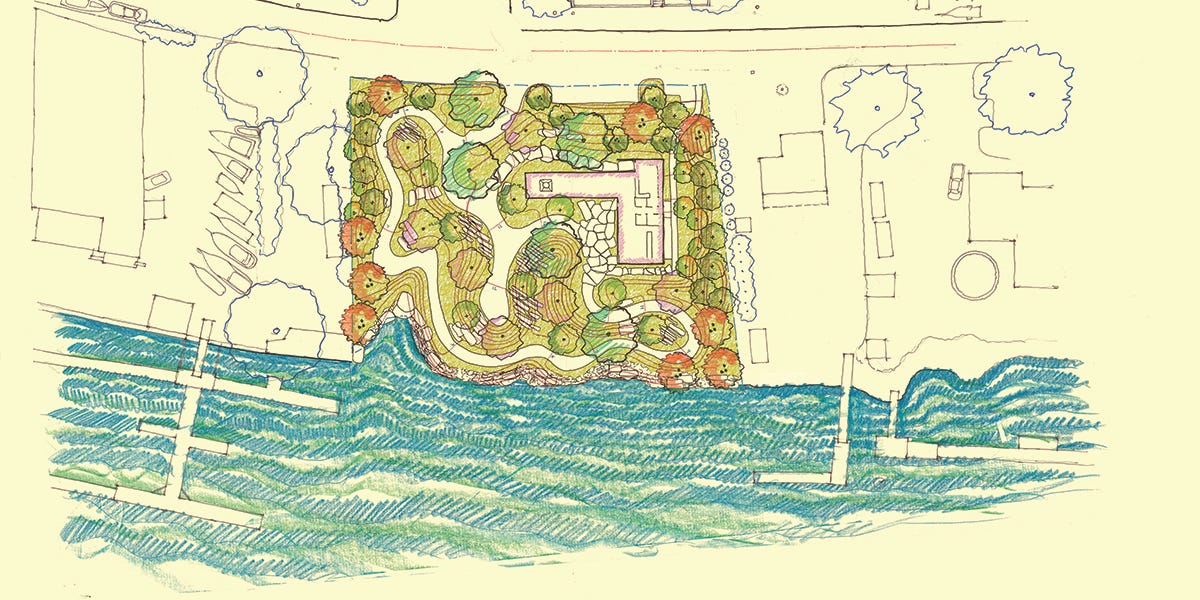
On the Hudson River, where the village of Athens meets the water, a parking lot has been remade into something more alive. Garden for Brice, a public garden slated to open this month, transforms the site into a riverfront landscape of stone, native plants, and open space—less a tribute than a place shaped by the artist it honors.
Brice Marden, who died in 2023, was one of the most influential American painters of the late 20th and early 21st centuries, known for work that bridged Minimalism and a more lyrical, gestural abstraction. He moved from luminous, layered monochromes to the calligraphic, interlacing forms of his later years—always informed by attention to water, rock, and light. His work is held in major museum collections, including the Museum of Modern Art, the Tate, and the Art Institute of Chicago. This fall the Gagosian gallery will present a comprehensive survey of his paintings at its West 21st Street space in New York City.
 Douglas Friedman
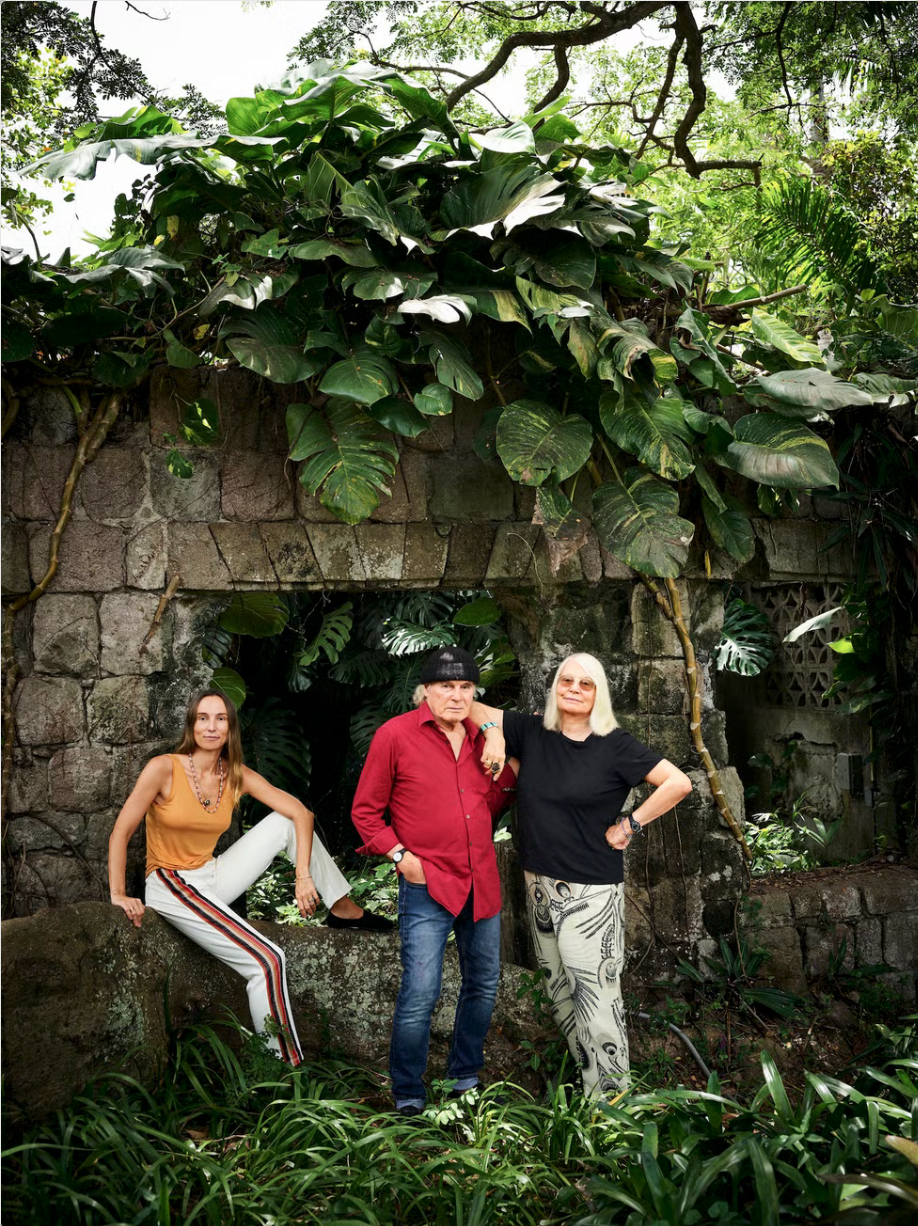
Mirabelle, Brice, and Helen Marden, shot for Town & Country in 2018.
Beginning in 1971, Marden and his wife, the painter Helen Marden, spent summers on the Greek island of Hydra, where the intense light, rocky landscape, and unique architecture became central to his practice. That sensibility has been carried into Garden for Brice, a project Helen Marden conceived and developed as its client and collaborator. “Watching the river change, the movement of water,” Helen says—this kind of sustained attention shaped his paintings over decades.
Helen, whose recent exhibition, “Interlude of Joy,” featured new paintings and watercolors, has long been passionate about landscape design. At Golden Rock Inn, the Caribbean retreat she founded with Brice on Nevis, she collaborated with the Miami-based landscape architect Raymond Jungles on its lush tropical gardens. Their collaborations favor restraint over display and spaces that reveal themselves gradually. “It feels natural to me. My husband’s way of seeing was always connected to the landscape,” she says.
“It feels natural to me. My husband’s way of seeing was always connected to the landscape.”
Jungles and his team approached Athens with similar discipline. The one-acre site has been reshaped into a series of informal, interconnected spaces planted with native and regionally appropriate species, including trees, shrubs, grasses, and flowering plants that support birds and pollinators. Asphalt has been removed, giving way to permeable surfaces that absorb stormwater and accommodate tidal surges. A low stone edge secures the riverbank while allowing visitors close access to the water. The project has already been recognized by the state of New York as a model for resilient riverfront design.
Despite that ecological ambition, the tone remains deliberately unceremonious. The garden is free and open year-round, with a 2,075-square-foot café and bar that offers simple, locally sourced food—meant to encourage people to stay. “I just want people to enjoy it. I know Brice would have loved the rocks, the river, and the plantings,” Helen says.
It is a place that reflects how Marden worked: through sustained looking at the natural world. Like his paintings, the garden resists easy categorization—neither quite formal nor quite wild, held in a shifting balance between structure and drift. And, like the river beside it, it is impossible to ignore.
This story appears in the October 2026 issue of Town & Country.