
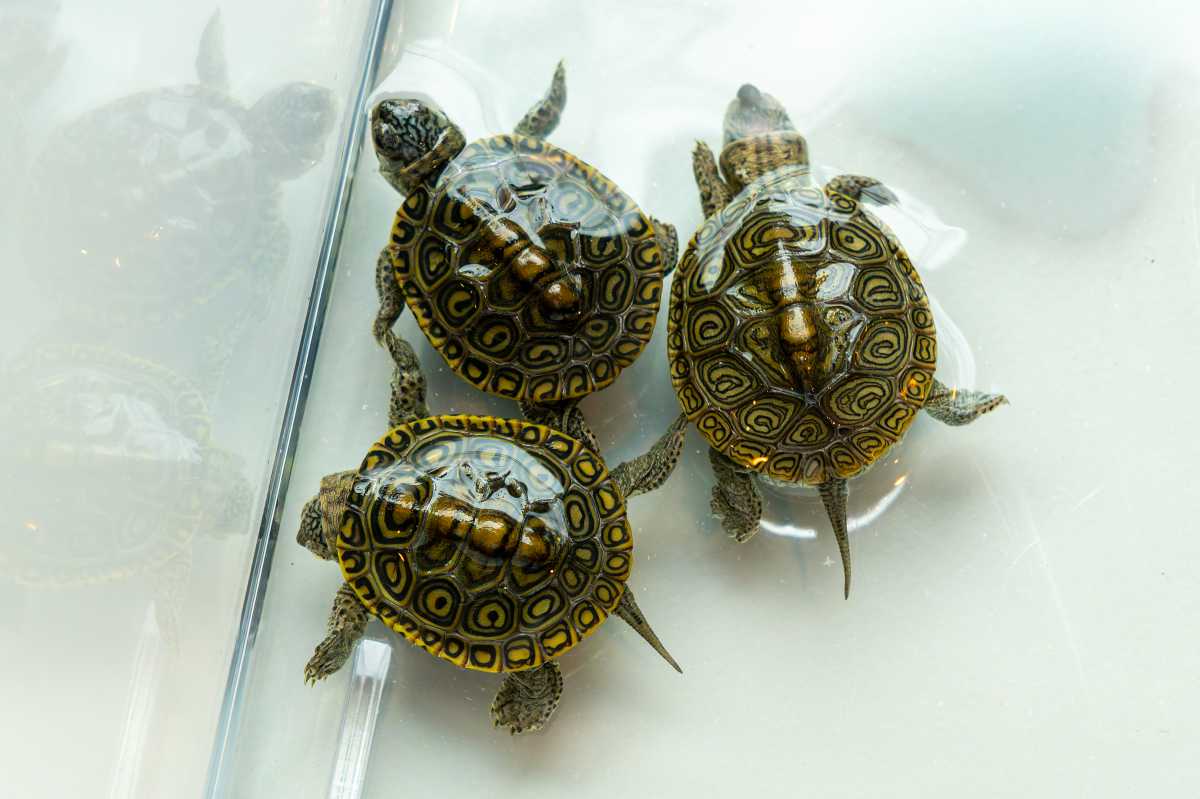
Dozens of tiny turtles got their first touch of the wild Tuesday as Staten Island conservationists released native diamondback terrapins into the creeks of Fresh Kills Park as part of a head-start program aimed at giving the vulnerable species a better chance at survival.
The Fresh Kills Park Alliance, in cooperation with NYC Parks, the Staten Island Zoo and city and state agencies, gathered to re-release over 45 adorably tiny diamondback terrapins — all about the size of a silver dollar — into the West Shore park’s local waters.
It was quite the shell-abration, as humans of all ages, including student volunteers from local schools and grown-up turtle experts, quietly cheered on the terrapins as they made a beeline from their aquarium tanks to the wild waters of Fresh Kills.
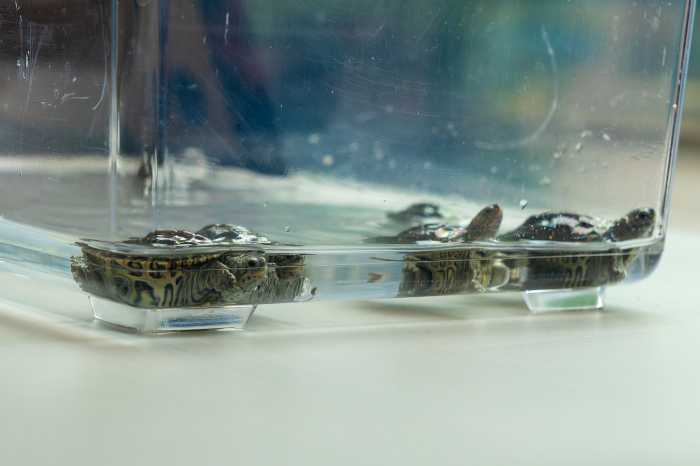 The terrapins preparing for their big trip back to Freshkills Park.Photo by Christian Gueits
“It was an exceptional year. It wasn’t just a bunch of park enthusiasts taking these turtles and putting them back into the main creek, but it was so many students that we had from our environmental leadership here in Staten Island,” said Mark Murphy, president of the Fresh Kills Park Alliance. “The kids from St. Clare’s School and the kids from the New York Center for Interpersonal Development program all came out to help.”
The terrapins came from eggs laid in the park in June and July of this year. After incubating at the zoo as part of its Staten Island Terrapin Project, the hatchlings emerged during the first week of September before Tuesday’s release.
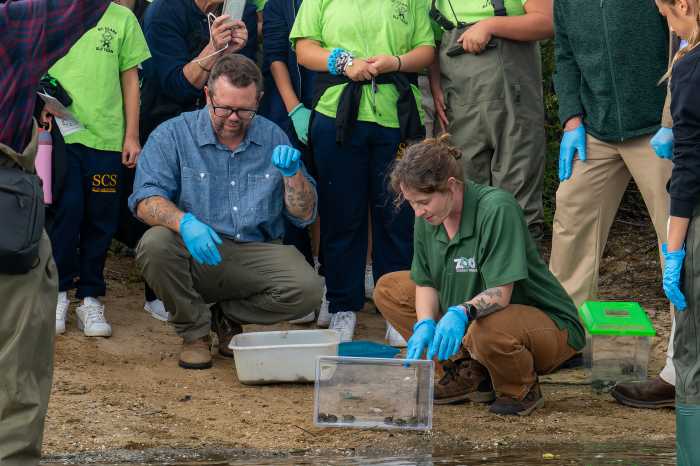 Heading toward the water.Photo by Christian Gueits
The program is especially important at Freshkills Park, where an abundance of predators has been a key factor in the terrapin’s decline.
“We at Fresh Kills Park, which is the brand new piece of land that we are developing out here on the old Fresh Kills Landfill, is an area where the turtles will lay eggs, but they will be 100% predated — or eaten — by predators and will never be able to make it back into the wild,” Murphy said.
Murphy explained that foxes and raccoons are particularly problematic because they have few natural predators in the area.
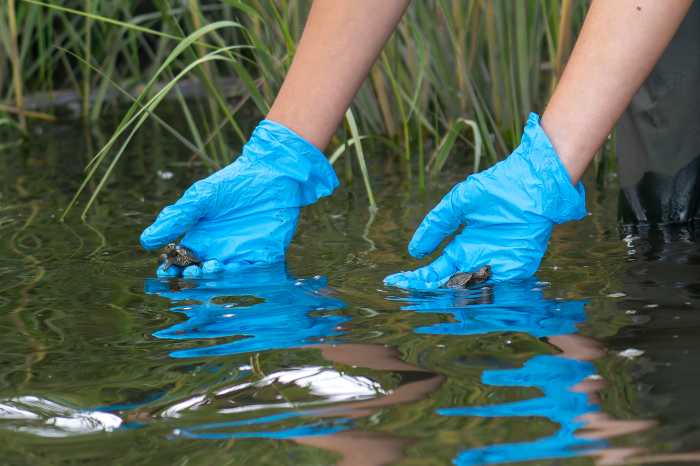 Getting a little help entering the water.Photo by Christian Gueits
“They are wiping out entire species,” he said. “That’s why the diamondback terrapin is a species of concern.”
To give the turtles a fighting chance, conservationists monitor where mom terrapins lay their eggs and protect the nests with chicken wire.
“Once we identify where a diamondback terrapin mother lays her eggs, we place an exclosure on it,” Murphy explained. “The chicken wire exclosure goes on top until the following day when the zoo team can get out here, dig it up and bring it back to the zoo’s veterinary team, where they will incubate them in a specialized environment under lights, in special machines, and make sure that they survive. We’re giving them every chance to survive.”
Once the turtles reach the release stage, they are returned to the water to join other larger, more experienced turtles who know a thing or two about living in nature.
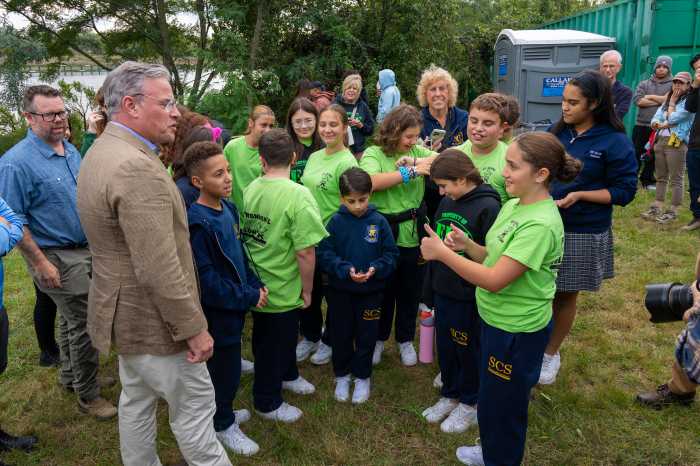 St. Clare’s School students assisted in the program.Photo by Christian Gueits
“The bigger terrapin is a robust swimmer,” Murphy said. “But the nests themselves, when they’re eggs, the fox will come in and just rip them up and eat them right then and there.”
The goal of the ongoing head-start program is to prevent that, thus giving the terrapins enough early protection to eventually survive on their own.
“They are protected and camouflaged and will be able to survive and thrive,” Murphy said.