
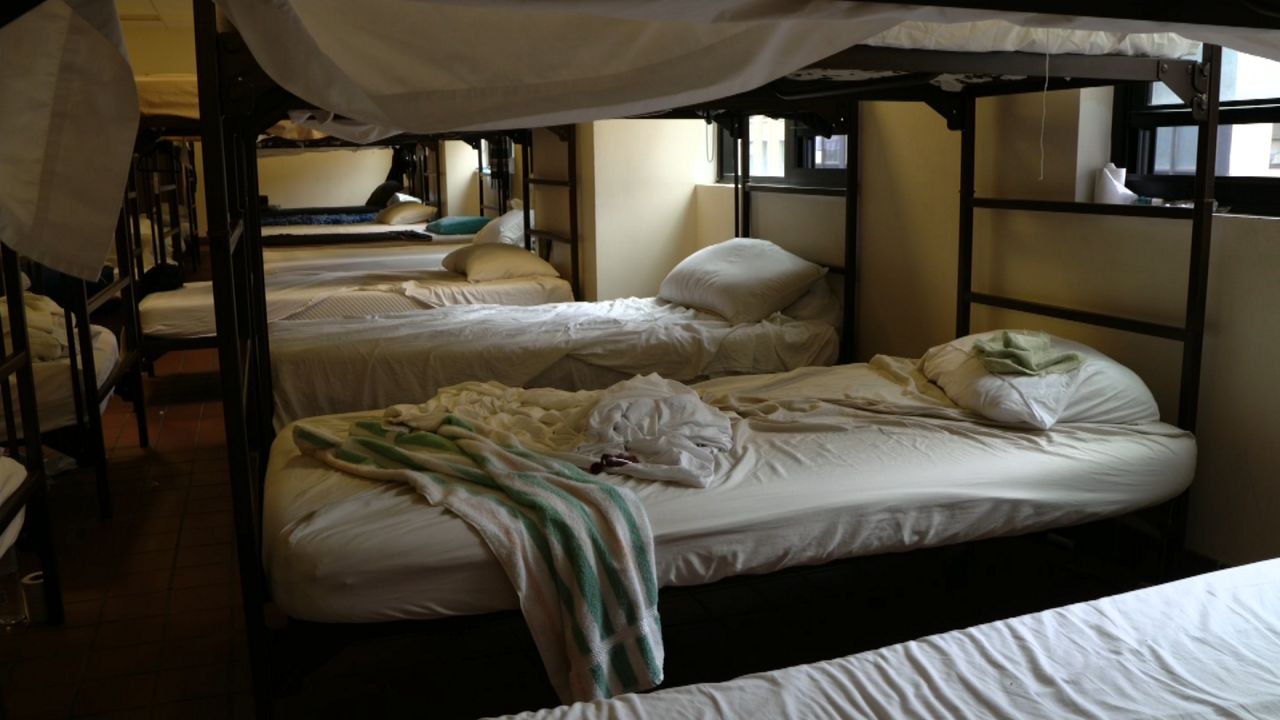
Organizations working to address homelessness in New York say uncertainty surrounding federal funding and barriers within the state’s system are making it increasingly difficult to provide supportive housing and other services to people who are in need.
Providers and outreach organizations do much of the work on the ground, but government resources remain a key part of those efforts. That has become increasingly complicated as organizations navigate changes at the federal level while communities across New York contend with housing shortages, combatting mental illness and other challenges.
“Agencies are unsure if they will have the funding to continue programs they have run for upwards of 10 years,” said Denise Galloway, chief program officer for CARES of NY, an Albany-based organization dedicated to ending homelessness.
Galloway said a recent restructuring of federal grant funding for housing assistance has created additional uncertainty. The changes shift available funding away from permanent housing assistance and toward temporary housing and supportive services.
The grant process was also held up in court, leaving organizations with little time to complete their applications before the end of the month.
“Permanent supportive housing works. It has worked for many years,” Galloway said.
CARES of NY says permanent supportive housing can provide stability for people with disabilities who are unable to work. The organization argues that moving away from that model toward temporary housing could set efforts to address homelessness back by 30 years.
“It means that folks who have been stably housed and really doing very, very well in our opportunities are now going to be reentering a homeless system that is already flooded,” Galloway said.
While organizations contend with financial uncertainty at the federal level, some state lawmakers say structural barriers within New York’s system can also make it more difficult to effectively use the resources already available.
“We’ve created a system that’s so complicated and so convoluted that many individuals fall through the cracks,” said Assemblymember Tony Simone, a Manhattan Democrat.
Following a recent stabbing in Times Square, Simone introduced statewide legislation alongside State Sen. Eric Bottcher, which would allow municipalities in New York to establish geographically based “neighborhood street teams”, comprised of homeless outreach providers, health and behavioral health professionals, housing providers and government agencies intended to provide individualized care and reduce silos and duplicative treatment through improved information sharing.
“People are not working together, they’re not connecting the dots, and in the end even though it’s only a few, many of these terrible incidents could have been prevented if information was shared,” Simone said.
The bill would allow these teams to share information needed to identify and assess the needs of an individual and provide continuity across providers. While he stressed that only a small percentage of individuals who find themselves struggling with mental illness and experiencing homelessness become violent, he feels that a better system could help many of those individuals before they reach such a point.
Simone told Spectrum News 1 the bill would allow organizations to track an individual’s progress and provide the interventions needed to ensure they receive the supportive housing or medical care that is needed.
Information could be exchanged electronically, by phone, in person or through a secure platform accessible to members of the team, though Simone acknowledged that some advocates have raised privacy concerns and questioned how such a law could work alongside HIPAA requirements.
The system would operate at the city level in New York City and at the county level elsewhere in the state.
State Sen. Pat Fahy, an Albany Democrat, said additional work is also needed to break down barriers to building affordable housing as tariffs and other economic pressures drive up costs.
“We as a state are spending billions to get the unhoused in housing, but with the increased prices, we are struggling to keep up,” Fahy said.