
by Michelle Mullen
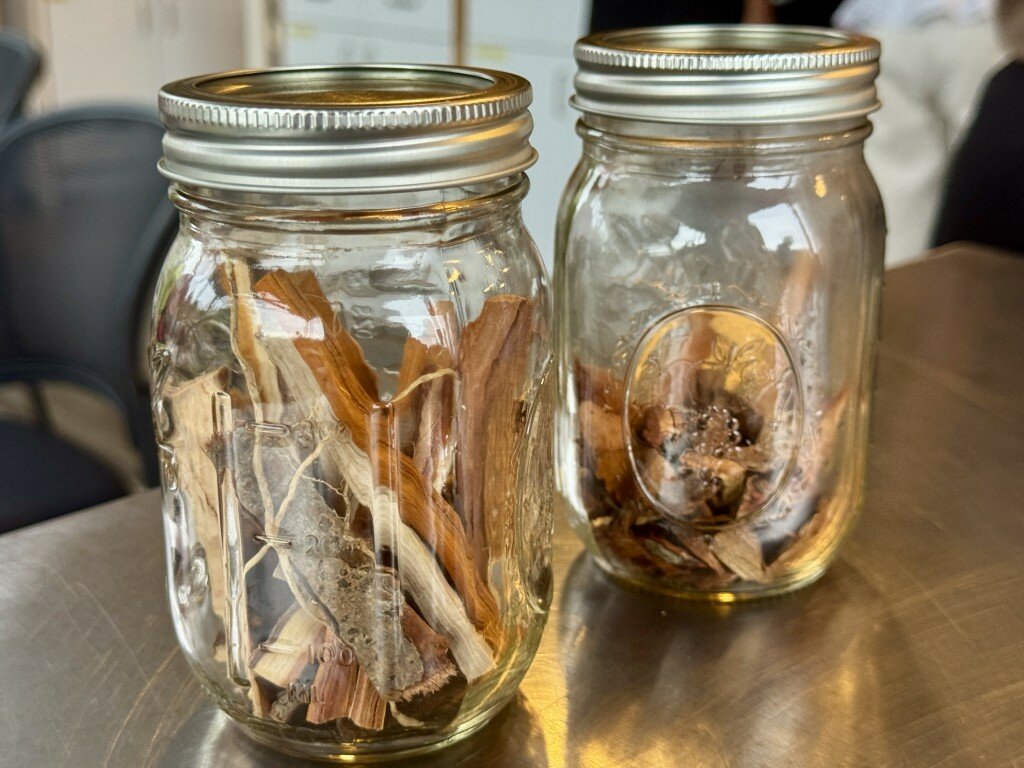
Mason jars filled with bark and herbs lined tables at the New York Botanical Garden’s Edible Academy on Sept. 17, as participants mixed up a traditional Caribbean concoction — Mamajuana, the spiced rum-and-wine infusion often called the national drink of the Dominican Republic.
The hands-on session followed a panel discussion tied to the new book “Caribbean Cocktails,” part of an event called “Botanicals in Caribbean Cocktails.” The book’s co-authors, chef Nelson German and culinary anthropologist Andréa Lawson Gray, joined Arvolyn Hill, the garden’s associate director for the Everett Children’s Adventure Garden, for a discussion on how Caribbean ingredients carry histories of migration, colonialism and family.
The panelists then guided attendees through creating their own batches.
German, an Afro-Dominican chef raised in New York City who now operates restaurants in California’s Bay Area, said reconnecting with his heritage changed the direction of his cooking.
“I am Afro-Latino,” he said. “And I’m very proud to mention the Afro part. I think a lot of our people — at least our elders in the past — weren’t, but we’re now changing that narrative and really embracing our African roots more and more.”
After years cooking professionally, German said moving away from New York left him missing the foods, music and gatherings he associated with home.
He began cooking more Dominican food, organized events at his restaurants and eventually brought that same instinct to cocktails. His book pairs 20 food recipes with more than 40 drink recipes, including non-alcoholic versions, organized by flavor profile rather than spirit.
Researching for the book meant looking past recipes to the histories behind them, said Lawson Gray, a chef, writer and James Beard Award-winning cookbook author.
Rum became a key entry point, she said, and different islands developed distinct traditions around the spirit shaped by the people who arrived there and the colonial systems that took hold. She said food and drink offer an accessible way to preserve histories that might otherwise fade from daily life.
“If you lose the recipes, you lose a piece of your culture,” Lawson Gray said.
Hill steered the conversation toward the botanicals themselves — cinnamon, cloves, allspice, coffee, chocolate and plantains, all ingredients familiar in Caribbean kitchens, the chefs said.
Mamajuana offered the clearest example of where plants, tradition and drinking culture converged.
After the panel, attendees received jars packed with dried botanicals and followed German through the process of adding rum, red wine and honey. The recipe distributed at the event called for a final mixture of roughly 50 percent Dominican dark rum, 40 percent red wine and 10 percent honey, with spices such as cinnamon, cloves or star anise added to taste.
German described the drink’s origins as medicinal, predating its association with rum and dating to before the rule of Rafael Trujillo, the former Dominican dictator.
DePrator, a Riverdale resident and longtime botanical garden member, said assembling the drink herself was the most memorable part of the experience.
“The mixing, actually, was my favorite part,” she said. “It was because of the individual ingredients with the different herbs and everything, and then to put it all together and realize the impact.”
After tasting an already-finished batch, she said it seemed like something made for a cold winter evening.
“It tastes like the warm chest warmer when you come in out of the street and you’re freezing,” she said. “You get a hit really fast that warms your whole body. “
RoseMarie Pasmantier, a Bronx resident, garden member and physician, said Mamajuana’s history extends beyond the bar for her, and that she was drawn less to the alcohol than to the roots and herbs submerged inside it.
“I was kind of more interested in learning a little bit about how they figured out the different herbs and the different ailments that the herbs were used for,” she said.
The jars assembled that afternoon were not meant to be opened right away. German told attendees to store them in a cool, dark place and let the mixture age for at least six months. Samples of already-steeped Mamajuana gave a preview of what might eventually emerge from the bark and roots now sitting in participants’ own kitchens.
Keywords
New York Botanical Garden,
NYBG,
Edible Academy,
Botanicals in Caribbean Cocktails,
Caribbean Cocktails,
Mamajuana,
Dominican Republic,
Dominican drink,
Caribbean cocktails,
Caribbean cuisine,
Caribbean culture,
Caribbean food history,
Nelson German,
Andréa Lawson Gray,
Arvolyn Hill,
Afro-Dominican chef,
culinary anthropology,
Dominican heritage,
Caribbean botanicals,
rum,
herbs and spices,
cinnamon,
cloves,
allspice,
coffee,
chocolate,
plantains,
Riverdale,
Bronx,
botanical garden events,
Caribbean recipes,
cultural preservation,
Mamajuana workshop