
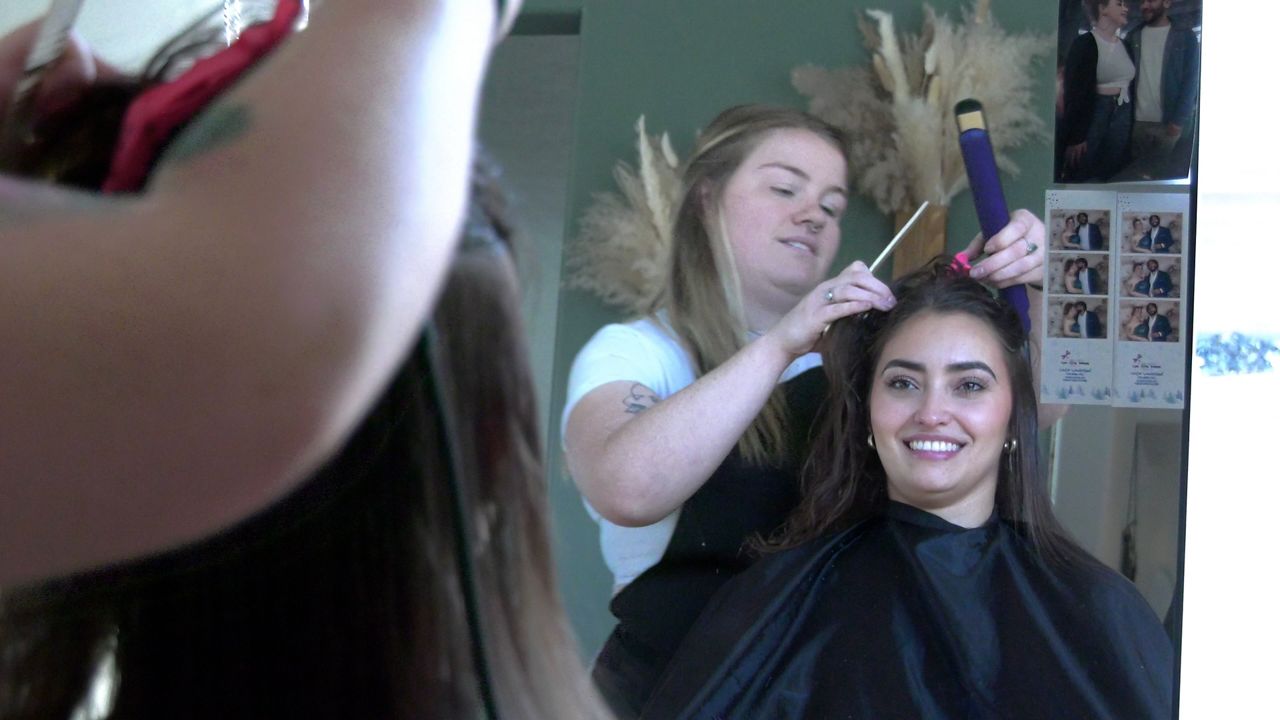
The lotions, fragrances, hair products and cosmetics people use as part of everyday routines were the focus of a University at Albany forum Friday on chemical exposure, public health and health disparities.
Researchers, community members and state health leaders gathered for UAlbany’s annual Forum on Health Disparities, which this year focused on consumer product chemicals and the potential effects of repeated exposure.
A recent study published in the journal Environment & Health analyzed 113 personal care and cleaning products. Researchers found 98% contained at least one chemical not listed on the label, while 85% contained at least one unlabeled chemical with known or suspected health hazards. The products tested included shampoos, soaps, sunscreens, baby lotions and other commonly used items.
For salon owner Kristen Vesely, the issue became personal.
Vesely, who owns Pure Elements, an organic salon, said she began experiencing health concerns while working in the industry and was prescribed an inhaler.
“I started having health issues, and my doctor had me on an inhaler,” Vesely said. “And I didn’t think it was right to have to use an inhaler every day to go to work.”
Vesely said she shifted her salon to products she describes as free of sulfates, parabens and ammonia. She also encourages clients to ask questions about what products are being used during their appointments.
“When you walk in the door, you don’t get hit with that harsh chemical smell,” Vesely said.
The issue can be especially relevant for salon workers, who may handle hair color, treatments, sprays and other products repeatedly throughout a workday.
Tamarra James-Todd, a professor of environmental and reproductive epidemiology at the Harvard T.H. Chan School of Public Health, said consumers may not realize how many chemical exposures can come from products used routinely.
“The average consumer doesn’t know that the many ingredients that are in products translates to well over 100 chemical exposures every day,” James-Todd said.
James-Todd said the amount and type of exposure can vary depending on the products a person uses and how frequently they use them. She pointed to products such as lotions and fragrances that may be applied to the skin or inhaled daily.
State Sen. Lea Webb, a sponsor of the proposed Beauty Justice Act, said the measure would restrict certain chemicals in beauty products and create a list of restricted substances with known health risks.
“Every single day, people across New York are unaware that the personal care products they use contain harmful chemicals,” Webb said in a statement. “My Beauty Justice Act will restrict chemicals in beauty products and establish a list of restricted substances with known health risks so that people are more informed about the products they are using.”
The bill passed the New York State Senate but did not pass the Assembly, meaning it has not become law.
James-Todd said the message for consumers is not to abandon personal care or self-care routines altogether.
“Reduction instead of elimination is really the message that we should be providing to people,” she said.
Experts encouraged New Yorkers to focus on manageable changes, such as reducing use of fragranced products, asking questions about ingredients and making one informed product choice at a time.