
September offers four possible poster boys. Two are stars always to be remembered by the “Brooklyn Dodgers baseball is my life” fan club. They are Johnny Podres and Duke Snider. Every ’50s and ‘60s Brooklyn fan can rattle off highlights of these two ballplayers’ careers. That is why I chose not to feature them this month, even though I have both of their autographed pictures looking down on me as I write this. The third was Dixie Walker, a good ball player but an ardent segregationist. Not for me.
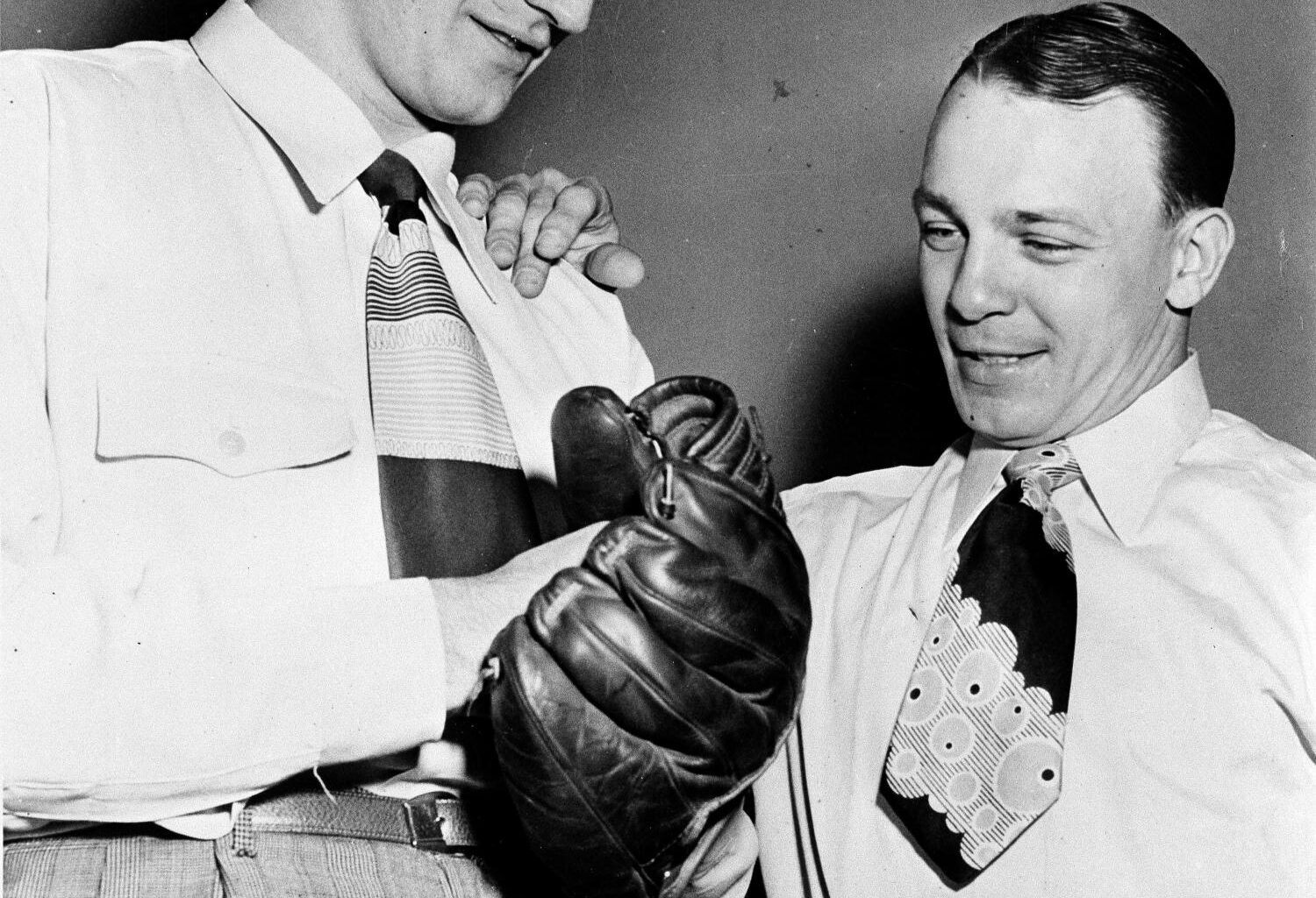
The other ball player is far more interesting. He was not known as a gentleman or a nice guy on the field or in the dugout. He played hardscrabble and playground baseball but played it well. His name was Eddie Stanky.
Stanky, who played for Brooklyn for four seasons beginning in 1947 after being traded by the Cubs, brought moxie as much as skill to the diamond. In fact, Dodgers general manager Branch Rickey said that Stanky couldn’t hit, field, or throw, but he was a good ball player. How? “He could beat you many different ways.” I found a similar quote attributed to Stanky’s manager, Leo Durocher, that ended, “He just knew how to win.”
In a radio interview found on YouTube with Phil Rizzuto, we listen to one of the all-time good guys talking about one of the all-time bad guys. In a previous interview, Stanky had called Rizzuto a dumb ball player in part because of a play in which Rizzuto allowed Stanky, about to be tagged out, to slide into second and kick the throw out of Rizzuto’s glove.
Rizzuto, calling Stanky a dirty ball player, cited these instances: Stanky would slide into second with two hands full of dirt to throw into the eyes of the covering infielder. Sometimes he’d grab the pants of the fielder as he slid into the bag, turning him so that the throw to first, originally on target, ended up in right field. Rizzuto remembers Stanky tagging him so hard right between the eyes that Rizzuto ended up with two shiners. That was one of Stanky’s best skills — intimidation. As a kid, I remember Stanky being known for sliding spikes high into a base. In those days, metal spikes left nasty lacerations wherever they hit. If Stanky was on first, you knew that both the second baseman and shortstop were thinking about what he’d do in an attempted steal or force play at second. There was a reason he was nicknamed, “The Brat.”
Stanky was not a traditional or powerful hitter, but he was an elite on-base machine. He posted a modest career batting average of .268 and hit only 29 home runs, yet his extraordinary discipline earned him a stellar .410 career on-base percentage. Baseball Reference said Stanky prioritized getting on base any way that he could. He’d foul off balls ‘til the cows came home and the pitcher got frustrated and weary. He’d happily not get out of the way of an inside pitch because getting hit meant getting on. He had a great eye, leading the National League three times in walks. To him, a walk was the same as a hit. In the old days, he was just what a manager wanted in a leadoff man.
Yet nasty as he was, he was a stellar teammate. He is oft-remembered for an event that happened the year Jackie Robinson broke into the majors. It was a game against the Phillies. The dugout’s verbal abuse of Robinson was reaching a fever pitch when Stanky, who was not known for favoring integration, stepped out of the Dodgers’ dugout, onto the steps, and called out the Phillies: “Why don’t you pick on someone who can defend himself?” With that, the Dodgers’ bench woke up; player after player joined Stanky’s chorus. It was a moment for the baseball books and particularly courageous because Philadelphia was Stanky’s hometown.
Mind you, this was not just a bad boy with a bat. Stanky was a four-time All-Star. He had 1,154 hits out of 4,301 plate appearances. He scored 811 times and knocked in 364 runs. The Baseball Almanac goes on to point out that his OPS was .758, and while he managed only 29 career home runs, he had a commendable slugging percentage of .348.
During his 10-year career with the Cubs, Braves, Dodgers, Giants and Cardinals, Stanky appeared in three World Series. He was a baseball man through and through. He left the field as a player but managed some in the minors, did a year with Cleveland as a coach, and then moved to the front office. He was director of player development for the Cardinals from ’59-64 and similarly for the Mets, but only for one year. But his heart was on the field, and when a friend encouraged him to take the managing job at the University of South Alabama, he grabbed it. This brought stability to his career, born of a love of the game and a love of place. Except for his time with the Dodgers, he hadn’t played more than one season for any team. Mobile and its kids grabbed his heart. He stayed ‘til the end of his time: 14 seasons.
It was 1968; it was a mediocre team. Under his leadership, the team, known as the Jaguars, was transformed into a Sun Belt team to be reckoned with. Over 14 seasons, they posted a head-spinning 490-195 record and appeared in five NCAA Regionals. They chalked up 13 conference championships, 11 Sun Belt Tournament titles, and 13 regular-season conference championships. A remarkable aspect of all of this is that Stankey adapted his nasty, fiery “brat” persona into one that was still full of vinegar but successful with college youngsters. In the end, he had guided them from a team that no one outside Mobile, Alabama, knew or cared much about into a program that was known on the national stage.
And this was done under the pressure of expectations. According to the University of South Alabama Stadium Journal, Mobile was a baseball town. Hall of Famers Hank Aaron, Satchel Paige, Willie McCovey, Billy William and Ozzie Smith were Port City ballplayers. That’s more Hall of Famers, writer Matt Colville says, than any other city in the world besides New York and Los Angeles. So, it is no wonder that today, because of his success, the Port City’s University of South Alabama Baseball Stadium is named “Stanky Stadium.”
The hold that Mobile had on Stanky was almost mystical. One moment in time says it all. The lure of big crowds and big money led him to accept the manager’s position with the Texas Rangers. He resigned after one game. Mobile was his home. It was where he felt comfortable; it is where he returned.
His last stop was Fairhope, Alabama, a town known for being long-ago kind of charming, quiet, friendly and having stunning coastal sunsets. Eddie Stankey’s sun set there at age 82.