
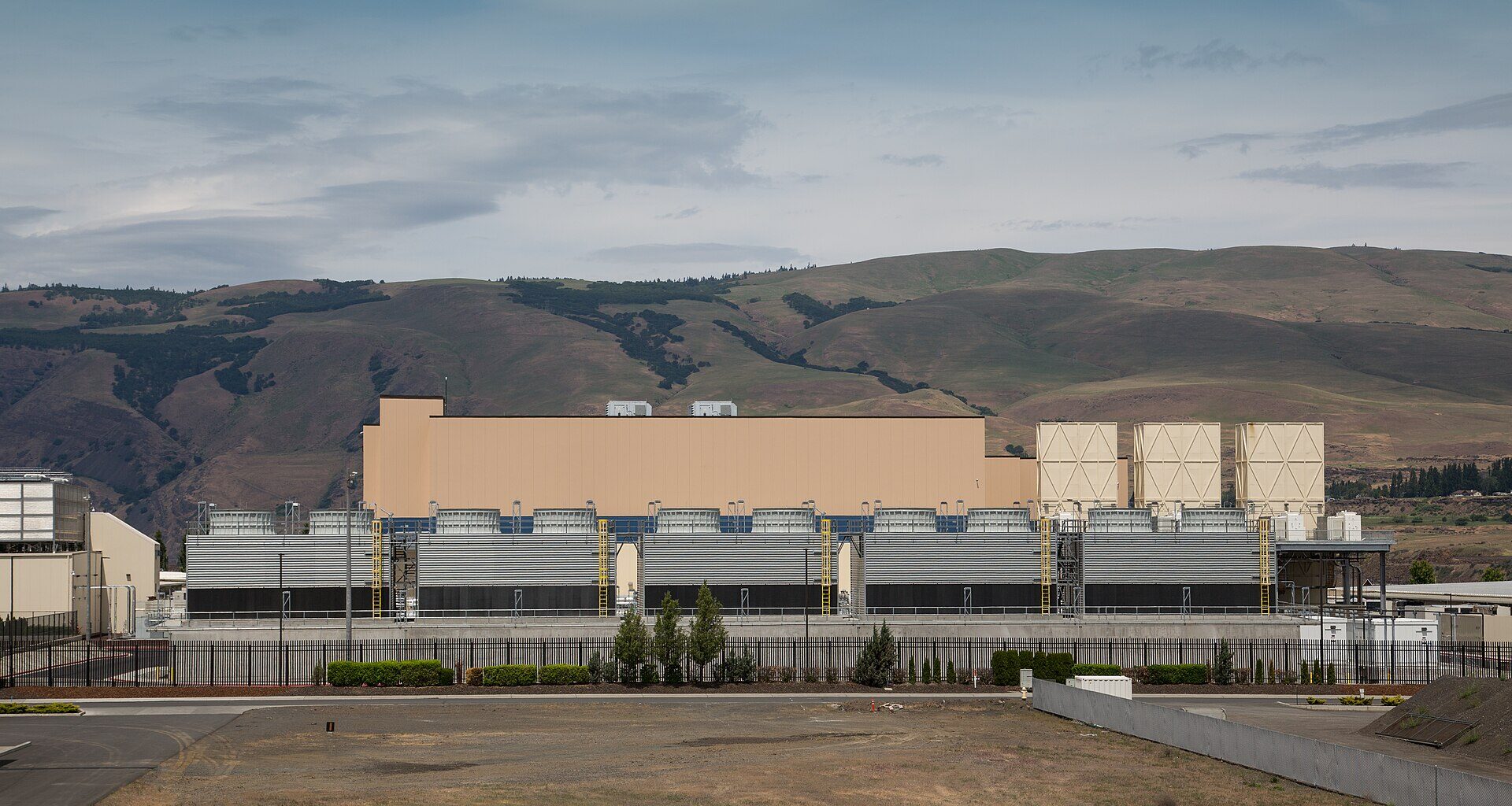
The Adirondack Research Consortium hosted a community forum on Sept. 16 in Glens Falls with experts discussing the impact of AI and data center energy usage on rural areas. Energy professionals shared how data centers create positive and negative economic impacts along with risks to the environment as well as the state’s energy grid.
The presenters and audience included members of state agencies, universities, local nonprofits, data science, the energy sector, health care, education, the arts and more, according to Sunita Halasz, board member of the Adirondack Research Consortium. Due to the divisive topic, Halasz said some presenters opted out.
“Two speakers, one from the public sector and one from the private sector, were requested to step back and not be involved with the event because data centers have become such a sensitive topic,” Halasz said. “Things in the AI and data center realm are changing on a weekly and even daily basis, and the more that local people can talk about it and get answers to their questions in a low-stakes gathering, the better it is for everyone.”
A survey at the entrance to the forum asked attendees what they think about AI and data centers. Nearly all attendees—30—responded that they’re worried about the societal and environmental issues associated with AI. Zero attendees said they were not worried about AI.
Data center concerns and impact
Gov. Kathy Hochul signed a one-year moratorium on data centers in New York state in July, making it the first to adopt such measures. Nevertheless, amidst pushback on battery storage systems, concerns about additions to the state’s grid and developing in rural areas remain present among Adirondackers.
Mark Watson, who retired from the New York State Energy Research and Development Authority (NYSERDA) after serving as the program manager of the environmental research and energy resources programs, presented an overview of how data centers impact communities throughout the country.
“Many developers enter nondisclosure agreements with local officials, which can limit public access to information about a project’s scale, resource needs and potential impacts,” Watson said. “At the federal level, new permitting policies have accelerated approvals for large data center projects, shortening environmental review timelines and reducing opportunities for local input.”
According to Watson, large data centers use as much power as 100,000 homes. Data centers could account for 12% of all U.S. energy production by 2028.
Mid-sized data centers can use up to 300,000 gallons of water per day, Watson said, while large facilities can use as much as 5 million gallons a day. Additionally, he said two-thirds of all data centers built or in development since 2022 are located in water-suppressed areas, places like southern Arizona, the Colorado River Basin and Texas.
Social, environmental and economic implications
Data centers are also linked to climate and air pollution, Watson said, due to the utilization of gas generators for daily operations and diesel for back-up power. He said some facilities have adopted battery storage as an alternative to fossil fuel generators.
Watson added that data centers disproportionately impact marginalized populations, with a national review of 700 data centers across the country finding that roughly 50% were located within communities with above average air and water pollution as well as social vulnerability indicators such as poverty and low education levels.
“Data center development can create real economic opportunities,” Watson said. “Their construction creates hundreds of well-paying, though temporary, jobs, for technicians, electricians and other building trade workers.”
However, once data centers are completed, Watson said full-time positions become fairly limited. While data centers can generate revenue for local areas through property, sales and use taxes, he said many local governments offer tax incentives to attract data center developments, meaning the actual gains can be far smaller.
In 2024, the average data center site covered 224 acres, roughly the size of 450 football fields. Hyper-scale facilities require more land, however, which Watson said could require up to 1,000 acres, driving developments toward rural areas.
Data centers’ impact on the New York State energy grid
Kevin Lanahan serves as senior vice president of external affairs and corporate communications at New York Independent System Operator (NYISO), a not-for-profit corporation responsible for operating the electricity grid throughout the state. He said New York’s energy reserves are declining due to the impact of changing winter conditions, the failure of overworked, existing generators, the electrification of buildings and transportation and the high demands of AI computing.
Lanahan said many of the state’s generators are 50-70 years old, the oldest energy generation units in the nation, resulting in breakdowns. He said every time New York State closes one gigawatt of fossil fuel generation, it must be replaced with three gigawatts of renewable energy generation to make up for the loss. While some coal and gas generators have been retired, renewable energy sources have not been created to take their place, resulting in statewide energy grid deficits.
RELATED READING: Inside New York’s energy transition
In the last five years, NYISO has approved roughly 14,500 megawatts of almost exclusively renewable energy generation. However, of that amount, just over 4,500 megawatts have been connected.
Lanahan said the disconnect comes from permitting headwinds, federal policies which hinder the citing and financing of renewable energy projects and high costs of building in New York State, causing developers to choose to build elsewhere.
“We want to see more utility-scaled solar, where it makes sense, and battery storage is part of the equation,” Lanahan said. “If we add commensurate amounts of battery storage with wind and solar, they can fill up with that renewable, but that’s going to be mostly during the day. Otherwise, battery storage will look like an additional load on the system during night hours.”
Lanahan said seeing offshore wind projects canceled by the Trump Administration was disappointing from a grid and resource perspective. He said offshore wind is very predictable and can provide a lot of power, with storage to supplement, helping to keep costs down.
Watson asked Lanahan about the likelihood of developers pursuing data center creation in New York State, especially in rural areas such as the Adirondacks.
“The amount of upgrades necessary to connect these facilities, to connect them safely—the costs seem to be expensive,” Lanahan said. “But we haven’t seen people pulling out of our queue. In terms of the governor’s executive order, we haven’t seen any type of slowdown.”