
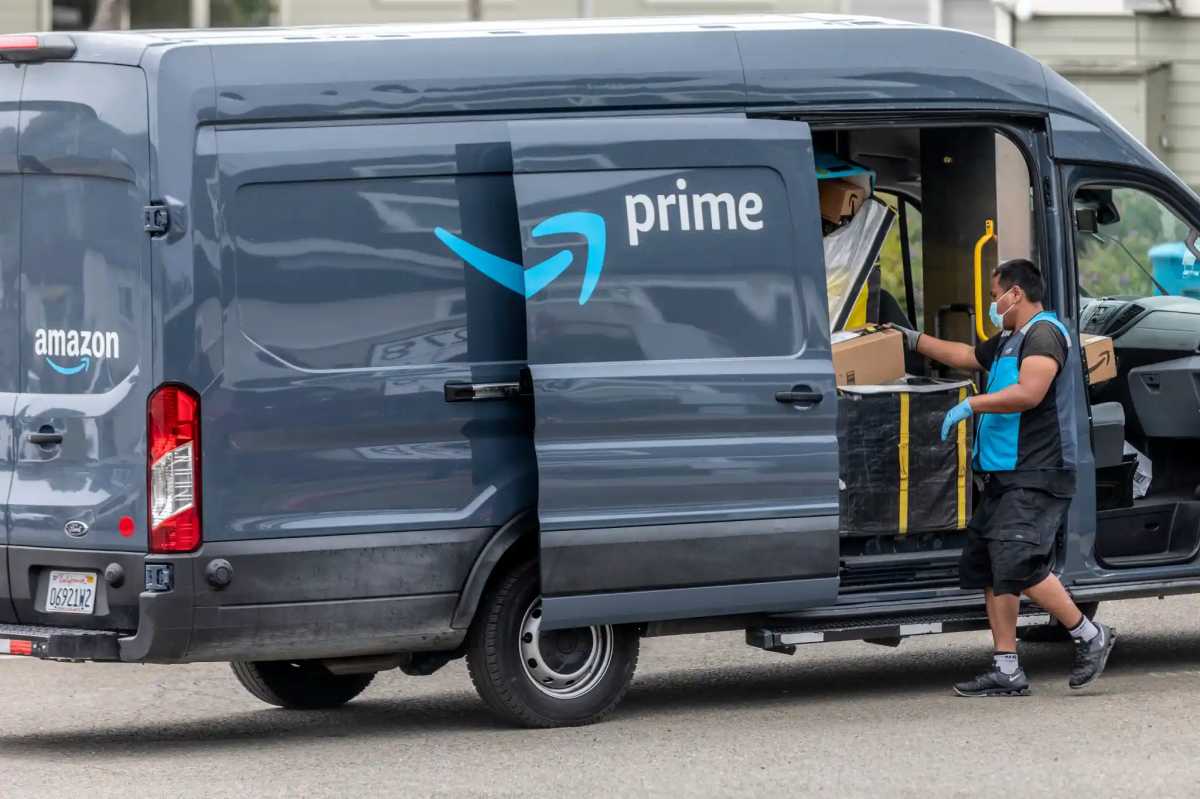
NYC politicians and advocacy groups are accusing Amazon’s delivery system of making NYC streets unsafe while calling for the passage of the Delivery Protection Act on Tuesday.
The Alliance for a Greater New York (ALIGN), a coalition of climate, labor and community groups, released the new Amazon Delivers Danger Map, tracking what it describes as the “rampant street safety hazards” of the online retailer’s delivery operations.
According to the report, ALIGN reviewed NYC citation records tied to 637 license plates associated with Amazon-related companies from July 2021 to June 2025, finding a staggering 14,210 street-safety violations citywide, across all the boroughs.
Notably, over 2,000 Amazon-related vehicles were involved in blocking emergency-response access (such as blocking a fire hydrant); drivers of another 2,162 delivery vehicles were given citations for speeding in school zones.
“Amazon is notorious for their terrible working conditions, but New Yorkers deserve to know that their lives — and their kids’ lives — are in danger, too,” said Daisy Chung, ALIGN campaigns director. “Amazon’s business model relies on speed, not safety, and this map is a wake-up call that our communities have become a casualty.”
ALIGN’s data map also shows that nearly 4,000 citations were given out for Amazon vehicles blocking bus lanes or other public-transit access. The review comes as the MTA ramps up automated camera enforcement on bus routes across the city to improve service, issuing fines to vehicles that improperly use busways and bus lanes or block bus stops.
Nearly 2,700 citations were given for obstructing curb access; 2,366 citations involved traffic and intersection safety; and 1,340 for blocking pedestrian or cyclist space.
Amazon says it works to deliver safely
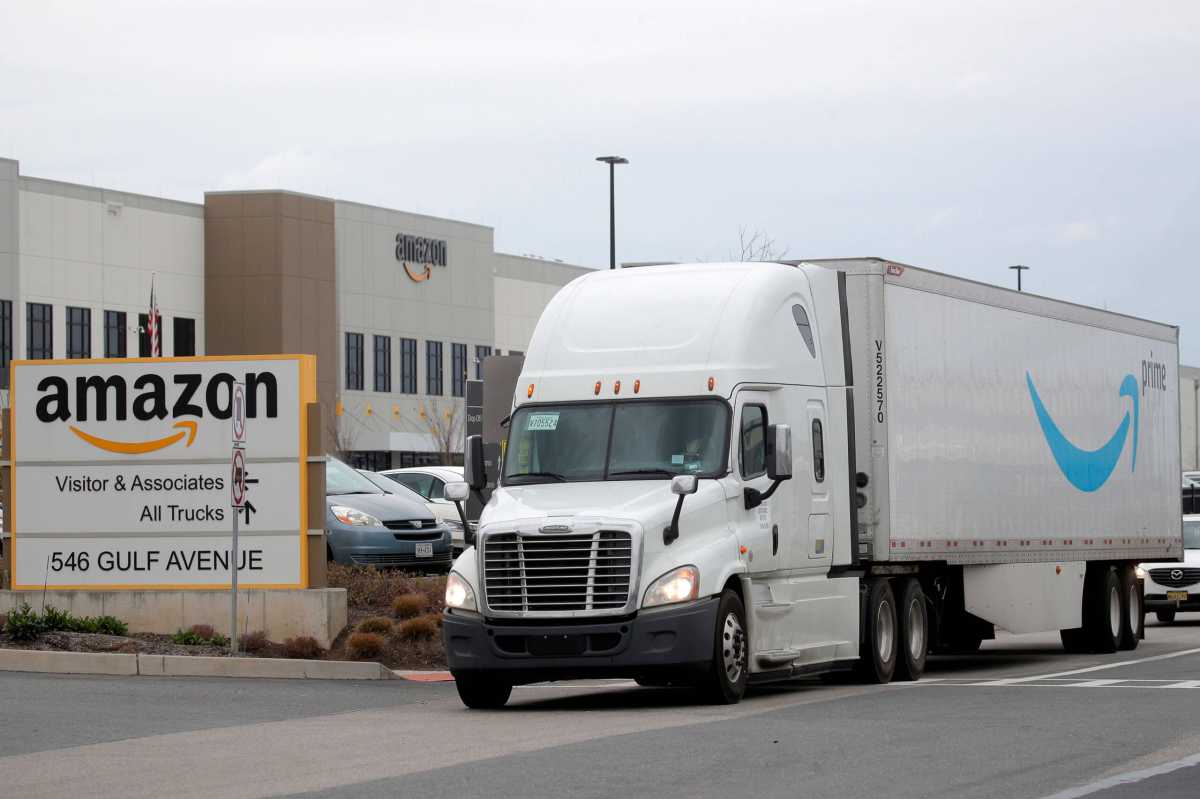 An Amazon truck exits the company’s JFK8 distribution center in Staten Island, Nov. 25, 2020.REUTERS/Brendan McDermid./File Photo
Leigh Anne Gullett, an Amazon spokesperson, said delivery service partners are responsible for following traffic laws.
“Safe and responsible delivery practices are always a top priority,” she said. “Delivery service partners are local, independent businesses, responsible for their own operations and for following the traffic and parking laws in the communities where they operate, including addressing any citations.”
But she added that Amazon also works with DSPs to promote driver safety and alternative delivery methods.
“We work closely with them to promote safe delivery practices, from hands-on driver training to in-vehicle safety technology, and we continue to invest in solutions like our e-cargo bike and on-foot delivery programs that reduce the need for vehicles on city streets and help us be a good neighbor in the communities we serve,” she said.
ALIGN, which made the new map with support from Teamsters 804, said package deliveries have surged in NYC in recent years.
According to the NYC Comptroller’s office, package deliveries in the Big Apple rose from 1.8 million daily in 2019 to 2.5 million in 2024. Many of those deliveries are transacted through Amazon, owned by multi-billionaire Jeff Bezos, the world’s second-richest person, according to Forbes.
The comptroller’s data also shows that in Maspeth, Queens, crashes near two major FedEx and Amazon warehouses rose by 53% and 48%, respectively. A cluster of four East New York facilities also saw a sharp increase in crashes within a half-mile radius, per the comptroller’s report.
Use of third-party contractors
Amazon has made public that it relies on third-party delivery service partners (DSPs), which employ drivers who make last-mile deliveries on the company’s behalf. The DSP program is where independent entrepreneurs launch their own package delivery business with Amazon. (Last-mile generally refers to the final leg of a package’s journey from a nearby delivery facility to the customer’s door.)
In fact, the company partners with more than 40 locally owned and operated DSPs in the city who have thousands of employees who deliver to Amazon customers across the five boroughs.
Amazon, in the meantime, is not directly responsible for its drivers or any damages caused.
But ALIGN claims Amazon is in a “race” to make deliveries fast and cheap, putting pressure on workers that could also lead to dangerous conditions for the general public.
“Amazon’s business model is built on the routine violation of traffic laws,” Matt Multari, a former Amazon delivery driver, explained. “Amazon surveils you and tracks you to the minute, forcing you to go faster. You don’t have time to look for parking. If Amazon’s AI notices that you are going slower than what they expect, you can get penalized, or eventually terminated.”
The Delivery Protection Act
To regulate Amazon’s delivery operations and help keep streets safe, the NYC Council is considering the Delivery Protection Act. The bill would require last-mile delivery warehouses to obtain a license from the City and directly employ workers over whom they exercise control.
NYC Public Advocate Jumaane Williams applauded ALIGN’s new data map and said passing the City Council’s Delivery Protection Act would help make streets safer while protecting workers.
“The results of a reckless focus on speed over safety are clear on this map, and Amazon should be held responsible for the consequences of their business model. Passing the Delivery Protection Act will prioritize the well-being of all New Yorkers– both delivery workers and the public – over pure profit.”
Council Member Tiffany Caban (D-Queens), a member of the Democratic Socialists of America (DSA), sponsored the bill.
“Companies like Amazon are using subcontractors to shield themselves from their responsibility to keep workers and New Yorkers writ large safe,” she said. “That’s why I’m proud to be the lead sponsor of the Delivery Protection Act, which would create a licensing system for last-mile deliveries, force companies to take responsibility for their drivers, protect against unfair retaliation and firing of workers, and require real training for workers.”
Amazon has repeatedly said there are “misconceptions” around its delivery operations when it comes to the Delivery Protection Act. In its testimony on the proposed bill, it has highlighted ways delivery has become safer in recent years without regulation, including an improved incident rate since 2019 and a more than $2.5 billion investment to advance safety.
Vehicles, including vans and cargo bikes, have also become safer and more frequently used, respectively, the company said.
“In Manhattan and Brooklyn, DSPs have deployed more than 800 electric cargo bikes that bring packages and groceries to customers, reduce traffic congestion, and produce lower tailpipe emissions,” Amazon said in its testimony. “These e-cargo bikes — which cannot travel faster than 12 miles per hour — are particularly well-suited for New York City’s dense urban environment, allowing for efficient last-mile delivery while supporting the city’s sustainability goals.”
Historically, opponents of the bill have said it could threaten businesses and workers, with some saying the legislation could even put thousands of jobs at risk.
In the meantime, the Delivery Protection Act has 34 co-sponsors, but is currently laid over in the council’s committee on consumer and worker protection.