
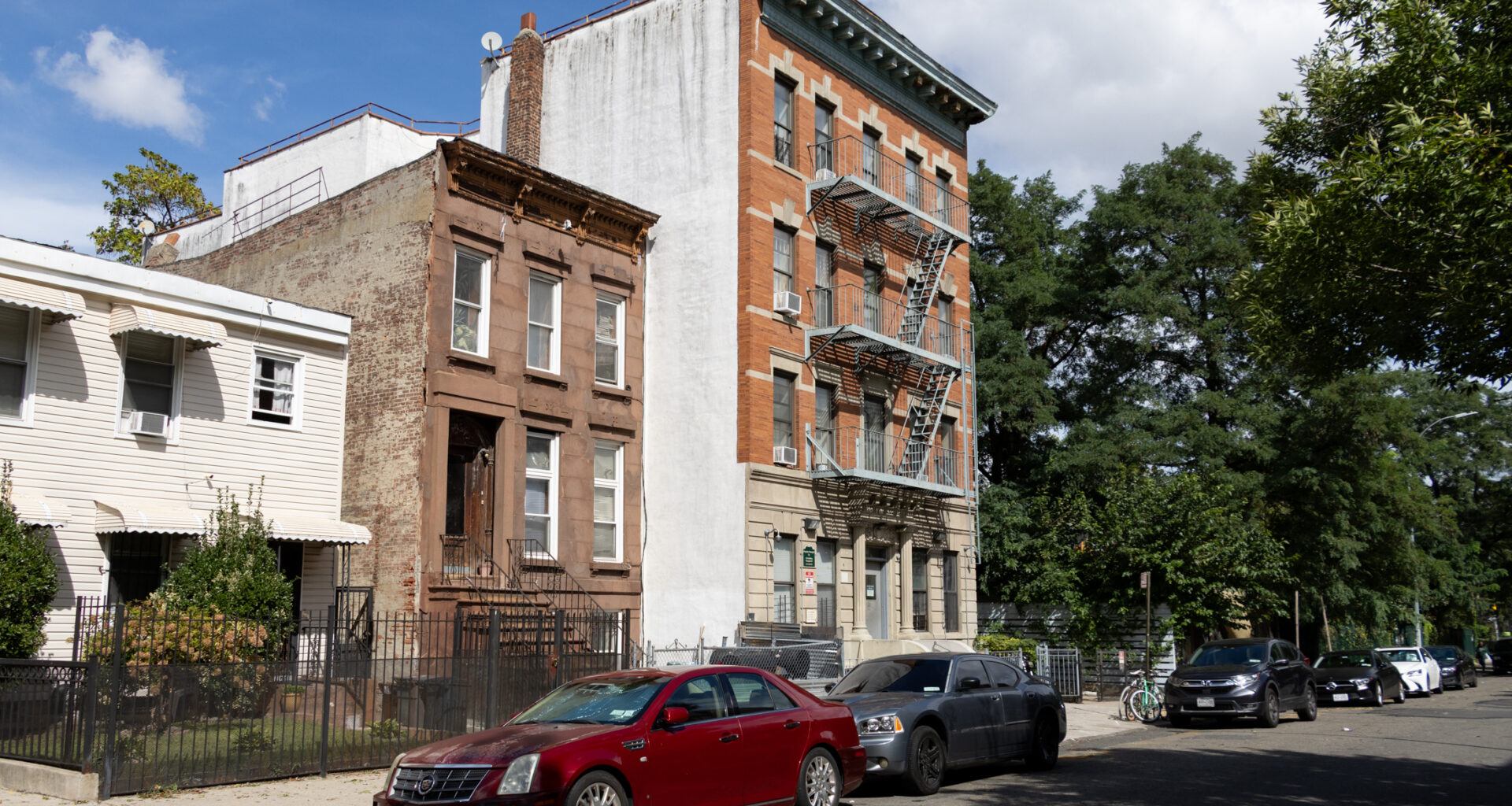


The building at 361 Clifton Place. Photo by Susan De Vries
A decade or so ago, my aging legs were becoming less enthusiastic about the more than five mile round trip run from my home in Clinton Hill to, and around, Prospect Park.
I had been jogging to the park since arriving in Brooklyn from across the East River in the mid 1990s. When I first moved to the borough, a family member quipped, “We spent years trying to get the hell out of Brooklyn and now you’re going back?” And in fact three of my grandparents had been raised in the county of Kings – in neighborhoods all over southern Brooklyn, from Bath Beach to Coney Island to Seagate.
So now I explored alternative, shorter running options in the northern part of the borough. The route I landed on would take me not just to the Bedford Stuyvesant neighborhood to the east, but down a path connecting to the memory of two of those original Brooklynites in my family from over a century ago.
 Undated family photos of Max Maisel (left) and Max, Bella, and children (right). Photos via David Woloch
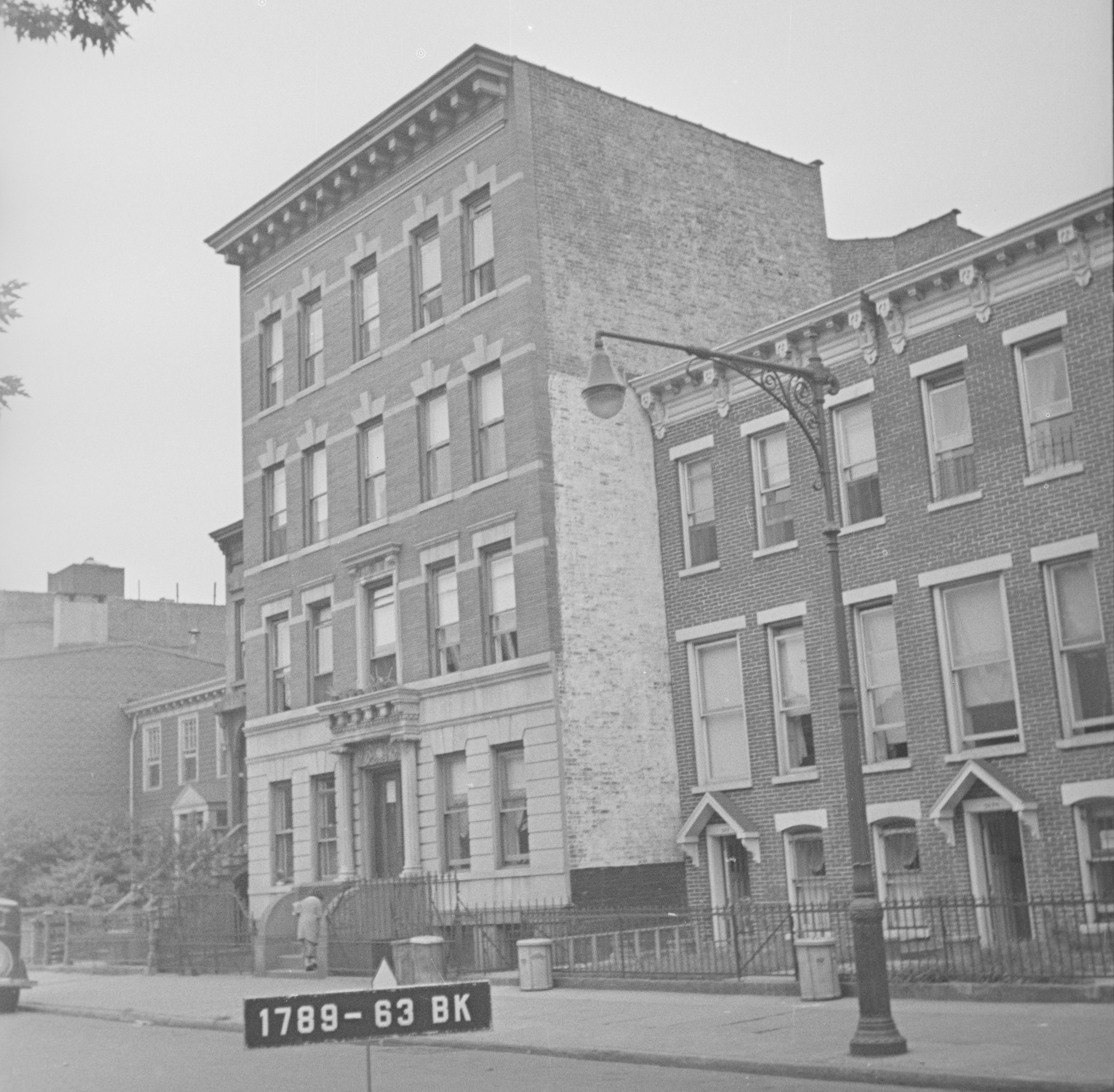 A circa 1940 tax photo of 361 Clifton Place. Photo via New York City Municipal Archives, Department of Records and Information Services
I realized it was just a mile to Bed Stuy’s Herbert Von King Park, and a short run around that eight-acre green space, nestled between Marcy and Tompkins avenues. Like the much larger and prominent Prospect and Central parks, Herbert Von King Park too was designed by Frederick Law Olmsted and Calvert Vaux. Once called Tompkins Park, the space was renamed in 1985 after longtime community leader Herbert Von King, known as the Mayor of Bed Stuy.
The change was apt. As the neighborhood became a prime destination for Blacks in the 20th century, it made much more sense for one of its premier parks to be named after a local 20th century African-American activist, rather than give tribute to Daniel Tompkins, a Staten Islander and the largely forgotten governor of New York and vice president under James Monroe.
As I experimented with different paths to Herbert Von King Park, I often settled on a route down Clifton Place, a side street leading to the park’s central entrance and then around the park, passing the bench sitters, sunbathers, dog walkers, and occasional Little League baseball players. Less trafficked than the parallel avenues, Clifton itself always seemed sleepy, showing scant signs of the recent gentrification along and around it.
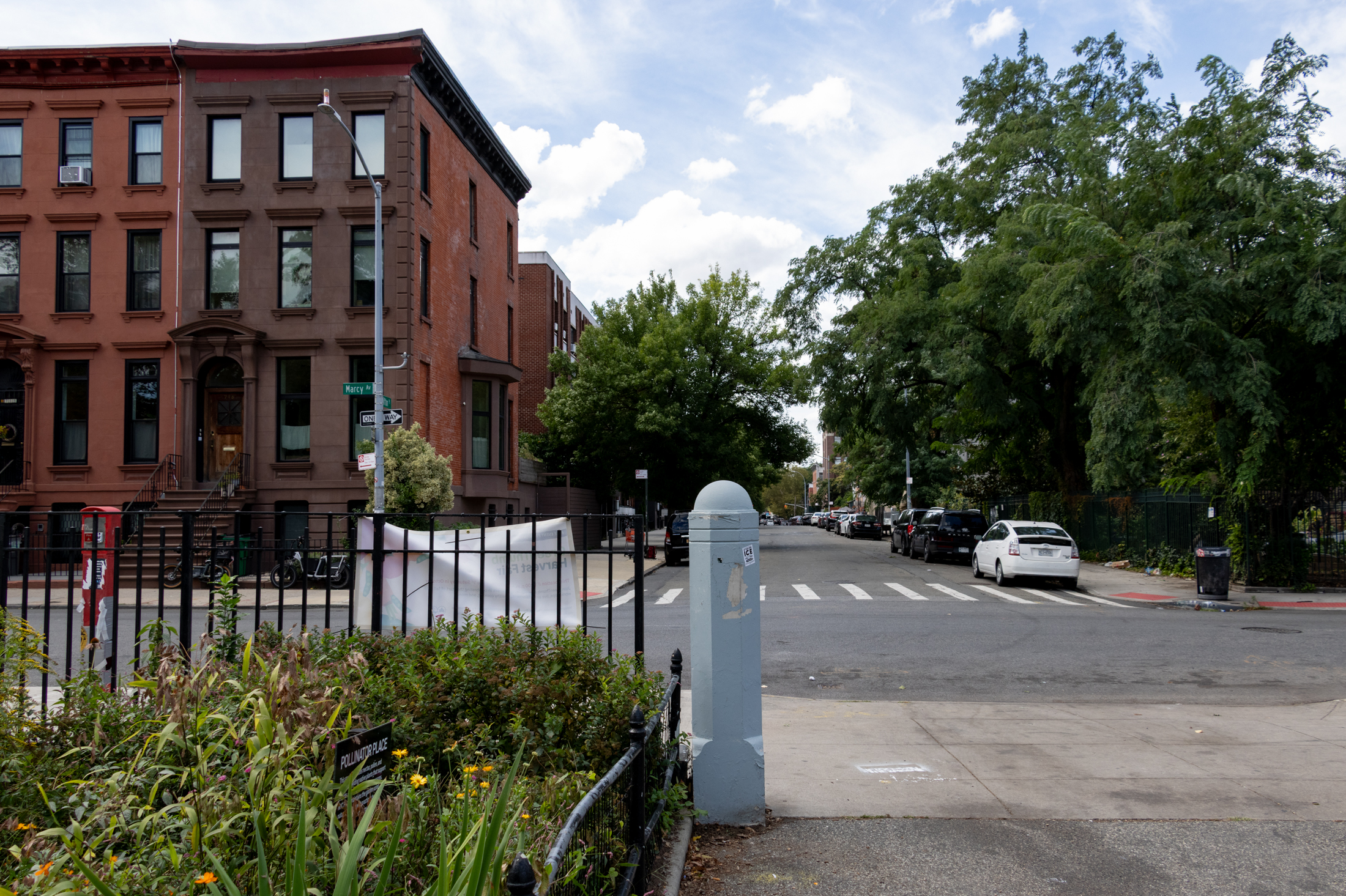 A view to Clifton Place from Herbert Von King Park. Photo by Susan De Vries
Some years later, at the height of the pandemic, my mother pointed out to me that she had discovered an address where my maternal great-grandparents had briefly lived before eventually settling in Seagate nearly 100 years ago. She asked if I knew where in the borough the street was located: Clifton Place.
The block they lived on was in fact less than one block west of Herbert Von King Park. I had repeatedly trotted past the spot where, over a century ago, my great-grandparents had begun to raise a family. At first we thought the address was No. 359 – a semi-detached two-story late 19th century Neo-Grec brownstone that still exists, albeit a little worse for wear. We later learned that the address was No. 361, a four-story brick structure with eight rental units that went up in 1909 and also still stands.
I hadn’t realized it when my Clifton Place runs first began, but I had been darting past my own family’s story, a story interwoven into the history of this block and this evolving neighborhood. An area that had been largely white, and inhabited by Italian, Irish, Eastern European, and Jewish immigrants in the early 1900s, grew into one of the largest and well established Black neighborhoods in the city and was now gentrifying and seeing many of its longtime residents of color displaced.
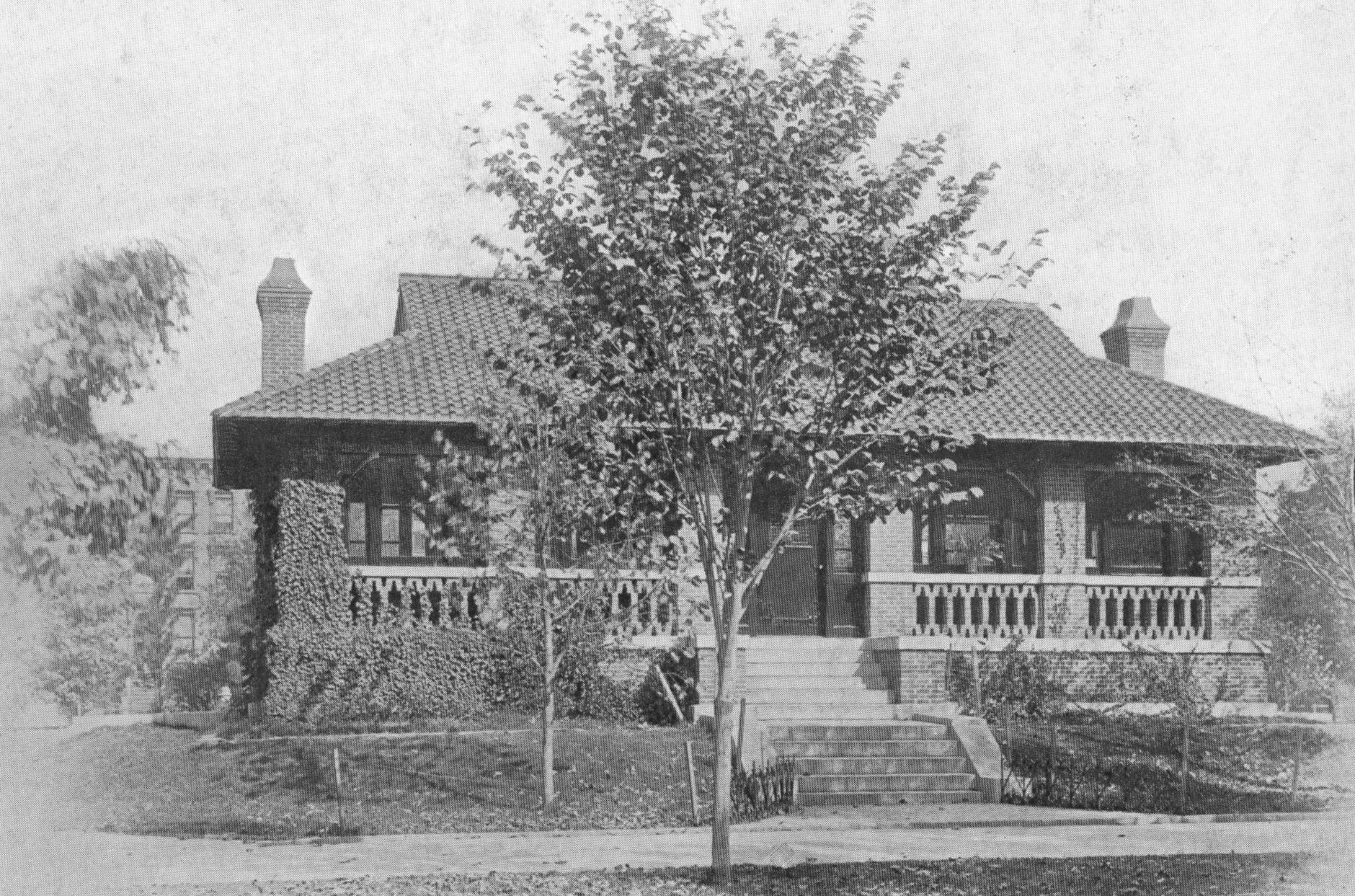 An undated photo of the Tompkins Park Library. Photo via Brooklyn Public Library, Center for Brooklyn History
What would my great-grandparents, Bella and Max N. Maisel, make of Clifton Place today amid all this change? And what would they make of a great-grandson who now lived within walking distance of an apartment where they once lived?
And who were they? Over the years I had been told a bit, but now, all of a sudden, I became much more interested in Max’s and Bella’s story. And it turned out to be an interesting one.
Bella Rubinstein Maisel’s first professional turn was as a librarian. She is listed among a group of fellow librarians in a 1914 article in the Brooklyn Citizen that interestingly ranks and categorizes those eligible to manage “evening recreation centers.” (The creation of evening rec centers was a Progressive Era reform to better meet the needs of the crowded city’s growing immigrant population.) It’s unclear if Bella was in fact a practicing librarian at Brooklyn Public Library. As a former BPL official myself, a century later, this particular question looms large for me.
But whatever library and rec center where she might have hung her hat in 1914, Bella seemed to have another goal in mind. A year later she graduated from the New York College of Dental and Oral Surgery (which, soon after, merged with the Columbia University Dental School) and became one of Brooklyn’s first female dentists. Bella had a practice, at first, in the center of the borough, in what is now Prospect Lefferts Gardens. Among the few papers that we still have of hers is letterhead from her office on Rogers Avenue. We also have a fictionalized story she wrote about herself and her two young children (my grandmother and her brother) from the point of view of her daughter called “My Mother Goes to College.” The cover of the story reflects the same Rogers Avenue address. So it seems likely Bella, Max, and their children had moved further south from Clifton Place and now lived next to her first dental office.
The tale begins, “I was 6 years old. My brother Donald was 4. We lived in a small two-family house in a little street called a ‘Place’.” Perhaps a reference to Clifton Place? (The story is oddly devoid of detail – maybe a nod to Bella’s Russian and Jewish roots, and her family’s reluctance to share information that could be used by tsarist forces.)
The story also mentions a nearby, unnamed neighborhood park. Could that have been Tompkins Park? And surely Bella, the now-former librarian, would have taken her daughter to the Tompkins Park Library housed in the middle of the park? (The branch, Brooklyn’s only one inside a park, was replaced by the Marcy Library on Dekalb Avenue in 1969.)
Apparently Dr. Maisel tried to get her piece published – to no avail. Also among her remaining papers is a rejection note from Rand McNally’s Child Life Magazine.
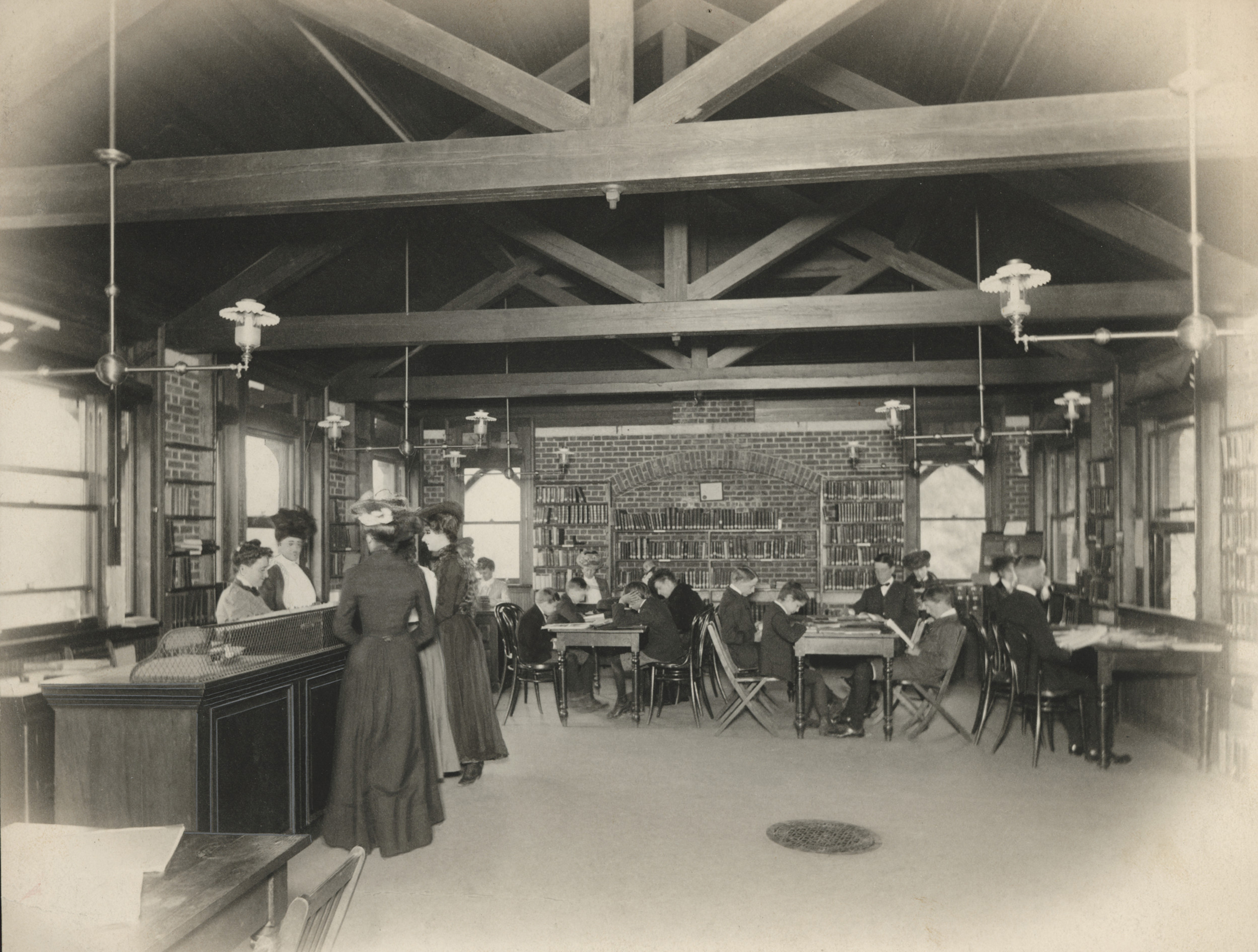 The interior of the Tompkins Park Library in the early 20th century. Photo via Brooklyn Public Library, Center for Brooklyn History
 A cultural arts center opened on the site of the old library in 1973. Photo by Susan De Vries
That getting her story published was a priority for Bella was perhaps not surprising given her husband’s own occupation. Not long after arriving in New York from Riga in the late 19th century as a young man, Max launched a bookshop at 424 Grand Street on Manhattan’s Lower East Side. Maisel Books, which stayed open for over half a century, was, as family lore described it, an “anarchist” bookstore. It was a gathering spot for leftists, a center of Lower East Side intellectual life and housed Max’s small Yiddish publishing operation. Though he hadn’t grown up speaking the language and wasn’t religious himself, he immersed himself in supporting the growth and preservation of this Jewish tongue. Max translated Shakespeare and Darwin into Yiddish, he published the books of Margaret Sanger (such as “What Every Mother Should Know”) and his store provided the backdrop for Christopher Morley’s novel “The Haunted Bookshop.”
A New York Times piece about him from 1910, “Max Maisel, Literary Adviser to the East Side,” noted that “Maisel favors socialistic and anarchistic publications and keeps in stock the revolutionary papers of every country on earth,” and added, “Encyclopedic in information, gifted with a wonderful memory, blessed with the knowing smile of the philosopher, Maisel is ready and willing to talk and answer questions from 8 a.m. to 10 or 11 at night.”
While Bella tragically died young in the 1930s, the widower Max continued to operate the bookstore into the 1950s. “Papa” was also from time to time asked to take care of his granddaughter (my mother) and would feed her in her high chair, urging, “Now eat one spoonful for your father . . . one for your mother . . . one for papa . . . and now . . . one for Trotsky!”
This last tidbit of family history delighted one of my own sons. An avid reader and ardent leftist himself, he too grew interested in learning more about Max and in fact was the one who tracked down the Times story that the rest of us had missed.
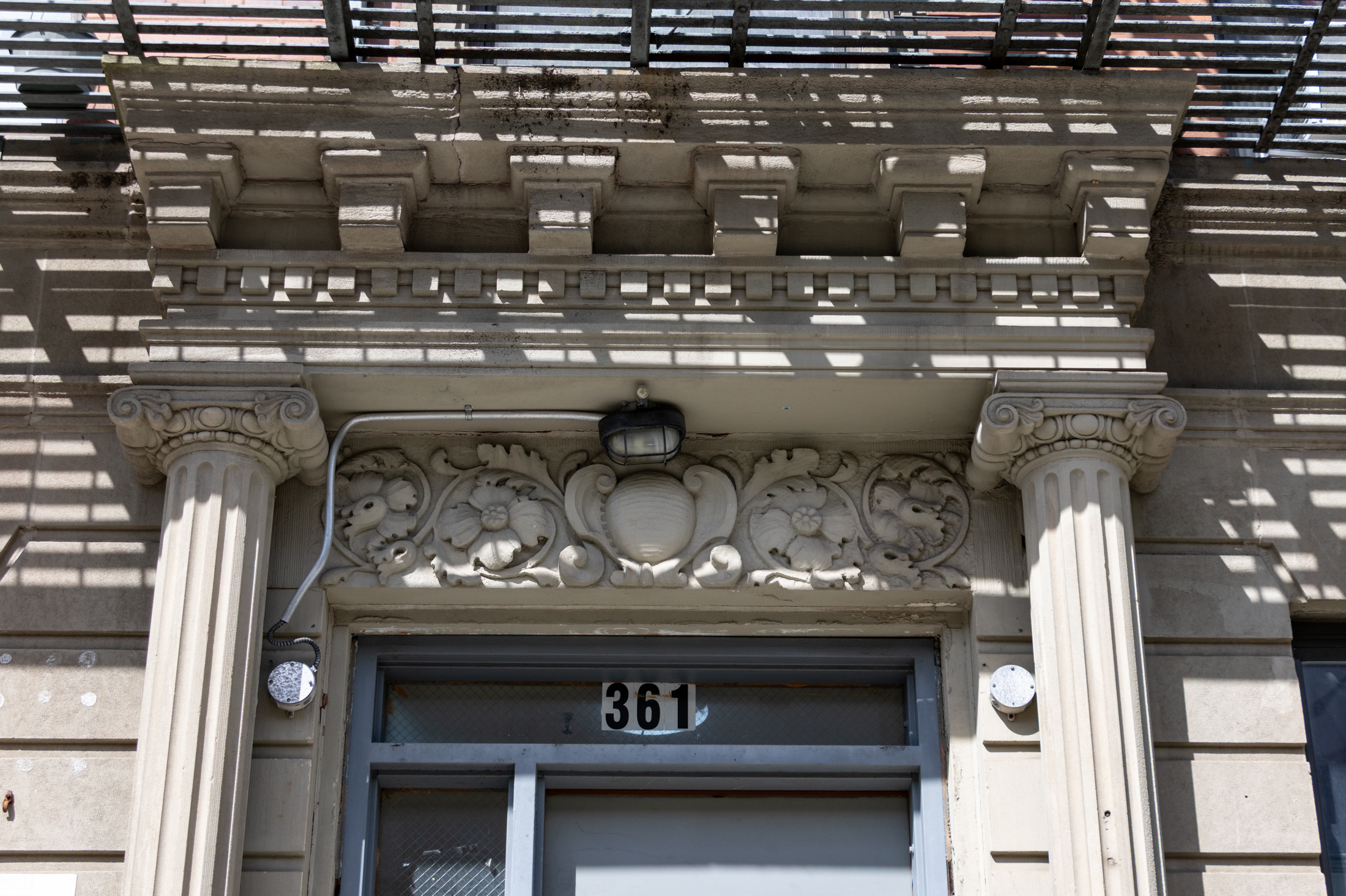 The entrance to 361 Clifton Place. Photo by Susan De Vries
The Clifton Place chronicle for me is a story of family, of the city, and the passage of time. The corridor represents not only connective tissue between me and these compelling great-grandparents, whom I never met, but my ties to my grandmother, my mother, and my own sons as well. It also shines a prism into the pronounced, changing fabric of central Brooklyn and indeed the city itself. Many of the buildings and the streets and the parks and the libraries stay largely the same (notwithstanding the fate of the Tompkins branch). But their occupants and users are often in flux, even as some of us unwittingly enter and cross the same spaces as our forebears.
That I now have this century-old connection to Clifton Place is an unusual and unexpected gift – one that I hope will keep me curious and keep me running past it from time to time, even as my legs continue to slow down.
Related Stories
Email tips@brownstoner.com with further comments, questions or tips. Follow Brownstoner on X and Instagram, and like us on Facebook.