
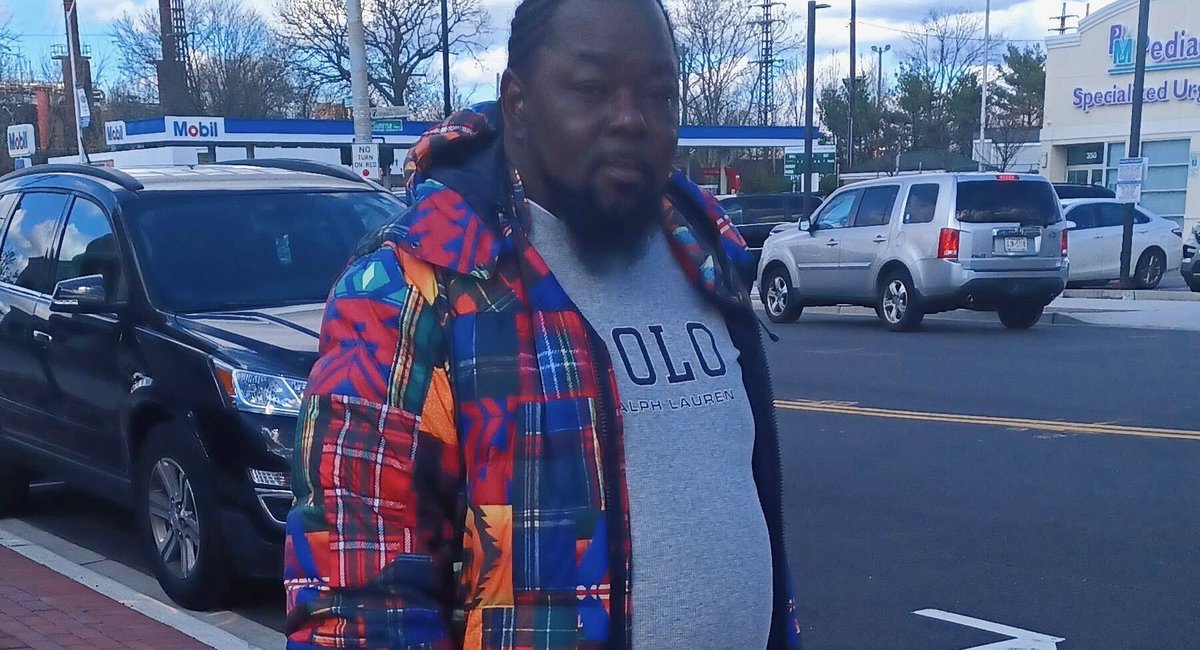
The week before John Price died in city Department of Correction custody in March, he told his family he was having to sleep sitting up in his cell — if he laid down, he felt like he was drowning.
“He said, ‘I don’t feel good, they’re not helping me, they’re just sending me back to my cell,’” Price’s brother, Arnez Price, recalled.
Several days later, on March 29, Price’s family received a call from doctors at Elmhurst Hospital. They told his family that Price was in their care, and that his heart had stopped.
“They asked my mother if she wanted them to resuscitate him,” Arnez said. “We said ‘absolutely.’”
But Price, 49, didn’t survive the ordeal. Not long afterwards, doctors called back to say he had died, Arnez said. The family went to identify his body, and when they came home, a Department of Correction chaplain was there, thinking he’d be the first to deliver the news to the family.
“They said they were surprised that we already knew,” Arnez said, “and that the hospital had broken protocol by calling us.”
That was one of many details the Price family said they found disturbing in the Department of Correction’s treatment of John Price. When the city’s jail oversight board released its report last week about the deaths of Price and several other detainees in DOC care, they learned he waited three-and-a-half hours to see a medical provider, because correction staff never told the medical team that Price was in distress. He was found to have died of pneumonia and a bacterial infection, the report stated.
Six more people have died in Department of Correction custody so far this year. Advocates say the deaths highlight a wide range of failures at the troubled city jail, including longstanding patterns of carelessness by officers. In January, a federal judge appointed a remediation manager to take control of Rikers Island and fix some of the most pervasive systemic problems. He filed his first action plan in July, where he wrote that the DOC struggled to perform some of the “most basic” duties, including staffing posts, securing housing units and keeping people safe.
Mayor Zohran Mamdani has said that closing Rikers Island and reforming the DOC are high on his list of priorities, but even after appointing a reform-focused correction commissioner and promising change, progress has not been smooth.
For the Price family, any promised reforms are too late. Arnez and his mother, Lillian Price, filed a notice of claim in July, saying they intend to sue New York City, the Department of Correction, Elmhurst Hospital, NYC Health + Hospitals and Correctional Health Services for $25 million for “negligent supervision” and “denial of adequate medical care” while John Price was on Rikers Island.
They allege that officers at the Eric M. Taylor Center, the jail facility where Price was held for most of his incarceration, knew about his severe health issues and should have been more responsive to his pleas in his final days.
The Department of Correction and City Hall declined to comment on the family’s plans to sue, referring Gothamist to the city law department, which doesn’t comment on pending litigation.
“The whole thing is heartbreaking. He’d been complaining and they would turn him away,” Arnez Price said. “We just feel as if they’d at least gotten him to the hospital, he’d still be here today.”
When Price arrived at Rikers on drug charges in Dec. 2024, he told the clinician that his extensive medical history included hypertension, congestive heart failure, and coronary artery disease. He also said he had open heart surgery in 2022, according to the Board of Correction oversight report.
“He was just waiting for his process and he required special attention and they knew that,” Arnez said.
On March 27, 2026, two other detainees in Price’s unit had a fight in a common area, which led correction officers to “deploy chemical agents,” according to the report. Price was nearby when that happened, and complained of nasal congestion and shortness of breath later that evening. Staff escorted him to the clinic, according to the report, and a health provider there checked his vitals and sent him back to his housing area with medication to relieve his chest congestion.
The following morning, surveillance cameras captured Price moving “slowly” throughout the housing area, stopping to rest on other people’s beds and appearing to struggle with his balance, according to the report. Nearly three hours later, he looked unsteady when he approached one of the officers on his floor and spoke to them, the report states. He was subsequently escorted to the medical clinic, and arrived there around 1 p.m., but wasn’t seen by a provider until 4:30 p.m. EMS took him to Elmhurst Hospital around 5:45 p.m., the report states. He was pronounced dead at 5:37 a.m. on March 29.
No officers were disciplined in response to the investigation’s findings, a fact that the Price family feels is unfair. Multiple officers received weeks-long suspensions after the deaths of Christopher Rodriguez and Clarence Woodward – two men who died in custody in August – for failing to properly tour the housing units and other infractions, according to oversight reports.
Working with incarcerated people “doesn’t give you the right to treat them as less than a human being,” Arnez said. “We want the appropriate disciplinary action.”
“Three hours is not a delay,” said Marc Battipaglia, the attorney who is representing Price’s family in their forthcoming lawsuit. “Three hours is a conscious decision not to act.”
Lillian Price said she and her husband miss their son every day. They are both elderly and deal with a variety of medical issues, and Price was their primary caretaker before he got arrested. He also leaves behind a daughter and a stepson in their late 20s, who both live out of state.
“He was a very outgoing person. He had no enemies,” Lillian Price said, adding that he was an incredible cook. She said she can still picture him grilling spare ribs on the barbecue at the family’s home in Queens – even in the middle of winter.
October 1 would have been his birthday, and the family is planning to gather at his grave at Pinelawn Cemetery on Long Island.
“We don’t want this to happen again,” Arnez said. “We want answers and we want accountability.”