
 6 min read
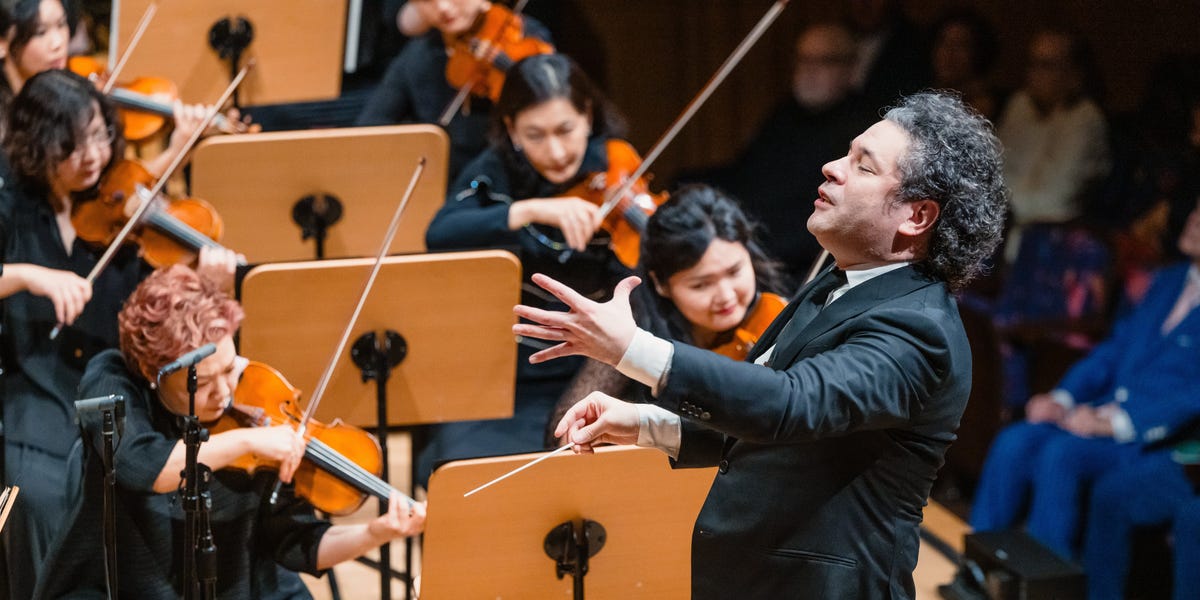
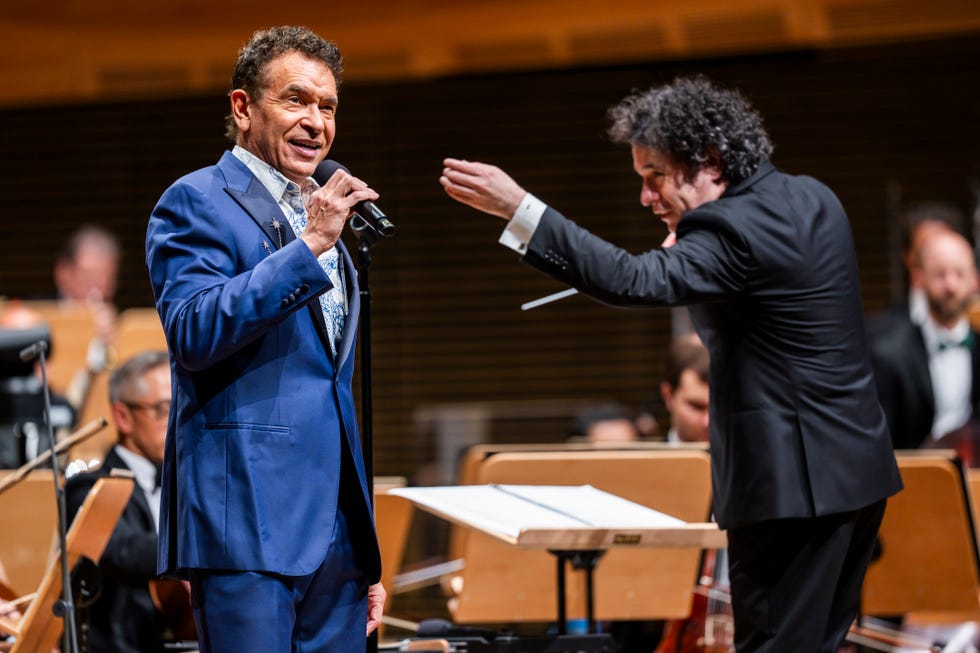
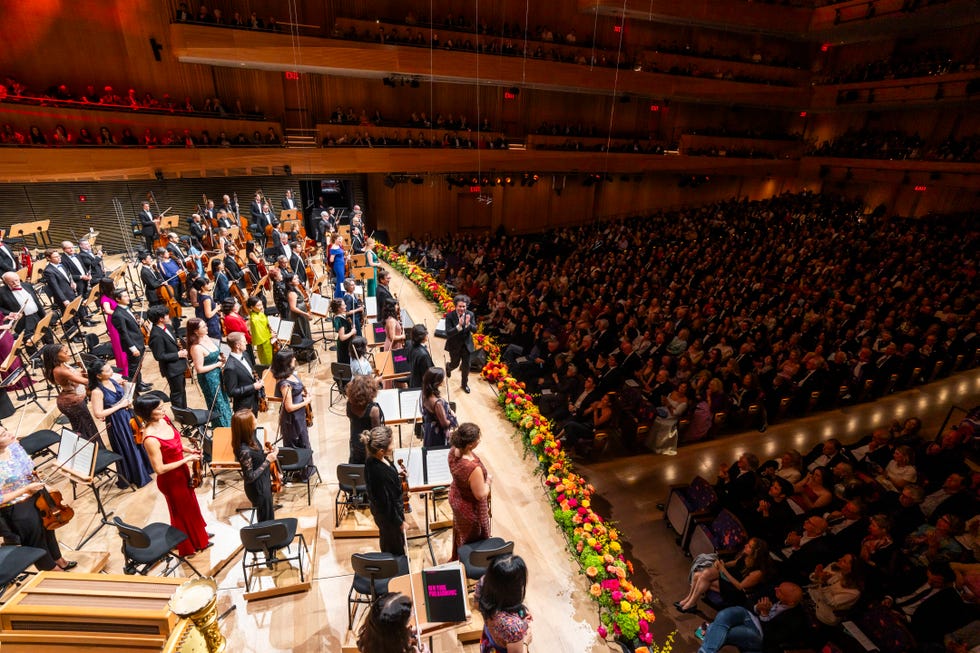
At his first-ever gala for the New York Philharmonic on Wednesday night, Gustavo Dudamel brought out actor Brian Stokes Mitchell to perform two selections: a mashup of “Another Hundred People” from Stephen Sondheim’s Company, followed by “Take the ‘A’ Train” by Billy Strayhorn and “Getting Married Today,” also from Company. During an interlude, Stokes Mitchell took a moment to pay homage to the city’s newest maestro, using one specific word to describe his style: “playful.”
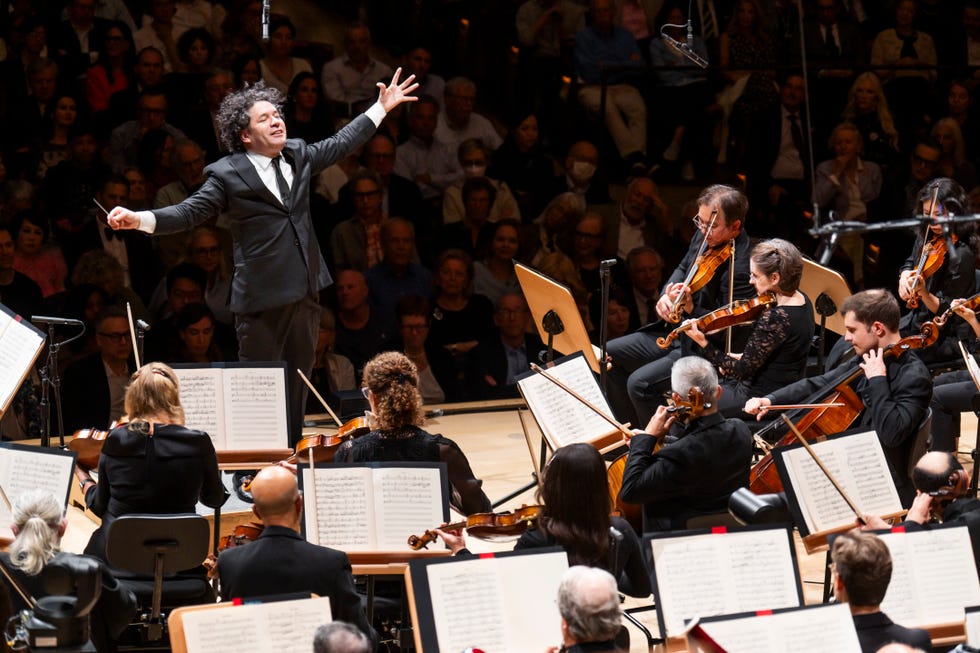
This sense of play can already be felt throughout Dudamel’s programming. In the lead-up to his first season with the New York Philharmonic at Radio City Music Hall, he brought out performers St. Vincent, Lizzo, and Aaron Tveit. This week’s event was hosted by Alec Baldwin, and, in a heartwarming moment, Dudamel dedicated a surprise song to Steven Spielberg, playing “Listen…” from the director’s most recent film Disclosure Day (the two worked together on Spielberg’s West Side Story; Dudamel served as the film’s conductor). His program at the gala, titled “LaPanAmericana,” featured works from composers Alberto Ginastera, Juan Bautista Plaza, Anthony Hopkins, Gabriela Ortiz, and Duke Ellington, giving audiences a sonic taste of what’s to come from his vision. “I want the Philharmonic to continue engaging with the extraordinary musical cultures of Latin America and the wider Americas,” Dudamel tells ELLE in an email. “There is so much music, so many composers and artists, and so many stories that deserve to be heard. I see this as part of a much larger conversation about what an American orchestra can be.”
Dudamel’s arrival marks a historic moment for New York: he’s the first Latino music and artistic director at the New York Philharmonic. Born in Venezuela, Dudamel has become one of the world’s best-known maestros, having previously held posts at the Simón Bolívar Symphony Orchestra and Los Angeles Philharmonic prior to his current role.
Below, Dudamel discusses his vision for the New York Philharmonic, the state of classical music, and more.
 Chris Lee
Brian Stokes Mitchell and Gustavo Dudamel at the New York Philharmonic Gala Concert on Wednesday, Sept. 30, 2026.
How do you plan to preserve the legacy of the New York Philharmonic while also making your own mark?
I don’t see those two things as separate. The New York Philharmonic has an extraordinary history, and I feel a deep responsibility to honor the musicians, conductors, composers, and audiences who have built that history. But an orchestra is not a museum. It is a living community, and every generation has the opportunity to add something to its story. For me, it begins with listening—to the orchestra, to New York, and to the people who make this city what it is. I want to build on the strength of the Philharmonic while opening new doors, bringing together different generations and traditions, and creating experiences that feel connected to the life of the city today.
What can we expect from your programming?
Curiosity. I want the programming to reflect the incredible diversity and energy of New York and to create connections between works, artists, and ideas that might not always be placed next to each other. There will be great works from the orchestral tradition, of course, but also new music, artists from different disciplines, music from across the Americas, and projects that invite people to experience the orchestra in unexpected ways. I want audiences to feel that there is always something to discover.
You’ve had such a positive and warm reception so far. Do you feel a responsibility or pressure because of that?
I have felt so much warmth from the musicians, from the audiences, and from people across New York, and I am deeply grateful for it. I don’t think of it as pressure, but as a responsibility in the best sense. When people welcome you in that way, you want to respond with openness, with work, and with music. I am very excited about what we can build together.
Chris Lee
What’s your take on the current state of classical music?
Sometimes we speak about classical music as if it is something fragile that needs to be protected, but I see incredible creativity, and curiosity is everywhere. The tradition is strong, but it is also constantly evolving. Composers are writing new music, musicians are finding new ways to connect with audiences, and young people are bringing their own experiences and perspectives into the art form. The question for us is not whether classical music can survive but how we continue to make it meaningful and accessible to people in the world we live in now.
How can listeners preserve and honor the tradition of classical music while also making it relevant and appealing to new, younger audiences?
We have to give young people the opportunity to encounter this music in a way that feels real to them. That means not assuming that there is only one way to experience an orchestra. Education is essential, but so are access, imagination, and invitation. Young people need to feel that the concert hall belongs to them, too. And that means programming that speaks to different experiences, artists who reflect the world around us, and opportunities to participate rather than simply observe. At the same time, we should never underestimate the music itself. Beethoven, Mahler, Stravinsky, and so many others continue to speak to us because they understood something fundamental about being human. We have to trust that power while finding new ways to share it.
You’re the first Latino music and artistic director in the history of the New York Philharmonic. How do you plan to bring your Venezuelan heritage and perspective to the Phil?
My Venezuelan heritage is already a part of who I am, so I don’t have to force it into the work. It comes through the way I think about music, community, education, and collaboration. I come from a tradition in Venezuela where music is understood not only as an artistic experience but as a way of bringing people together and giving people a sense of possibility. That experience has shaped me deeply.
What does this moment mean for Latine people—not only across the United States, but around the world?
I think it is meaningful because representation creates possibility. When a young person sees someone who comes from a similar place, speaks a similar language, or shares some part of their cultural experience on a stage like this, they can imagine themselves there too. I hope we see this as something bigger than one person or one appointment. Latin culture is already deeply woven into the cultural life of the United States and the world. But it is meaningful, I hope, because representation always creates possibility. For me, this is an opportunity to celebrate that richness and to create more space for those voices.
Chris Lee
Latin creatives have had a significant, yet often underrepresented and underdiscussed, impact on classical music. How are you choosing to bring greater visibility to their contributions?
The history of classical music in the Americas is much more interconnected than we sometimes acknowledge. Latin American composers, musicians, and artists have been shaping classical music for generations, even as their contributions have too often remained outside the way we tell the story of the art form. I want to help broaden that picture. That means programming music from Latin America and the Caribbean, working with artists from across the Americas, and creating opportunities for audiences to encounter these traditions not as something separate from the classical canon, but as part of the larger musical conversation. I am particularly interested in the idea of the Americas as a living, evolving story, shaped by many cultures, histories, migrations, and voices. That is a very New York story, too.
Which Latin artists and creatives in the cultural space should we be keeping an eye on?
I have been lucky to meet and make music with some really exciting young artists recently. I had the chance to perform with Ca7triel & Paco Amoroso at Coachella, and I was inspired by the energy and freedom they brought to the stage. Lasso was a featured artist at A Concert for Venezuela at the Hollywood Bowl with the Los Angeles Philharmonic, and I have also loved getting to know artists like Mafer, a wonderful performer from Brooklyn who sang at the launch of my inaugural season with the New York Philharmonic, and Joaquina, who joined us at Radio City. What excites me about all of these artists is that they have such a strong sense of their own voice. They are not limited by genre or by borders. They are bringing together different influences and creating something that feels very much their own. I think that kind of openness and curiosity is one of the most exciting things happening in Latin music and culture today.
This interview has been edited and condensed for clarity.