
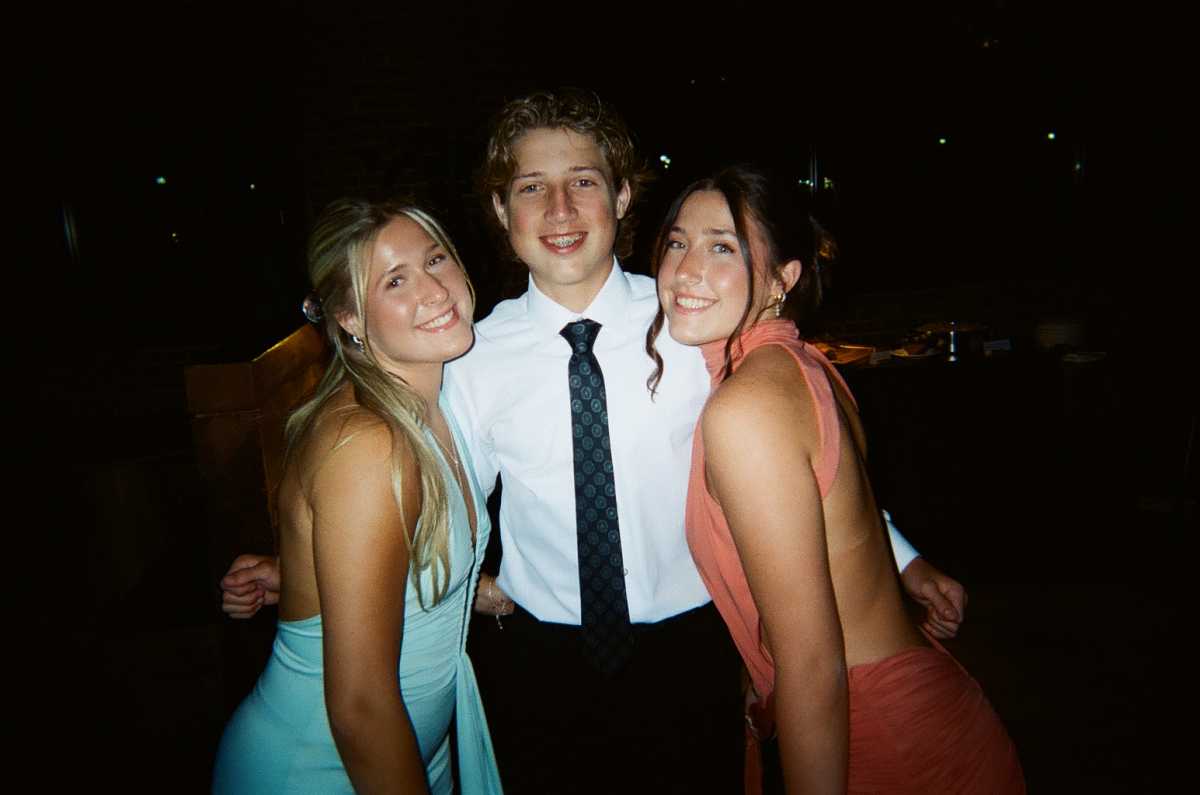
The increasing ambulance response time in NYC has only been getting worse — and for the family of a Queens high school student, it was a matter of life and death.
Brian Daly’s 14-year-old son, Kevin, a student at St. Francis’ Preparatory School in Fresh Meadows, was just arriving for class on Sept. 28 when he started to feel intensely dizzy and needed to sit down. A school nurse immediately assessed him and called 911 at 8:47 a.m., but after 10 minutes, help did not arrive.
The nurse and others called 911 several more times before 9:30 a.m., but still, EMS was nowhere to be found, Daly, a retired FDNY firefighter, shared with amNewYork.
As the school team waited frantically, Kevin’s older sisters, who are also students at the school, stayed with their brother until their parents arrived.
Daly and his wife decided not to wait any longer for emergency help.
“I went to the school,” Daly said. “Me and my wife passed each other. She was going down the block in a separate car. There was no ambulance or anything. My wife brought him to the hospital in her car, and I followed.”
The Dalys, who live in Franklin Square, LI, brought Kevin to NewYork-Presbyterian (NYP) Queens Hospital in Flushing, where doctors quickly diagnosed him with a stroke in the left thalamus of the brain — a condition rarely heard of in children. Researchers say only about 1 to 2 childhood stroke cases per 100,000 children occur each year.
Kevin was soon transferred to NYP’s Irving Medical Center in Washington Heights, where he underwent treatment for several days. Daly described his son as a cardiac patient who had multiple open-heart surgeries when he was first born and as a younger child, but since then, he has been healthy — making a stroke diagnosis particularly shocking.
“He was perfectly fine. He played sports,” Daly said. “He had no restrictions whatsoever. None of us would ever expect this. In fact, we saw the doctor on Aug. 4 and everything was perfectly fine.”
Queens high school student’s family never had 911 calls answered
Another shocking factor was the lack of an ambulance after 911 calls were made. In the case of stroke, EMS response time is especially important for treatment.
“Optimal care for patients with stroke relies on timely recognition and rapid transport to appropriate treatment, often by emergency medical services,” an American Heart Association article states.
Daly, a retired FDNY firefighter, said his daughters, who stayed with their brother waiting for the ambulance, gave him an aspirin. They had just completed a health course about recognizing the signs of a stroke and sprang into action.
“They had just taken a CPR and defibrillation course at St. Francis Prep,” the concerned father said. “The doctors said the aspirin made a difference.” (Note: The American Stroke Association does not advise taking aspirin during a stroke because not all strokes are caused by blood clots.)
 Kevin playing football.Courtesy Daly family
Daly made at least one of the 911 calls, making sure the operator knew that he suspected it was a stroke.
“I told them what it was and what was going on, and they just said they’re coming,” Daly said. “But no one came.”
Amanda Farinacci, an FDNY spokesperson, told amNewYork that the department is thoroughly investigating the case.
“Our thoughts are with this student and his family, and we hope for his full recovery,” Farinacci said. “We are conducting a thorough investigation into the 911 response at St. Francis Prep, including how the calls were handled, classified and dispatched, to determine what caused the delay and what operational changes are needed to prevent something like this from happening again. New Yorkers deserve timely, reliable emergency care, and we are committed to doing everything we can to fulfill the FDNY’s lifesaving mission.”
Unfortunately, waiting for an ambulance in NYC has become all too common. Life-threatening emergency response time in the Big Apple has been increasing by as much as 2 minutes amid a staffing and pay crisis, according to the city’s latest Mayor’s Management Report released last month.
In fact, in 2025, FDNY EMS responded to 1,613,282 medical emergencies. Average response times to the most serious, life-threatening medical emergencies rose nearly two whole minutes — from 11:21 in 2025 to 13:09 in 2026, city data shows.
Meanwhile, Queens City Council Member Joann Ariola, who chairs the committee on fire and emergency management, described the EMS system as being in a state of emergency itself.
“This was a terrible tragedy, and my prayers are with this boy and his family,” Ariola said. “But it also highlights a deeply troubling reality. When New Yorkers call 911 in an emergency, help is not guaranteed to reach them as quickly as they need.”
Emergency medical technicians (EMTs) themselves said they are feeling burnt out from the job, with many of them working at near-minimum wage levels in some of the most dangerous environments. Union reps have said this has caused many EMTs to leave the job, leaving behind a shortage of workers and a city with few emergency response crews.
“Our city deserves a fast, high-quality emergency response system that New Yorkers can rely on in a health crisis. Our heroic EMS first responders — who are frequently women and people of color — provide amazing, life-saving care on our streets every single day,” FDNY EMS Local 2507 President Michael Greco said. “But our experienced EMTs and paramedics are leaving the service because of embarrassingly low pay and poor workplace conditions.”
The result, he said, is longer response times.
“These moments are literally the difference between life and death, and delays are putting the health and welfare of New Yorkers in serious jeopardy. New York City must act now to avert an emergency response disaster,” Greco explained. “The answer is to properly support, value and pay our first responder heroes what they deserve, and we look forward to working with the Mayor to get this done.”
Ariola is calling on City Hall to tackle the ambulance response crisis.
“The administration needs to sit down with EMS, address the staffing and retention crisis, and put forward a real plan to give these first responders the pay and support they deserve,” she said. “New Yorkers should never have to wonder whether help will arrive when they need it most, and events like this one should never happen again.”
As for Kevin, he remained in the hospital as of Friday, undergoing tests to try to figure out what caused the stroke and what the effects might be. He is now home recovering, but the cause of his stroke is still unclear.