
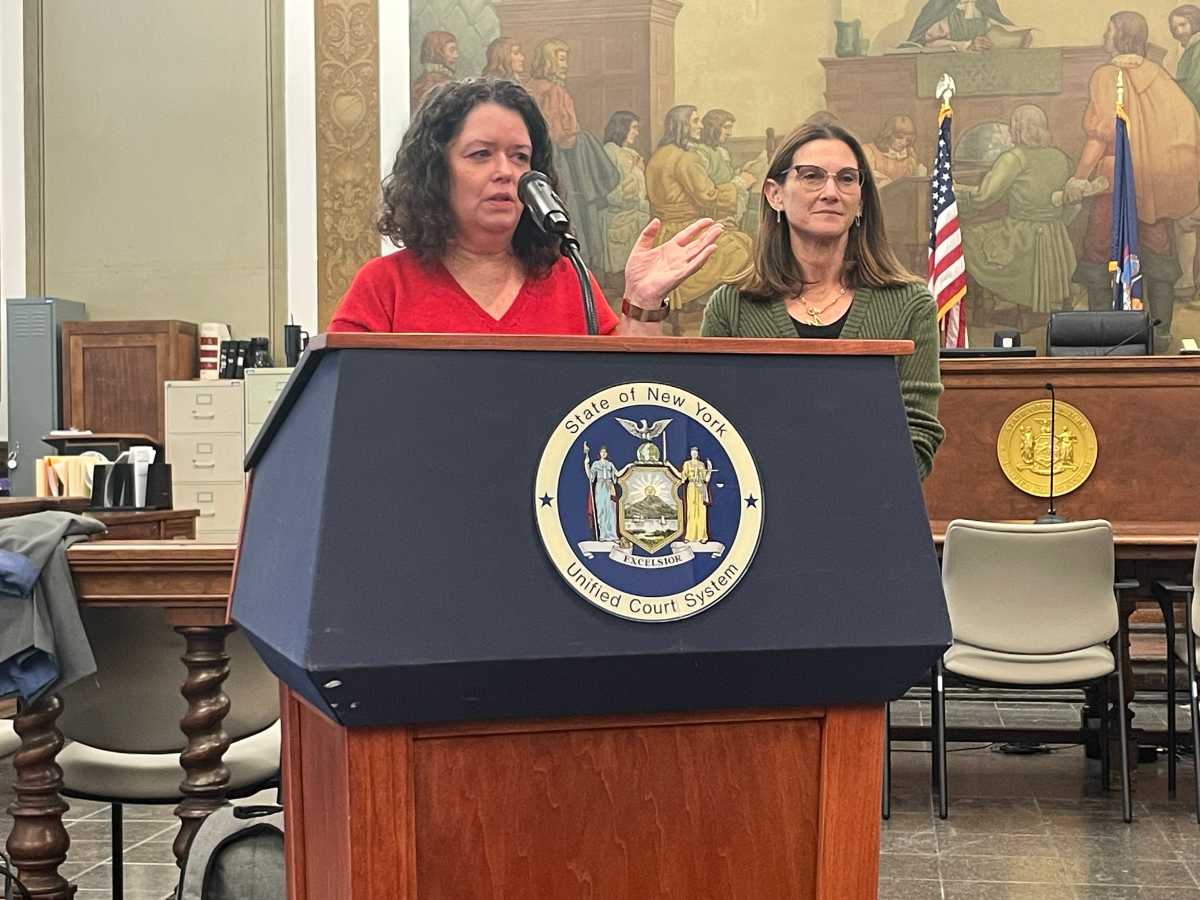
New York’s court system took time Monday to provide advice and support to its attorneys, judges and staff who might be, or are concerned that a colleague is, struggling with depression.
Representatives from both an independent and the court system’s employee mental health provider and a mental health practice told the small group gathered during the lunch break at 60 Centre St. in Lower Manhattan on Oct. 5 that watching out for symptoms of depression in themselves, their workplace and their loved ones was critically important.
“It’s not just sadness,” Marjorie Mangot, a mental health educator for the court’s Corporate Counseling Associates, said of depression. “It’s really a numbness. It’s not crying or sorrow as much as it’s feeling flat … It is a feeling of heaviness, wading through wet cement, carrying a backpack full of stones. Ordinary tasks like showering or replying to a text, or making a meal can feel really heavy.”
Court system employees and their families can call up or access counselors through their Employee Assistance Program and receive free help, no questions asked. Anyone in New York City can call 988, a mental health and suicide prevention helpline that connects people struggling with mental health or grappling with thoughts of suicide with support. Both phone lines have trained counselors answering them 24/7.
The Lawyer Assistance Program is another free, confidential program available 24/7 for all New York State Bar Association members that offers free counselling sessions for lawyers.
Those in the legal profession can be particularly at risk for depression and mental illness: 41% of attorneys say it’s “detrimental” to their mental health while nearly 22% report depression at any given time and over 40% say they’ve experienced depression at some point in their careers.
Across the U.S., 21 million, or 8.3% of people, reported experiencing at least one major depressive episode in a year and roughly 20% of people will experience clinically significant depression at least once in their life, according to data from the National Survey on Drug Use and Depression.
“It is extremely prevalent,” Mangot said. “If you’re not experiencing it, someone in your life may be.”
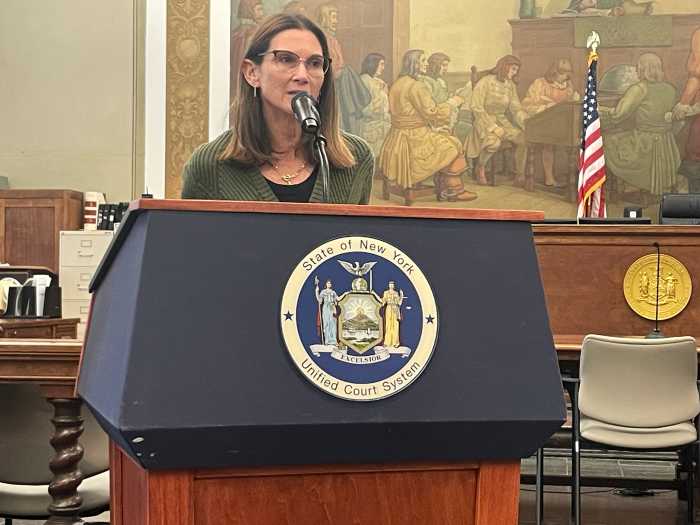 Mangot speaks about depression in Manhattan Supreme Court. Photo by Isabella Gallo
Knowing what to look for in yourself and others is important, the pair said.
Sudden changes, like weight loss or gain, inability to sleep or sleeping much more, feeling achy for no reason or a “bone-deep” tiredness that sleep doesn’t touch, having trouble concentrating, making decisions or working, memory lapses, withdrawing from friends, family, school or work, and feelings of persistent sadness and hopelessness are symptoms and warning signs.
“If you’re experiencing these symptoms most of the day, nearly every day for at least two weeks, it’s a signal that it may be helpful to talk to someone and see more about what’s going on,” Mangot said.
Seeking services when you’re struggling or asking someone if they’re okay and working to connect them to resources if you notice they’re struggling can be the difference between life and death, said Deirdré De Leo, a behavioral health director at VNS Health: Depression is the most commonly identified mental health condition among people who die by suicide.
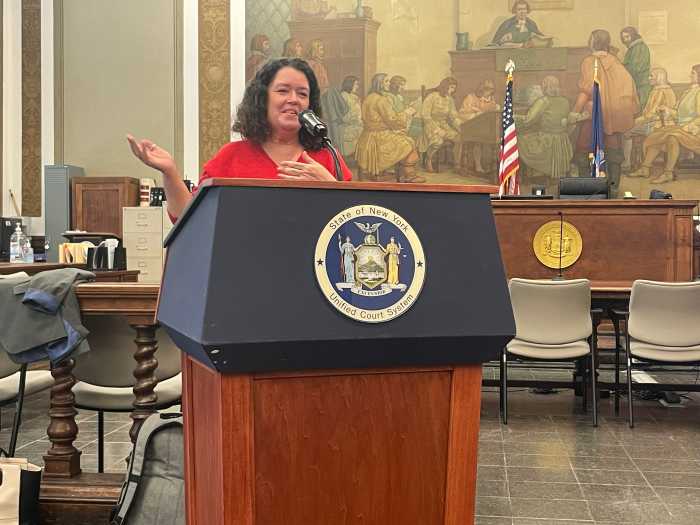 De Leo speaks about suicide prevention.
“The number one sign that goes with someone who’s going to die by suicide is feeling hopeless,” De Leo said. “If people start talking about being hopeless, they start saying things like, ‘Things are never going to get better.’: Do me a favor and ask them if they’re okay.”
“It’s okay to say, ‘I’m worried about you,’” De Leo continued. “It’s okay to say, ‘Hey, sometimes when people feel this way, they think about not wanting to live. They think about ending their life. Have you had those thoughts?’”
If the person you’re talking to says that they are thinking that, De Leo said you should immediately connect them with 988 and offer to sit by them as they make the call, as well as encourage them to seek out other forms of support and notify people in their lives or supervisors if necessary.