
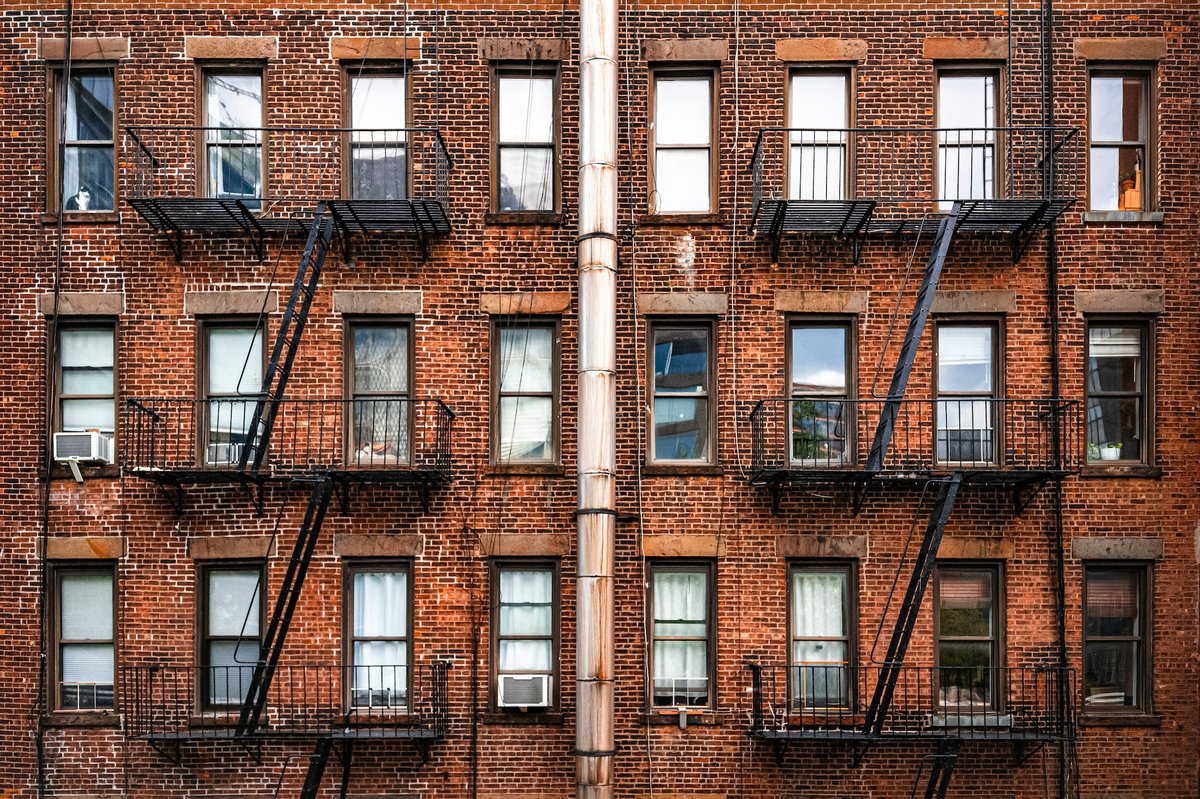
Like many other cities and towns across the country, New York City is facing an affordable housing crisis. In the face of rising rent prices, growing numbers of people are facing housing insecurity or becoming unhoused.
In July 2026, more than 350,000 New Yorkers were without homes, and more than 96,000 people slept each night in city shelters, according to the Coalition for the Homeless. Last year, the city received more than seven million applications for about 10,000 affordable housing units.
In May 2026, shortly after taking office, New York City Mayor Zohran Mamdani announced plans to invest $22 billion in capital funding over five years to build 200,000 new affordable housing units. In June, the NYC Rent Guidelines Board approved a historic rent freeze for lease renewals on about one million one- and two-year leases for rent-stabilized apartments. As the mayor said, “This is the relief that working people across our city deserve.”
“The housing crisis is just that—a crisis,” Samuel Stein, a housing policy analyst with the Community Service Society of New York, tells The Progressive. “Especially for rental apartments, the costs are far more than the average New Yorker can afford.”
But Stein also notes the city has “the strongest tenant protection in the country,” as well as numerous community groups that are involved in creating new housing or preserving older housing for moderate or low-income people. Such organizations include the Association for Neighborhood & Housing Development, Our Bronx, Cooper Square Committee, and Good Old Lower East Side.
Stein cites the Fifth Avenue Committee (FAC) as a model nonprofit community development corporation. Established in 1978, it serves the South Brooklyn communities of Gowanus, Red Hook, Sunset Park, and Park Slope. FAC is also part of NeighborWorks America, a national network with nearly 250 member organizations. There are sixteen NeighborWorks America groups in New York State, including four in New York City.
“I’ve been at the Fifth Avenue Committee for 22.5 years,” FAC executive director Michelle de la Uz tells The Progressive. “When we did organizing and advocacy around affordability issues, middle-income people didn’t relate so much to it—it was low-income people. Then it became more moderate-income people. Now, I feel that even middle-income people feel it; I think the affordability issue is resonating with them.”
De la Uz notes that community development corporations came out of the Civil Rights and anti-redlining movements of the 1970s. That’s how the Fifth Avenue Committee launched nearly fifty years ago.
“We got started in Park Slope, which was a redlined community and an urban renewal area that had a lot of vacant lots and abandoned buildings,” she says. “A group of neighbors that were racially and economically diverse came together and said we wanted to have a say in our community.”
As she explains it, the underlying concept was: “If you really want to solve the intractable problems facing the neighborhood, you have to have the three sectors—nonprofit, for-profit, and government—working together.”
Across the country, de la Uz says, “the costs of [housing] construction and preservation have outpaced people’s income. They can’t afford the costs. That’s why developers aren’t building. The market alone is not going to solve the affordability crisis.”
She adds, “Affordable housing is no longer cheaper to build in New York City than market-rate housing. If anything, it’s more expensive per square foot. It’s also no cheaper to manage, necessarily. So we have many of the same expenses as market-rate housing.”
In response to these trends, de la Uz says the Fifth Avenue Committee is “mission-focused like a nonprofit” while also “entrepreneurial like the for-profit sector.” It works to make sure “the government focuses on issues of inequality and corrects for the mistakes that the market makes.”
The group, she says, has developed integrated programs that serve about 7,000 low- and moderate-income people a year. “We address the affordability question in two ways—from the supply side and from a demand side.”
From the supply side, they “build, manage, and preserve for low- and moderate-income people,” de la Uz says. On the demand side, they “train people and place about 1,000 people a year into living-wage jobs.”
Looking specifically at the supply side for the building and preserving affordable housing, she explains, “We’ve built over 1,600 units of affordable housing and invested between [$500 million] and [$750 million] total. We have an ‘affordable housing pipeline’ with more than 2,000 affordable housing units.”
De la Uz identifies the Sunset Ridge development, which opened in 2024, as an exemplary FAC project. The nine-story, eighty-four-unit affordable housing complex in Brooklyn accepts Section 8 vouchers and targets seniors sixty-two or older earning less than $37,000 a year. The eighty-four total units include studios and one-bedrooms, of which nine are reserved for people with physical disabilities, five for people with sensory disabilities, and twenty-five for formerly unhoused residents.
Janice Walker, a tenant in the Sunset Ridge apartments. “I love living here, I love my apartment,” she tells The Progressive.
She formerly lived in an apartment with her daughter in Queens, but lost it when the building was sold and her rent shot up. After suffering three heart attacks, Walker moved into a public shelter and lived on disability income. With the help of social workers, she was selected in the lottery to live at Sunset Ridge, where she moved in 2024.
“My social worker helped me apply and luckily, I was chosen,” Walker says. “That was the best thing that ever happened to me.”
After moving in, Walker’s daughter passed away. She remains grateful for her neighbors who came together to support her. “I wouldn’t trade this apartment for anything because my daughter loved it here. I love it here and I’m going to live here until God calls me home.”
Lack of affordability is forcing communities to innovate ways to tackle the ever-growing housing crisis, says Stein.
“I would love to see groups like the Fifth Avenue Committee be part of the solution by taking those buildings away from the bad operators and putting them in stable hands,” he says. “This might be the next front in the affordable-housing wars.”