
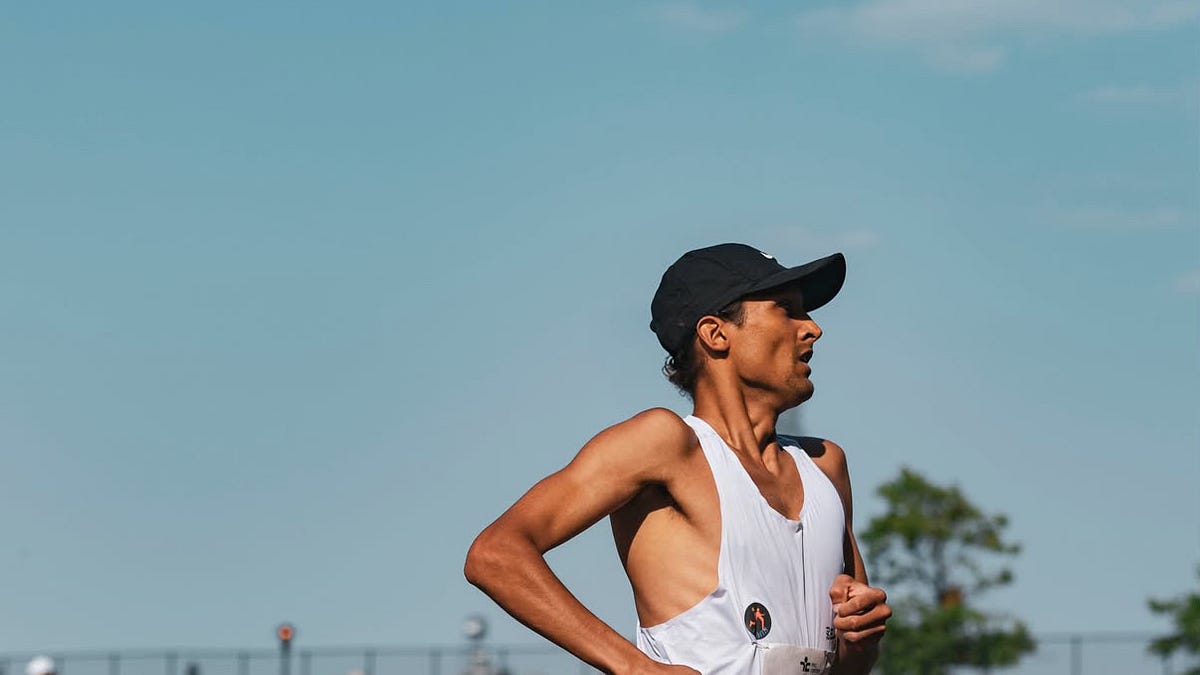
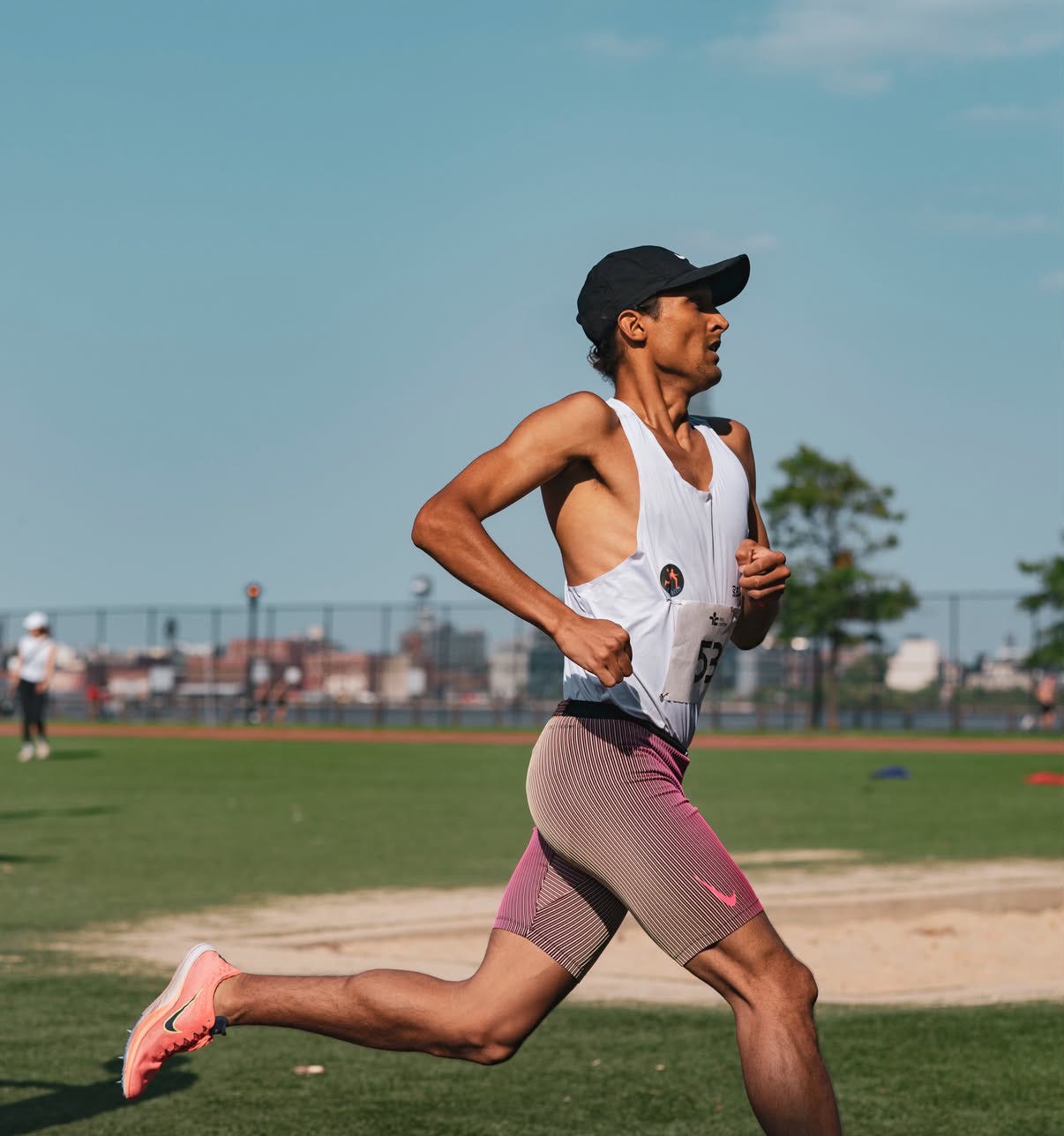
On the side of his chest, Will Whelan has a tattoo that says ‘Grass Roots.’
It’s the name of the club of his late high school coach Mike Slinskey, someone who Will says shaped both the runner—and person—he is today.
The Newburgh, NY native credits Slinskey with encouraging him to continue training competitively after graduating from Fordham in 2021, at first keeping his focus on the track before shifting to the marathon last fall. And following a 2:32 debut in New York and 2:26 in Jersey City, Will now has his eyes on his former coach’s 2:18 PR and potentially an OTQ within the next few years.
However he also emphasizes that those strict time goals are far from his only motivation, and that he takes inspiration from Slinskey to simply put in the work every day to pursue his potential.
“If you ask anybody chasing the OTQ, they don’t want to run just 2:15:59. They want to run 2:15 flat, sub-2:15,” Will says. “I want to be the best version of myself I can be, so when I do walk away from the sport I look back and have no regrets. I left it all out there….
“Thankfully, I had not only the best coach, but a good friend who pushed me my entire life to be the best version of myself…. His hard work and his love for this sport reflects on me every day and in every aspect of what I do. I hope to be an ounce as good as he was. Maybe I won’t hit a 2:18, but I’m gonna keep trying, for myself and for him and everything he stood for.”
We spoke with Will to discuss his marathon progression and goals, following in the footsteps of his Brooklyn Track Club teammates, how the NYRR Club Points Series ‘brings [him] back to cross country’ and more.
This interview has been edited for length and clarity.
Can you start with an intro of where you’re from, what brought you to New York City and your initial origins of how you got into running?
Yeah, so I am from upstate New York, Newburgh, close enough on the Metro-North. Originally I’m from Russia, got adopted, my parents are from New York. Mom is from Long Island, dad is from New Jersey. I always wanted to live in an urban environment, and the moment I graduated high school, I looked for schools in a city. I was also chasing that dream of going D1, looking at Albany, UMaine, Stony Brook, and I had a legacy at Fordham. My mom went to Fordham Law. My dad, a bunch of his brothers, my uncle went to Fordham. Getting a scholarship on the team was a big drive and a big push. That was in 2017, graduating in 2021….
I’ve done all kinds of jobs, everything from sales to now working in the city in local government. Now I’m in grad school, a part-time student, I’m running, which is almost like a part-time job of itself. I look at my Strava and I’m putting at least 10 hours a week dedicated to this. Working full-time, so I’m balancing that, but I’m also enjoying everything the city has for runners like us. There’s nothing better than this. With how popular running is, everyone’s fast in New York, and being on a competitive club team is a dream come true.
Was it always a goal to run in college, or when did that start to become a realistic goal for you?
I always knew I had the talent. I was running 5ks when I was seven. I wanted to play football, but my mom signed me up for track and field instead. I thought I could be a good wide receiver, but she thought otherwise. It wasn’t until maybe freshman year—I think I ran 18-lows my freshman year [in cross country], and I knew, ‘Okay, if I really put my work in this—maybe it’s not what I want to do, but I definitely had the talent for it.’
It wasn’t until indoor track that year that I ran the indoor mile, and I was like, ‘I’m hooked. I want to just run track.’ So I always thought of myself as a track guy who occasionally runs cross country, but that’s slowly changed now. I’ve accepted the distance running as part of who I am.
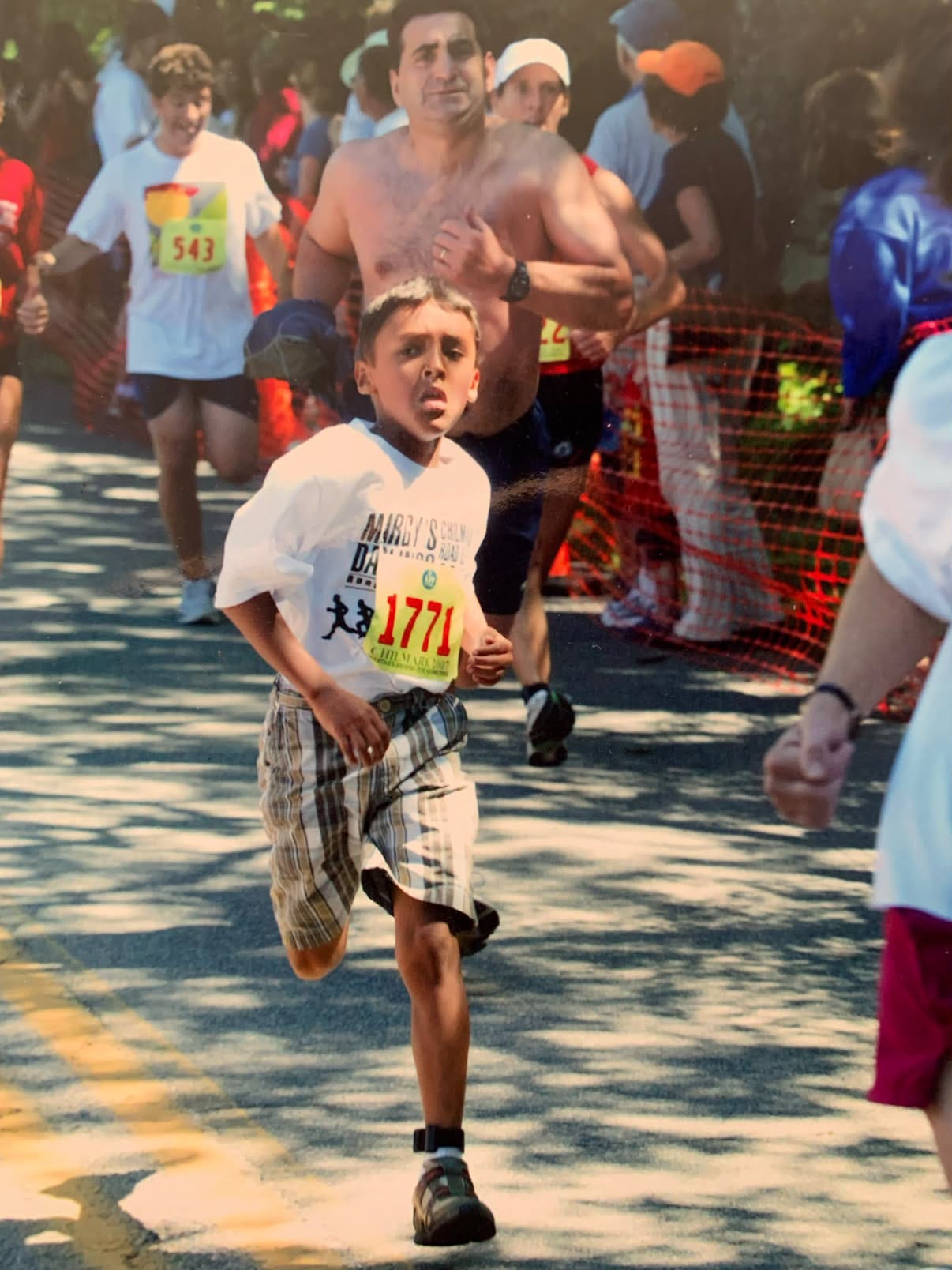
After Fordham, what did running look like for you in those first couple years post-grad? Did you always know you wanted to keep training and competing at a high level?
I was gracious to have one of the best coaches, a Hudson Valley legend, Mike Slinskey [in high school]. He unfortunately passed away a year back. When I graduated Fordham, he genuinely believed in me, and he thought I still had it. I switched more to the track and field stuff, and when he passed away, I was like, ‘I’m really gonna take this marathon training seriously now.’ So I’m grinding to beat his time. He ran 2:18, so that’s the goal now.
What motivated you to join Brooklyn Track Club, and how did they push you in those years leading up to your first marathon [last fall]?
I originally started on West Side Runners under Coach Bill Staab. They have great talent on that club, but there’s not a training environment with it. A lot of it they do independently, so you don’t have any kind of community or any kind of team orientation on that club.
My friend Alberto Mena, who is also a local runner who went to the [U.S. Olympic Marathon] Trials in 2024, introduced me to a lot of the people on [Brooklyn Track Club]. Sean Grossman, Matt Leach, Liam Dee…. And so it slowly became, ‘These are the people I want to work with, who have way more talent than me, have done way more impressive things, and I want to chase after it myself and give that a try.’ That’s where I am transitioning now, to more of doing the marathons in their footsteps, and my friends’ footsteps and my coach’s footsteps, trying to go after what they’ve already done.
You were training at a high level with Brooklyn Track Club for a couple years before doing your first marathon last fall. Was that intentional—building toward [the marathon] rather than going straight into it?
I knew eventually I was going to run [the New York City Marathon], I just didn’t have an estimated time when. I’ve always been training—especially for the Club Points Series, if you needed to put me in a 10k or a 5k anywhere, I would run it. I always thought of myself as, ‘I could race, I could run anything. I’m not gonna win it, but I’ll place and score for the club.’ For West Side, I was constantly their fourth and fifth guy. Brooklyn Track now, I’m right in the middle of the pack with the Performance Team.
It wasn’t until I got an email from New York Road Runners that they had a non-complementary bib for me if I wanted to run [the marathon] that I took it and I was like, ‘I think 2025’s our year.’ I didn’t know how fast I was going to be. I didn’t do the best training block either. I was in Spain for almost two weeks, and I didn’t get a lot of running in there. So I was kind of just like, ‘What happens, happens.’
After running 2:32 [in New York], and then 2:26 in New Jersey, taking six minutes off, I’m like, ‘I’ve got something, I can really cook. I can do something really good if I keep at it.’
What are your short and medium-term goals, upcoming races and goals for those? And long term, you mentioned 2:18, based on your coach’s time—is the Trials standard something you have in the back of your mind as well?
Right now I have planned for Indianapolis in early November, looking around the low 2:20s, probably 2:21, 2:20 flat. And I’d like to take that fitness, after some time off, of course—I’m entered into Tokyo, so that’ll be another great Major I’ve heard a lot about. That would be the one looking to sub-2:20, and hopefully it’s OTQ come 2027 CIM…. That would be the goal. And then maybe find some half marathons sprinkled in there to keep up the fitness and test where I’m at.
What motivated you to sign up for Tokyo in the spring?
It’s been a dream to go to Japan and travel. I don’t do it enough. I do a lot of domestic traveling, but I don’t go internationally a lot. The plan I have right now is, while I’m fit, while I’m chasing these times, go out there and find new competition, race against some other countries with the best of the best, and get away from staying local….
I want to get out there and challenge myself…. Get the internationals done, then come back home for the domestic Majors. That’s what I’m thinking right now.
With the OTQ standard as a goal over the next couple years, how do you balance having that time as something that motivates you with not forcing training for it?
Running is a long-term thing. It’s not something you just pick up in a year and hit marathon-pace-specific things…. I know the time right now is 2:15:59. If I don’t hit it this [cycle], and they’re going to drop it, that’s what you chase. That’s just how it is. Running is all long-term consistency, and just being dedicated and loving it. If you’re not loving running, you’re missing out on half of what we’re doing.
“I want to be the best version of myself I can be, so when I do walk away from the sport I look back and have no regrets. I left it all out there”
If you ask anybody chasing the OTQ, they don’t want to run just 2:15:59. They want to run 2:15 flat, sub-2:15. It’s chasing the next time. They don’t want to just hit an OTQ. They want to keep getting better for themselves, and that’s how I think of it. If I hit OTQ, I’m not done. The job’s not done. It keeps going…. I’ve always been competitive and shooting for the next best. I’ve never been one to, ‘Let’s just get 2:15:59, whatever pace that is, right on the mark.’ I want to be the best version of myself I can be, so when I do walk away from the sport I look back and have no regrets, I left it all out there….
Thankfully, I had not only the best coach, but a good friend who pushed me my entire life to be the best version of myself. He never gave up, and I’m not giving up either. I have his club [name] tattooed on my chest, and it just means so much to me. So I’m gonna keep pushing for him and everything that he stood for….
“He was the pinnacle I think of how a coach should be with his athletes…. Maybe I won’t hit a 2:18, but I’m gonna keep trying, for myself and for him and everything he stood for”
He was the pinnacle I think of how a coach should be with his athletes. I’ve met so many talented runners, and there’s a difference between talent and hard work. He was on the complete hard-work spectrum. He was the last one out there finishing workouts, the first one to show up. He wasn’t the most talented. In high school, he was not the best. Collegiately, he was not the fastest either. But his hard work and his love for this sport reflects on me every day and in every aspect of what I do. I hope to be an ounce as good as he was. Maybe I won’t hit a 2:18, but I’m gonna keep trying, for myself and for him and everything he stood for.
What makes the New York City running community special to you, or what’s your favorite part of the New York City running community?
It has to be everyone’s background and everybody’s insight on the sport…. Having a club team that not only wants to help you but will help you, especially Brooklyn Track, has been the best thing. Everybody there is so supportive and uplifting. They just want to see you succeed.
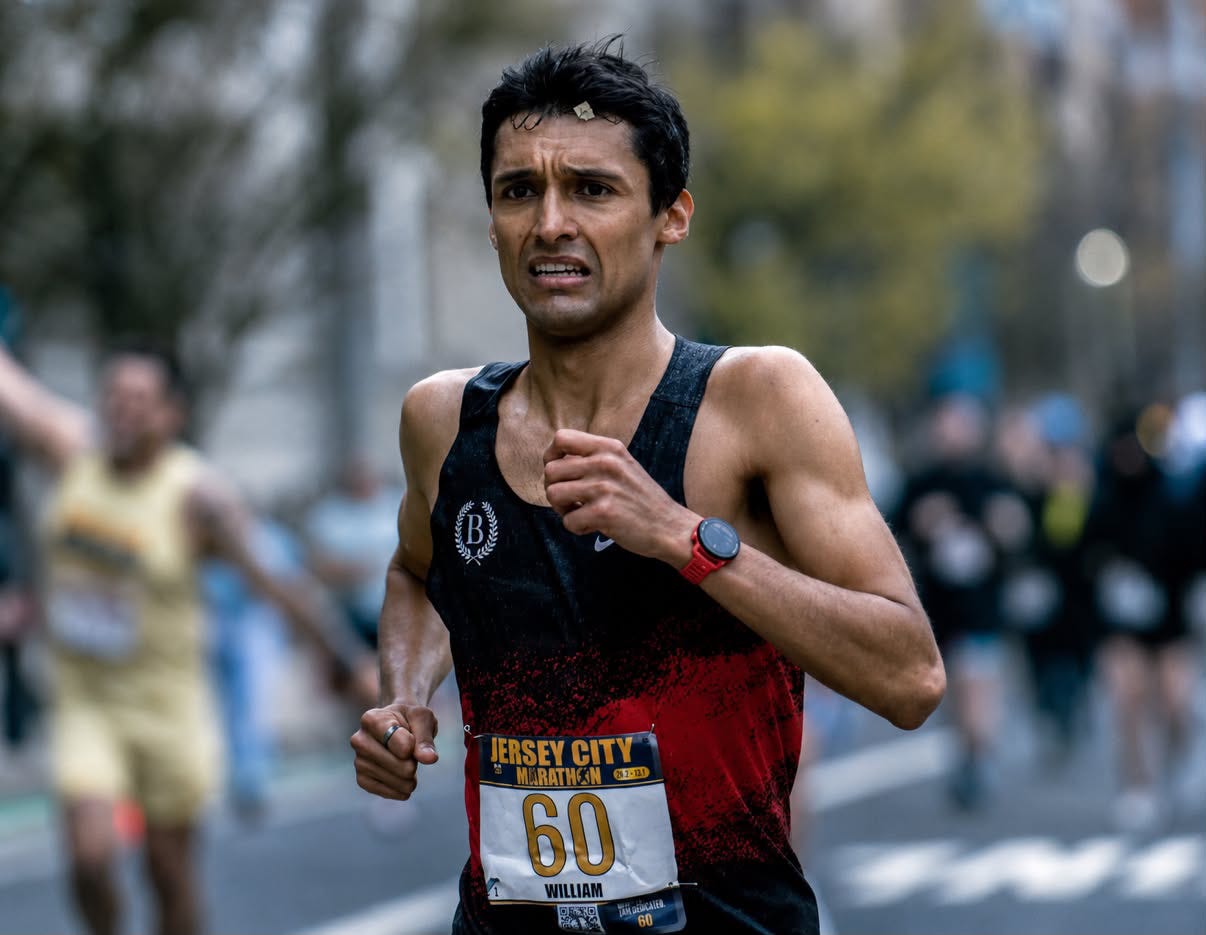 Will set a 2:26 PR at the Jersey City Marathon this past spring | Photo by @swagmirr
Any life lessons you’ve gotten from running, or ways it’s helped in other areas of your life?
You don’t have to be the best, you don’t have to be the fastest, but just showing up and being there is sometimes all it takes. And just giving it your best, giving it your all.
Any favorite running or racing memories that stand out?
I’ll quickly speak on—I did the Bronx 10 Mile [this year], and I was in the top pack. We had maybe 15, 20 guys in the lead, and it was a windy day, five, maybe six miles of brutal winds. And you look around and see a pack of NYAC, Central Park, Dashing Whippets, all these clubs, and you’re at the front, and your teammate’s there.
Another aspect is the Club Points, and it’s like you’ve made it. You’re running with the top talent in New York, and I can’t wait to feel that way again, to experience how competitive, how fun racing is in New York. It brings me back to cross country.