
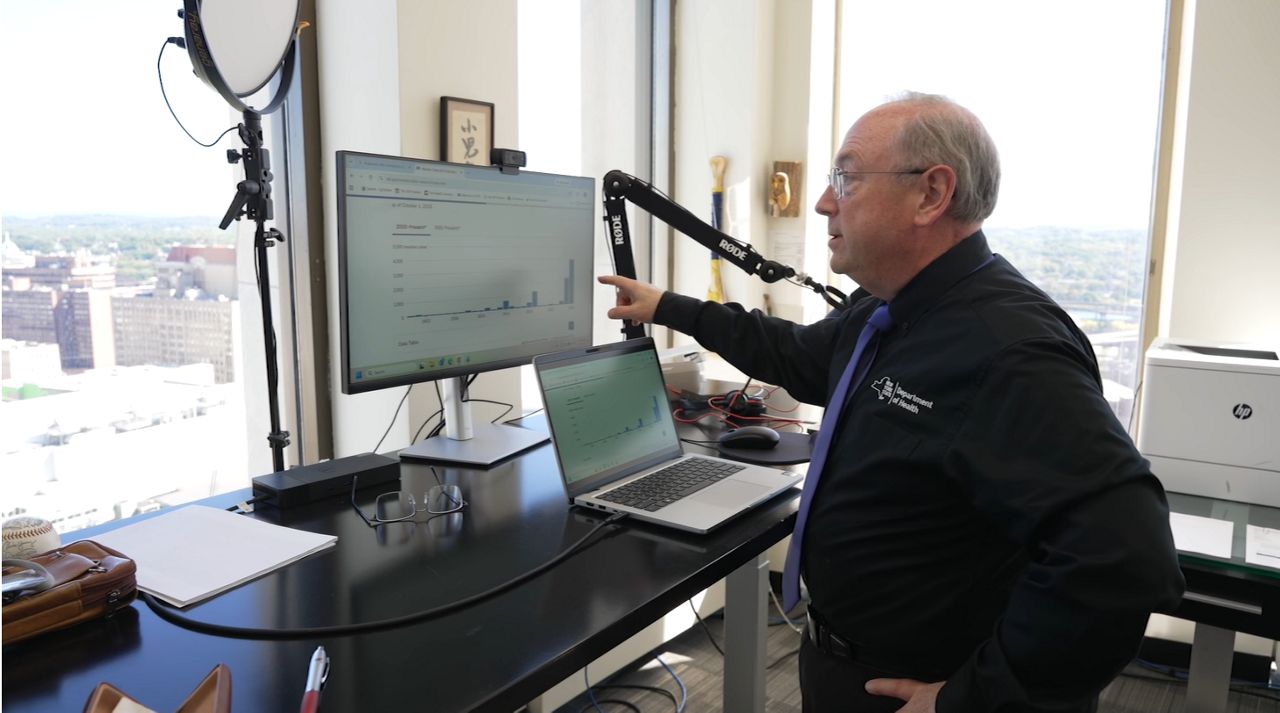
New York State Department of Health Commissioner Dr. Jim McDonald said Tuesday that he’s glad to see the state take action on the measles outbreak. That outbreak has seen more than 100 cases statewide, a majority of which persist in rural counties north of New York City.
“One out of five cases are ending up in a hospital,” he said. “Two of three of these cases are adults. What we’re doing is doing all we can to do the intervention that matters the most, getting the most immunizations into the most people.”
An executive order signed by Gov. Kathy Hochul on Monday declared a state of emergency and expanded access for vaccines in order to keep more people protected from the deadly but preventable disease. With this order, more healthcare professionals will be authorized to administer vaccines, including paramedics, pharmacists and midwives.
“One of the things the executive order gives us is we can do more testing,” McDonald said. “That’s important. Testing gives us better data. This helps us as well. So we know where we’re seeing the most measles in New York state.”
In 2025, there were just 48 total cases of measles in New York state. Now there are at least 108. The most affected county is Otsego, followed by Seneca and Steuben.
Jana Shaw is a professor of pediatrics at SUNY Upstate and a member of Let’s Get Immunized NY, a group that advocates for education and access to vaccines. She said the executive order is critical for these rural communities.
“Access to care is limited,” Shaw said. “I should mention they are communities that choose not to vaccinate… So we do need additional resources to support public health officials who are trying to reach those communities.”
McDonald believes misinformation and vaccine hesitancy is partly fueling these outbreaks. He encourages people to find out more about the vaccine that has been in use for over 50 years.
“What’s really important is you can do your part,” he said. “Get your information from a trusted medical professional who has a vested interest in your health and well-being. That’s your state health department, your local health department, your health care provider.”