
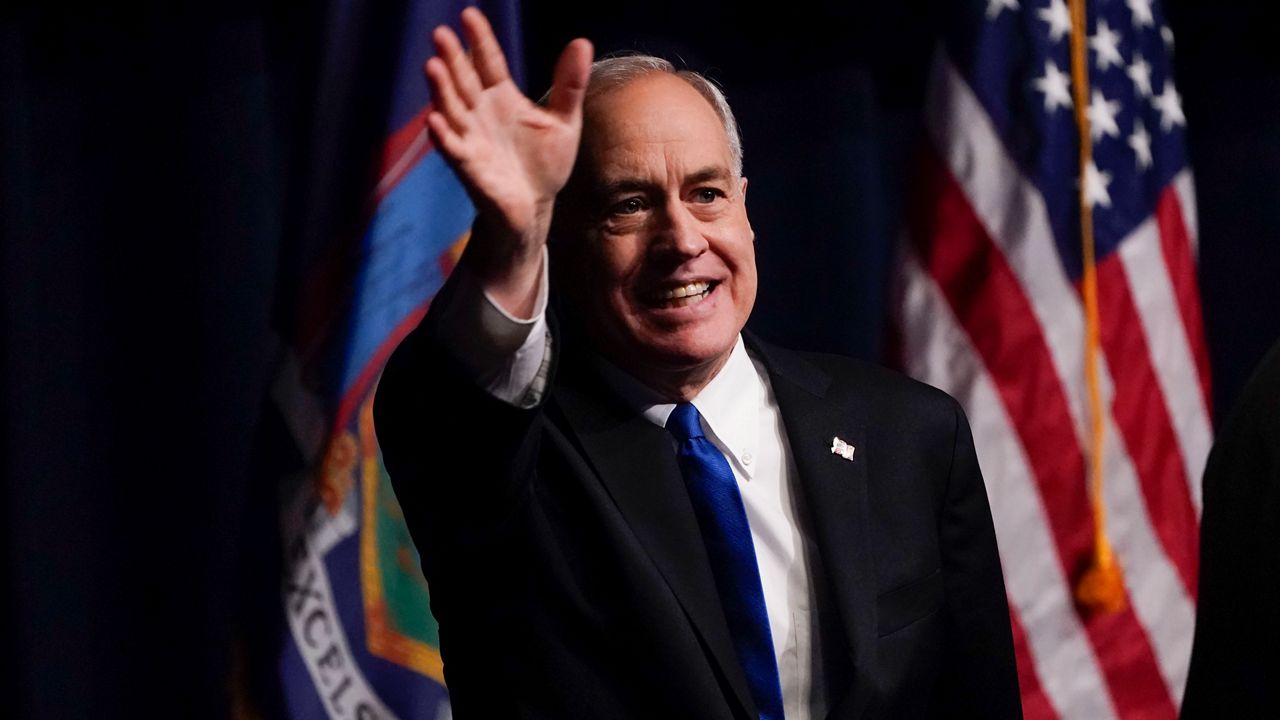
New York State Comptroller Tom DiNapoli says Wall Street is heading for a record year, providing a boost to state tax revenue as New York begins looking toward its next budget.
A new report from DiNapoli’s office shows Wall Street profits totaled $45.9 billion through the first half of the year, the highest two-quarter result on record. If the current pace of growth continues, annual profits could exceed a record $90 billion in 2026.
“Wall Street is headed for a record year; profits are up significantly,” DiNapoli said. “Probably a much higher bonus pool than we had last year; all of that will mean more tax revenue for New York state,” DiNapoli said.
Some of that revenue supports the state budget, but the report also raises a question that has plagued fiscal discussions in recent years as Wall Street has been on a hot streak: What message should state leaders take from it?
Do they lean into the additional revenue to expand services and fill gaps? Or do they use it as an opportunity to prepare for a day when there is no such hot streak to be found?
While good news from Wall Street can seem like inside baseball at first glance, DiNapoli explained that it is a core pillar of how the state funds its massive budget and network of services.
“All of the programs that we depend on in New York, whether it’s for education, healthcare, senior programs, childcare, you go down the long list. So when Wall Street is doing well, that has a positive impact on our tax revenue,” DiNapoli said.
But as state spending continues to increase year over year and New York faces out-year budget gaps, DiNapoli cautioned that fiscal instability in Washington and general long-term uncertainty are still real threats.
“It might lull us into a sense that it’s going to continue forever; we just don’t know that’s the case,” DiNapoli said.
Budget watchdogs are already weighing in on how state leaders should respond.
Andrew Rein, president of the Citizens Budget Commission, said that with those risks in mind, the state should use any budget surplus that could arise from it to pad its rainy day reserves.
“The continued Wall Street run is great news for our revenues; the issue is we have to be smart and put some money away and not just build up a spending base that comes crashing down when the economy turns,” Rein said.
The more left-leaning Fiscal Policy Institute takes a different stance. Acting Executive Director Emily Eisner told Spectrum News 1 the report shows there is room for the state to raise and spend revenue as it responds to federal funding cuts and that could be further supported by raising income taxes on high earners.
“The state is going to be looking for ways to not only plug some of the gaps that the federal funding leaves behind but to build more resilient institutions and infrastructure; to do that we need revenue,” Eisner said.
DiNapoli himself advocated for a measured approach, pointing to additional federal funding reductions expected to affect New York.
“Make hard choices as far as spending because there are still pressures coming from Washington, the cutbacks that we saw this year as far as healthcare, we’re going to see more of that, you’re going to see more cutbacks in terms of nutrition programs and SNAP programs,” DiNapoli said.
The report comes as the machinery around the state budget is beginning to turn. Because it is an election year, the governor has until Feb. 1 to present the executive budget proposal, rather than the customary presentation around the third week of January.