
A meek middle-aged woman learning to assert herself as an actress and a person; the great German writer Thomas Mann, who fled his country’s Nazism, returning with his daughter after World War II; brave young Russian women journalists fighting against Putin’s war in Ukraine; an old man mentally drifting away, to the anguish of his loving family. Having spent far too much time in front of a TV watching interchangeable mediocre Nordic and BritBox policiers, I can’t say how glorious it has felt sitting in a great film theater again, for this 64th season of the New York Film Festival, watching one serious film after another. As in years past, I could only watch a selection of the many films on offer, and I write about the ones that meant most to me. And the really good films were a truly heady experience. The public screenings continue until October 12, and after that, most of the films will be distributed to theaters, especially the Film Forum in New York.
What struck me about the best films this season was how many were concerned, more or less directly, with the current crises of wrongful wars and violence in Ukraine and Gaza, the threat of authoritarianism from the right, and the loss of democracy in countries that were solidly democratic until recently. One can cite the huge gains of the right in recent German elections, in France, and elsewhere. The world’s worries—my worries and probably yours—enter these films not didactically or boringly, but with dread and humor and warning. And the wonder of art is that what is so painful in life gets transformed and is exhilarating when shaped into a genuine work of art.
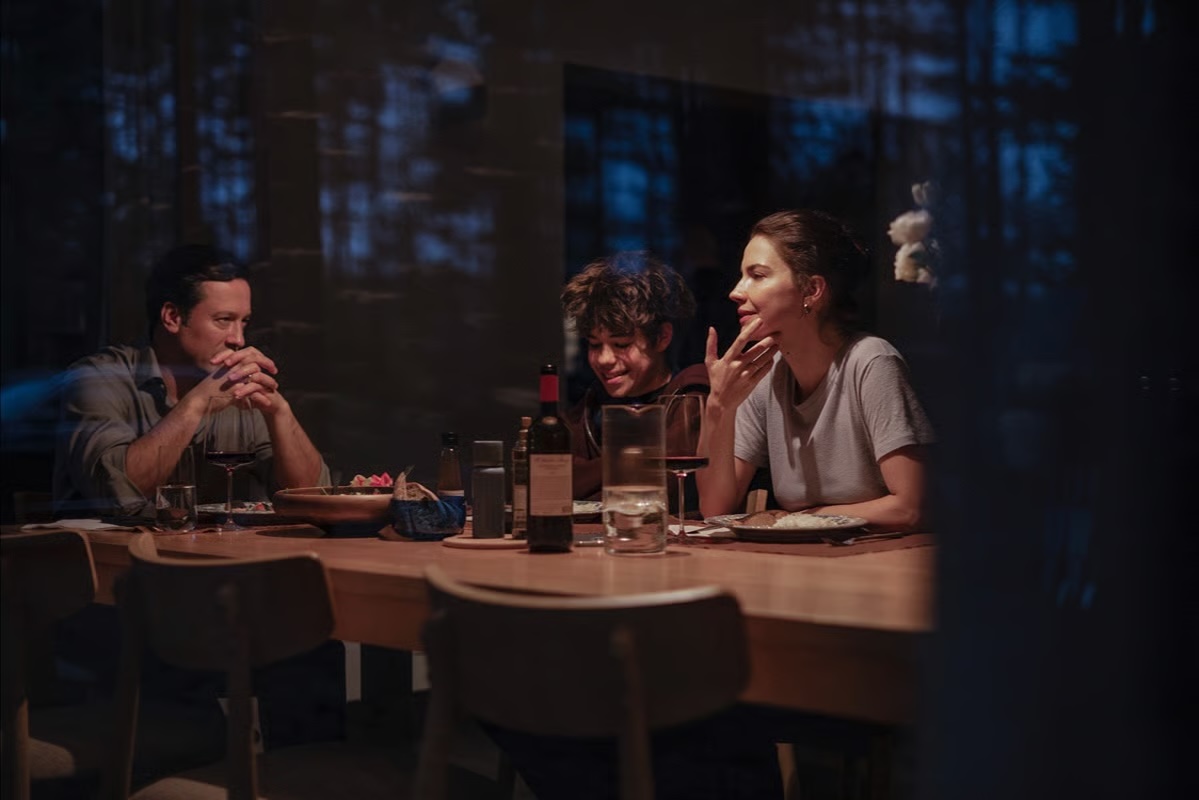
Andrey Zvyagintsev’s “Minotaur” is an amazing Russian film that changes its shape as you watch. It begins with a family that seems both affectionate and strangely apathetic. Grandma urges the child to run his usual little race as she times him; her son goes back to get her forgotten glasses, then does a playful soccer stint with his boy. But in this handsome house, the marriage feels mechanical, something seriously amiss, as they go through the daily motions. Gradually, we become aware that the husband is watching his wife and following her. Ah, so this is about an adulterous affair, a very passionate one. But no, it is about a murder and meticulously covering up every trace of it—and so far “Minotaur” stays quite close to Claude Chabrol’s 1969 “La Femme Infidele.” But that morphs into what someone in high places in Russia can do to call off detective inquiry, to cover himself, how the give and take works in a corrupt country. So, while the film appears to be a personal story, a domestic story, it enlarges into a study of corruption and then further enlarges into a seething commentary on the war with Ukraine (without naming it as such). Zvyagintsev got horrifically ill for a long time just before this film was made, and as he was slowly recovering in Germany, Russia invaded Ukraine. He was so horrified that he decided to stay in Europe, not returning to Russia. He moved with his family to Paris, “the mecca of cinema.” He made this film in Latvia because parts of it look like Russia and assembled many members of his old crew from various countries since almost all of them also left Russia in protest of the war. It is remarkable, given these circumstances, that all through “Minotaur” we feel we are in Russia and get convincing reminders of the war being waged: a grandiose recruiting poster (that collapses), an amputee on crutches momentarily in the background on the street. Then, in the final part of the film, the war fills the screen, with immense numbers of soldiers and the ridiculous lies of patriotic speeches calling on them to save the Motherland. The final damning stroke is that the central couple in the end accept and embrace each other, in full knowledge of all the betrayals, crimes, all the darkness. And we are left on an airplane, a family headed to a vacation, with a very long final take of the impenetrable enigma of total cloud cover—and with the sense that we have watched a hugely engaging and brilliant film.
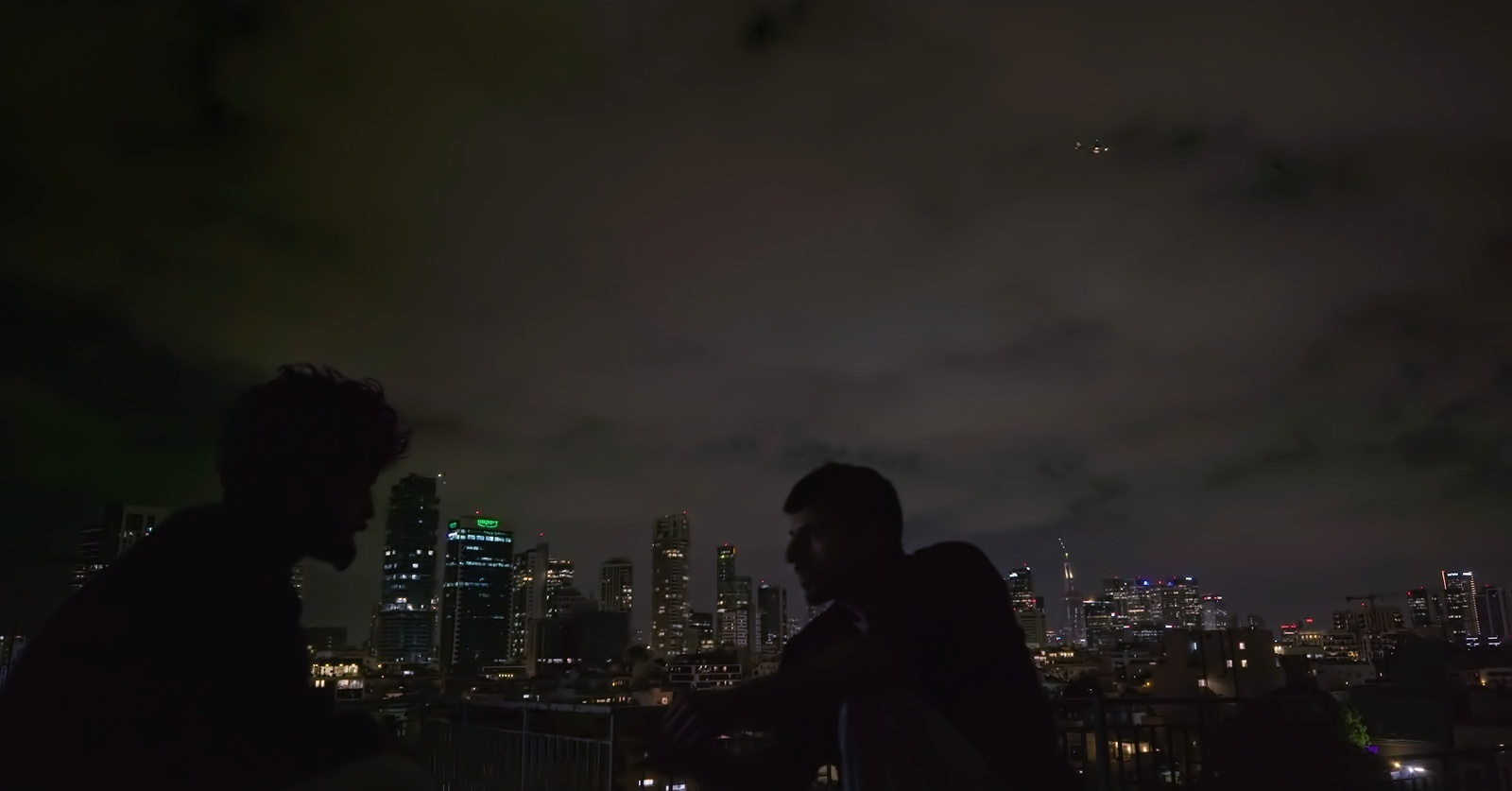 Yuval Abraham and Rachel Szor’s “NAZA.” Photo courtesy of NYFF.
“NAZA” is a totally devastating documentary, made by Yuval Abraham and Rachel Szor, the same Israelis who made the powerful “No Other Land” with Palestinian Basel Adra. That film gave us front-row seats to watch Israeli West Bank settlers brutally assault Palestinians, raze their houses and schools, and, after these were rebuilt, come back and raze them again. In this new film, we are witnesses to even more appalling realities, as narrated by some 24 Israeli intelligence officers and soldiers—seen only in dark silhouette profile and speaking with disguised voices—about what they did and what they saw as they served in Gaza. In Israel, the truth of these reports has been ferociously questioned because of the anonymity of the sources. But apart from every indication of meticulous journalism, given the rage with which this film has been received there, it is perfectly clear it couldn’t have been made in any other way. Filmed in black and white, the documentary shows Abraham sitting on a nighttime rooftop in Tel Aviv, where the intelligence services are based, asking quiet questions. At first the answers are dry numbers and procedures: how to assess a building to be destroyed, how to track down Hamas members, how phone surveillance works. Then comes a story of AI picking up a child speaking of Daddy, and both Daddy and child being killed. But, of course, mistakes are made, and sometime only the family is killed, with Daddy not at home after all. Worse, there are deliberate killings of children, of people known to be ordinary Gazans, of people racing just to get food. Like a video game, one says, all remote. And from another: The intelligence agents were no Arab haters, they were from Tel Aviv, the elite. Abraham says he chose to film at night because people will say things in the dark that they might not be willing to admit in daylight. One officer says it was fun, not a single voice raised to express doubt while they were in action, completing the “mission.” To one who admitted feeling disturbed, Abraham asks, “Why didn’t you say something?” “Because it wasn’t my role, I was technical.” The Nazi parallels are overwhelming, and I say this as a Jewish person for whom Israel was an important and special place for most of my life. It is bewildering in fact—how in the world could Jews of all people be doing this to others? Of course, if you have lived your whole life with everyone around you wanting to kill you, what does that do to your own humanity? The incident on the Dubai plane filled with Israelis, in which the pilot attempted to crash it, throwing the passengers back into the vulnerability and horror of October 7 and leaving them not knowing whom to trust, reminds one of why, apart from Netanyahu’s toxicity, Israelis went along with the Gaza bombings and chose not to look. But this film’s Israeli director chooses not to go into causes or feelings of guilt—he wants to keep his focus on what was done to the Palestinians. Gaza is full of bodies, one tells us. The film periodically cuts away from these terrible exchanges to view Tel Aviv apartment buildings, looking into windows where Israelis go about their daily lives, not far from Gaza. Interestingly, Jonathan Glazer, the British director of “The Zone of Interest,” is an executive producer of this film, and we remember the pleasant domestic life he imagines for the family of a major Nazi commandant, living in a house right next to Auschwitz. Israel has banned “NAZA” (to be fair, just as French TV banned Marcel Ophuls’ “The Sorrow and the Pity” as late as 1969, and as Poland objected to Claude Lanzmann’s “Shoah,” because both Holocaust documentaries told truths about ugly capitulations that neither country wanted known). So, Netanyahu and others have threatened the masterful and courageous creators of “NAZA” (and their families!) with severe punishments, and it is even more deeply disturbing that the whole country seems hostile to these two brave truthtellers. For good reason. It is hard to see how Israel can hold its head up after the clearly factual horrific revelations in this extraordinary and painful film. And the fact that they are not alone in this sad world for such behavior doesn’t help.
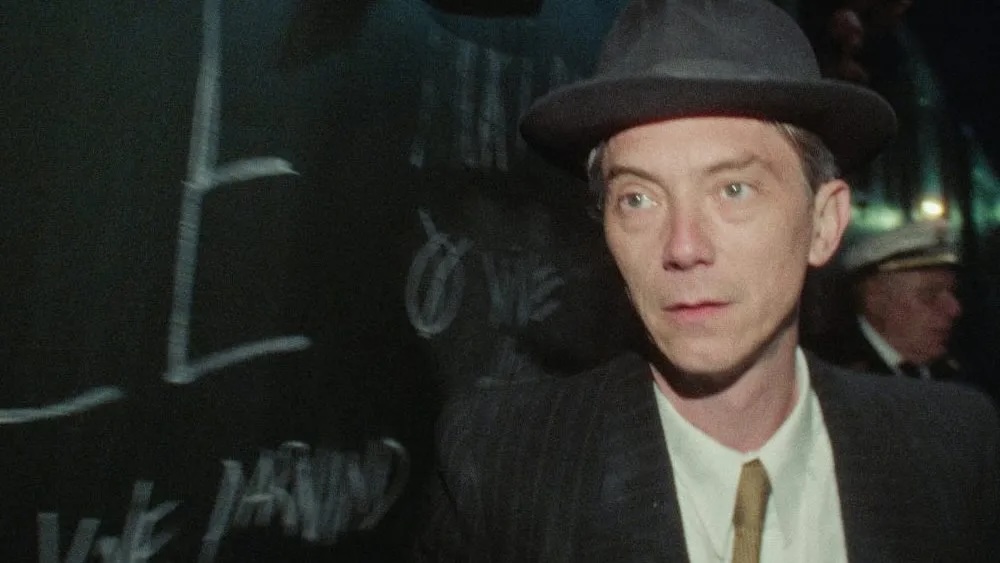 Emmanuel Marre’s “A Man of His Time.” Photo courtesy of NYFF.
Just as “NAZA” deals with material that is painful for Israelis to face, “A Man of His Time” looks at a period of French history that France is deeply uncomfortable examining. The Nazis invaded in 1940 and France fell quickly, with the Nazis taking full control of the north and a Vichy government set up in the south under the appearance of French control. That government was profoundly collaborationist, gradually as terrible in its actions as the Nazis, and eventually fully taken over by them. And perhaps it is because France is currently threatened by an increasingly powerful right that this period seemed important to recall just now. Director Emmanuel Marre has constructed the film around his grandfather, Henri Marre, who played an ignominious role in the Vichy government. Eager for a position of importance but instead becoming a bureaucratic functionary, Henri slowly transforms, as we watch, into someone who calculates the numbers of Jews to be deported just as he figures out how much fuel to allot and decides which terminology best disguises the reality of what he is doing. Another figure directly above him, Henri Maux, is an example of someone who resists, slow walks his responses, as Henri Marre—though often looking uncomfortable in the face of the worst things said or requested—complies. A lovely, poetic voiceover of love letters runs through the film, read as the correspondence between Henri (Swann Arlaud, in a beautiful performance) and his wife Paulette (Sandrine Blancke), which Marre says comes from their actual letters. When she finally joins him and understands how he has evolved, a whole new interesting layer of complexity is achieved. The “little lady” turns out to be charismatic, as we see in one scene, and she ends up morally appalled by him. It is a quiet, very skillfully made film, though not an easy one to follow because it is both dense and low-key, almost casual, in its descent into a moral abyss. But the unusual angle is what makes it particularly interesting.
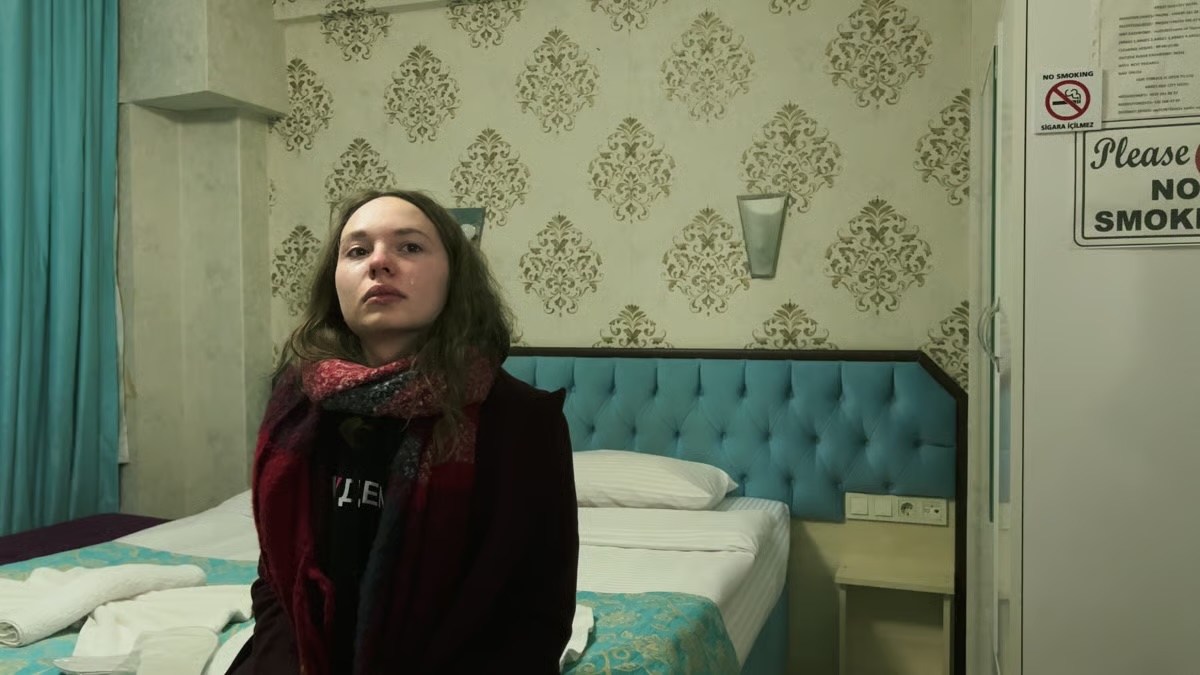 Julia Loktev’s “My Undesirable Friends.” Photo courtesy of NYFF.
In keeping with these visions of a world on fire, and of those who comply with evil (government) forces and those who fight them, a special mention must be made of Julia Loktev’s 12-hour documentary “My Undesirable Friends,” which follows dissident journalists in Russia and, in Part 2, shows how they were forced into exile. I missed Part 1, “Last Air in Moscow,” but I must say Part 2, “Exile,” in this festival, often had me in tears. Right after Putin invades Ukraine to the horror of these journalists, he declares all-out war on the media. Newspapers and TV shows felt compelled to close down, and journalists who told the truth were labeled “foreign agents” and faced 15 years in prison. So, the film—shot on an iPhone, yet wonderfully made—follows a group who worked for TV Rain, the last independent station, as they, with great reluctance, leave their homeland for various places: Istanbul, Tbilisi, Tel Aviv, Prague, Vienna, Amsterdam, and eventually a number in the U.S. The filming is intimate, and almost entirely with women. The first two journalists we follow go to Turkey, the only place that would take them without a visa. Lera, the youngest at TV Rain, is especially consumed with grief, feeling lost without work, cut off from family, wandering from country to country and not knowing where she will be tomorrow, worrying about money, getting ripped off by a cab driver, in a struggle over how many people can sleep in the room they rented. Fiercely opposed to the Ukraine war, they cannot understand their parents’ support of it. We move on to another woman, Anya Nemser, somewhat older and a major journalist (also co-director of this film), with a little family. She is granted a passport to Israel but is appalled that, given all her moral values, she is willing to take it. She worries about how her teenage daughter is processing all this, is determined to leave Tel Aviv, and ends up in Tbilisi despite information on the exiles’ grapevine that Georgia made some kind of deal with Russia to keep people—especially those who worked for TV Rain—out. She is full of pain—radiating this wave of madness that, she says, her young daughter must intuit—but she keeps reminding herself that she has it a lot better than those who are being bombed. And when she gets to Tbilisi with her husband and child, after multiple “no” answers to her apartment inquiries, someone recognizes her name from TV Rain and says it would be an honor to rent to her. They all struggle to keep reporting on Russia’s war against Ukraine, from wherever they land, but at great cost to themselves. One young woman decides to go to Ukraine itself to report what she sees, shockingly seeking out the frontlines, and writes so detailed a description of dead bodies that that alone moves you to tears. There are joyful reunions of friends and colleagues. These are incredibly brave and wonderful people—heroic, warm, funny, and loving (and physically beautiful), clearly all major journalists. Following Putin for so many years, one could wonder what happened to the Russia of the great literature one loved, but looking at these young people, one can see it is still very much alive, though tragically embattled. And of course the details of their struggles now feel all too familiar to us here, with Trump “banning” CNN, MS NOW, and Politico from the White House. In the film, Putin’s talk and his actions sound chillingly like Trump’s playbook. The film is a warning to us.
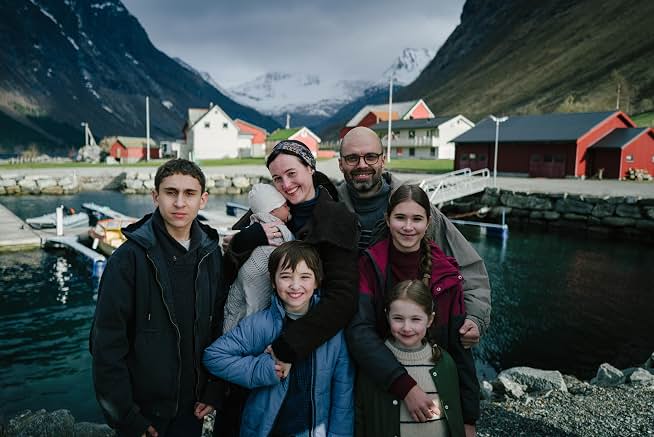 Christian Mungiu’s “Fjord.” Photo courtesy of NYFF.
“Fjord” raises other kinds of moral questions. A Romanian family has come to live in a part of Norway with stunning fjords, at first warmly welcomed and then met with awful bureaucratic censure for behavior not unusual for a Romanian religious family but alien and punishable in the eyes of Norwegian social services. That this tension occurs in a part of the world renowned for its tolerance and humane values is what gives the film its interest. Romanian director Christian Mungiu’s films can be masterly, like “4 Months, 3 Weeks and 2 Days” and “Graduation,” but “Fjord” is, in my view, not one of his best. It goes on longer than it needs to. And with its central idea, it is somewhat predetermined and the characters feel schematic, not quite coming alive. Still, the pressures exerted by the mainstream culture, especially since it sees itself as so well-meaning, are disturbing. It is a film worth seeing.
 Pedro Almodóvar’s “Bitter Christmas.” Photo courtesy of NYFF.
If you really like Pedro Almodóvar’s work, as I do, you are willing to cut him a lot of slack. He made wild films when he was young and, as he has aged, increasingly poignant, very human films, some truly great. “Bitter Christmas,” his latest, is not one of the great ones, but I liked it. There are multiple plot lines, revolving around a number of great-looking women, and a sense of soap opera. Elsa, the main character, once a filmmaker but now in advertising, suffers from migraines and panic attacks; her friend’s young son has a tumor; another’s husband is spotted in a romantic embrace when supposedly on a business trip. All this is complicated by questions of what is “real” because these turn out to be characters in a screen play Raul is writing for a new film. And further, they are recognizable appropriations from the lives of his friends, a whole other set of characters. All this culminates with Raul’s assistant of many years furious with him for using his friends in this way—Almodovar in effect presenting an attack on his own work, indeed the very film we are watching, and defending it as well in the name of art. The cinematography is lively and colorful as always. A male stripper’s charming erotic act reminds us that we are in a gay world despite seemingly heterosexual couplings. Two songs that interrupt the action—mourning the loss of things one most loved, now disappeared, devoured by time—remind us that this is the film of an elderly director. Themes from his terrific “Pain and Glory,” but as good as that? No. But nonetheless engaging and pleasurable.
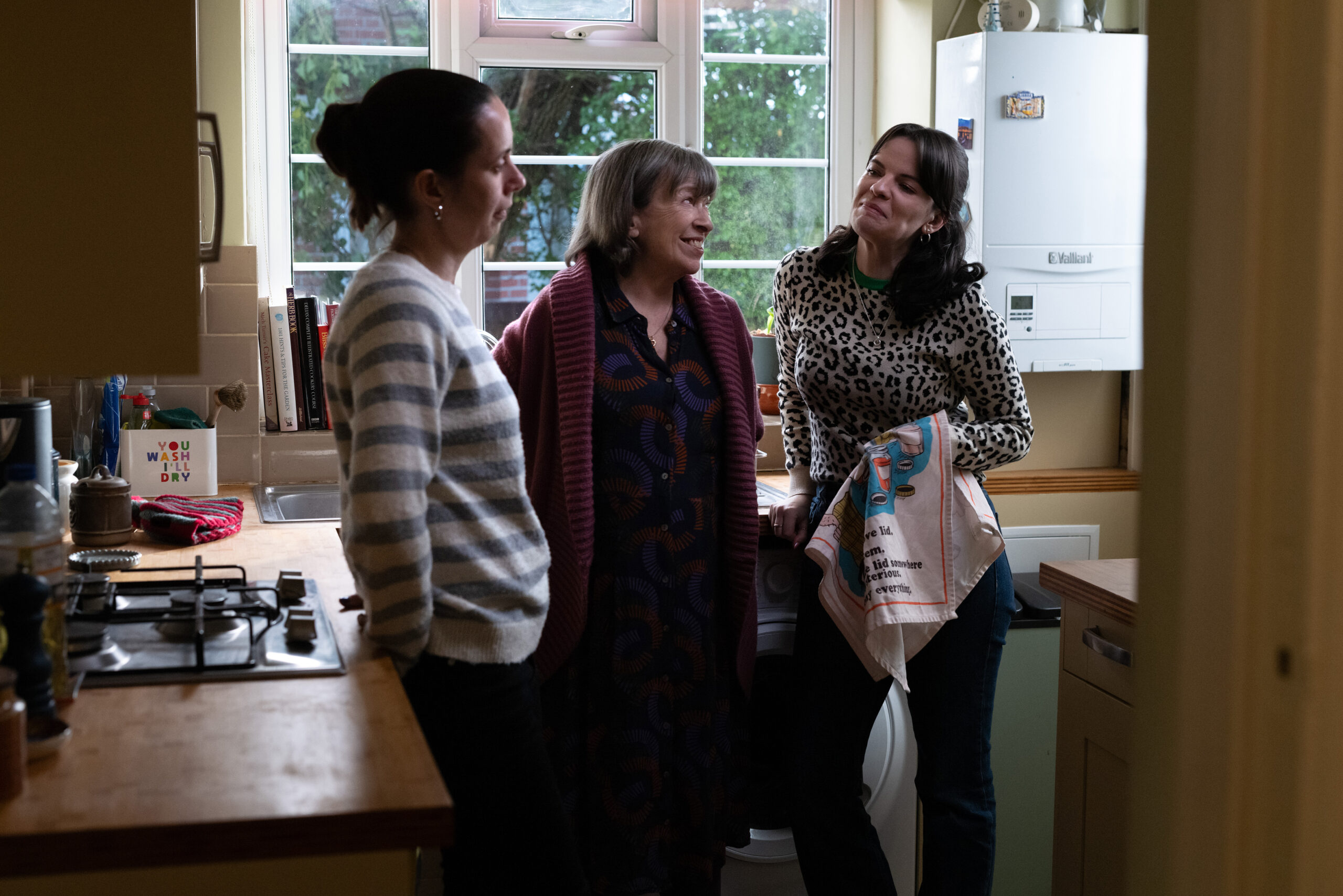 Mike Leigh’s “Tender Loving Care.” Photo courtesy of NYFF.
Mike Leigh’s “Tender Loving Care,” which he says is his last film, hits you with a gut punch. It begins with a slow, lingering extreme close-up of the most weathered of faces, that of an old man (Alan Williams), beaten down by the ravages of time and who knows what else. It is a face that is incredibly moving before a word is uttered. Leigh says his new film is about caretaking, people taking care of one another. And what follows is the first of a series of encounters, in which two young/middle-aged social workers, Amy (played by Kate O’Flynn of “Widow’s Bay” and three earlier films of Leigh’s) and Rosie each try hard, despite being hindered by government cuts to social services, to engage and support people in varied kinds of trouble though they are mostly turned away, and some of the clients seem beyond help. The two women, longtime friends, are there for each other as well. When Rosie in distress declares she has left her no-good married partner of five years, Amy invites her to move into a spare room. In Leigh’s usual mix of humor and sadness, these two fill the first part of the film with spirited interactions and joking even as their various intents and desires are thwarted. That kind of super cheeriness appears in other Leigh films, most obviously “Happy-Go-Lucky,” and to me it sometimes feels strained and excessive, as it does here. But darker notes are sounded, and they resonate deeply. A visit to Amy’s parents, Birdie and Geoff Spooner, brings up reminiscences from the old Laborites of changes for the worse in social service funding since the ’80s Thatcher years. The parents receive a recently widowed friend full of anguish over her son’s estrangement, how she screwed it up, suffocated him, was a terrible mother—with warm reassurances from Birdie. The long-married couple display some minor bickering—Birdie reproaches Geoff for continually interrupting her when she speaks—but their relationship is clearly a loving one, their daughter Amy is deeply attached to them, and they open their arms to Rosie as well, as another daughter. But it soon becomes clear that something is very wrong with Geoff. Marion Bailey, who is Mike Leigh’s real-life partner, is brilliant in the role of Birdie and carries this devastating last half of the film, her face reflecting her growing agitation, worry, and deep sorrow as her long-time much-loved husband drifts away into what appears to be dementia. The family’s singing together of old songs brings him back for a little (as people deep in Alzheimers can still sing the songs of their youth) and is deeply touching, reminding one of Terrence Davies’ early “Distant Voices, Still Lives,” built entirely around a working-class community during World War II movingly singing together in pubs. This film may be about caretaking, about people taking care of and loving one another, but for me its enormous power lies in grief: the pain of old age, illness, and dying. This is a difficult subject, especially for making a film to entertain, but Leigh does it stunningly here. Doubtless what contributes to the power is the very serious illness that Leigh himself is now suffering from and which he has said will probably force him to end an extraordinary life in film. Meanwhile, because Leigh’s renowned method involves his actors collaborating with him to discover the story, the final half of the film is really constructed by family: His partner Marion Bailey; her daughter Alice Bailey Johnson, who plays Rosie; and Paul Jesson, who plays Geoff, has worked with Leigh (and Bailey) since 1980, and played the father in “Mr. Turner.” So, Leigh had the closest support he could have wished for, and you feel it. There are sequences in this film that move you to tears: the simple, slow backing away of the camera from the singing around the father’s bed until it rests, Ozu-like, on the open door, and the final slow take, once more, of that opening weathered face of immense sorrow.