
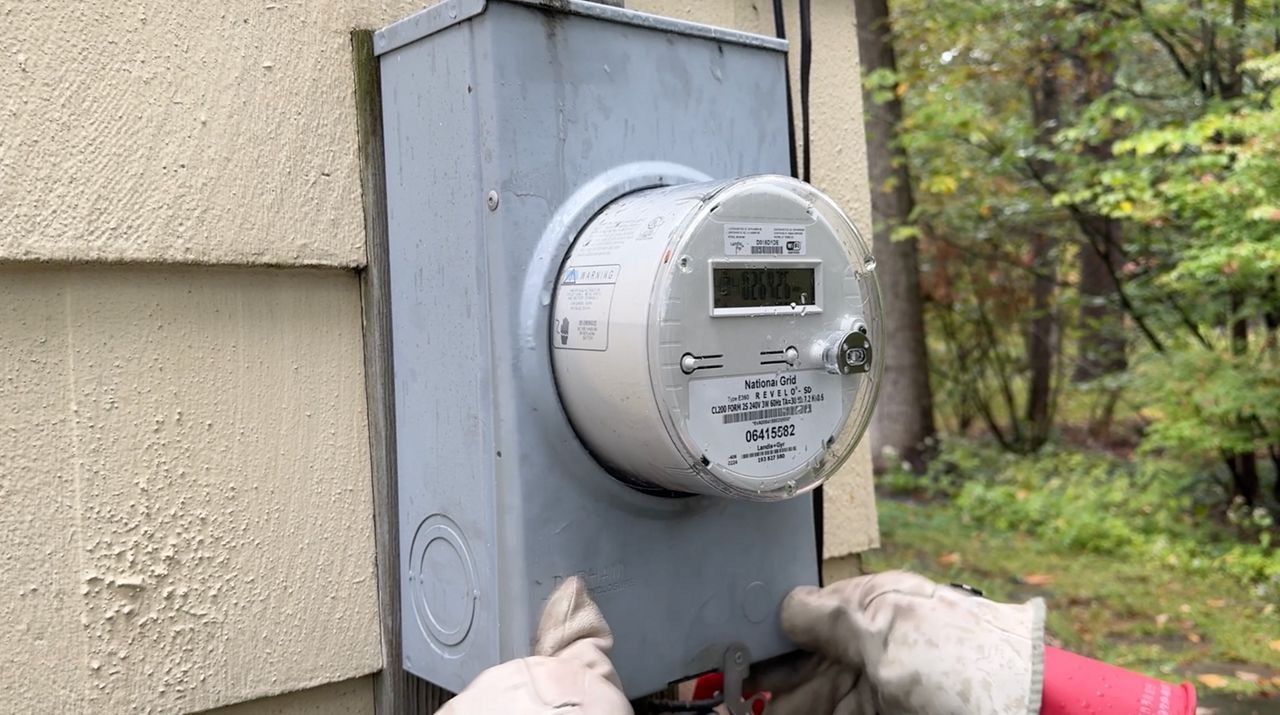
National Grid’s smart meter rollout across upstate New York is entering its final stretch, with the utility aiming to wrap up installations by July 2027.
The technology is meant to benefit both customers and the overall grid. The program’s progress comes as New Yorkers pay more than 60% above the national average for electricity.
It has been almost five years since National Grid began replacing old meters with smart meters.
“Since that time, National Grid has installed over 2 million meters, and we are intending to wrap up the program in July of 2027,” said Michael Mokey, head of advanced metering infrastructure at National Grid.
The company says the new meters are already improving on the old system, especially during outages.
“In the past, we would have to wait for a customer to call in. Now we’re able to see in real time when a customer has lost power and start a response sooner, hence restoring customers quicker,” Mokey said.
The meters are tested before they reach homes.
“Once they arrive here, we then sample test, randomly, the meters as well to make sure they’re performing and they’re accurate before they’re ever being used,” Mokey said.
The installation itself takes only a few minutes, said Zachary Conerty, senior technical instructor for National Grid Customer Metering. Technicians first inspect the meter area for signs of damage or arcing wires. Then they remove the cover and the existing meter.
Before the new meter goes in, technicians test the power supply.
“We’re going to check for the supply voltage, which is actually coming from the transformer, right from the overhead wires, and make sure that the customer has the correct supply voltage,” Conerty said.
Next year, National Grid plans to offer customers a new way to track their power use, free of charge.
“It provides appliance-level insights,” Mokey said. “It really allows them to make informed decisions and to see how they’re using energy in near real time.”
With winter approaching, Mokey said the data could help customers lower their bills.
“Smart meters provide a new level of energy transparency to our customers,” he said. “And it’s actionable data that they can make real-time changes in how they’re using energy to save money.”
Company officials say the meters help everyone involved by cutting costs and making the grid more efficient, with the savings meant to be passed on to customers.
A report from MIT found that smart meters lower household electricity and gas use by more than 3% through real-time feedback.
Critics have raised concerns about data collection and about what have been called “perceived bill increases,” which occur when meters replace inaccurate estimates with actual consumption figures that had been under-reported.
Customers uncomfortable with a smart meter can opt out for a fee. National Grid is expected to release its winter outlook report Oct. 14, which will show what customers could expect their bills to look like.