
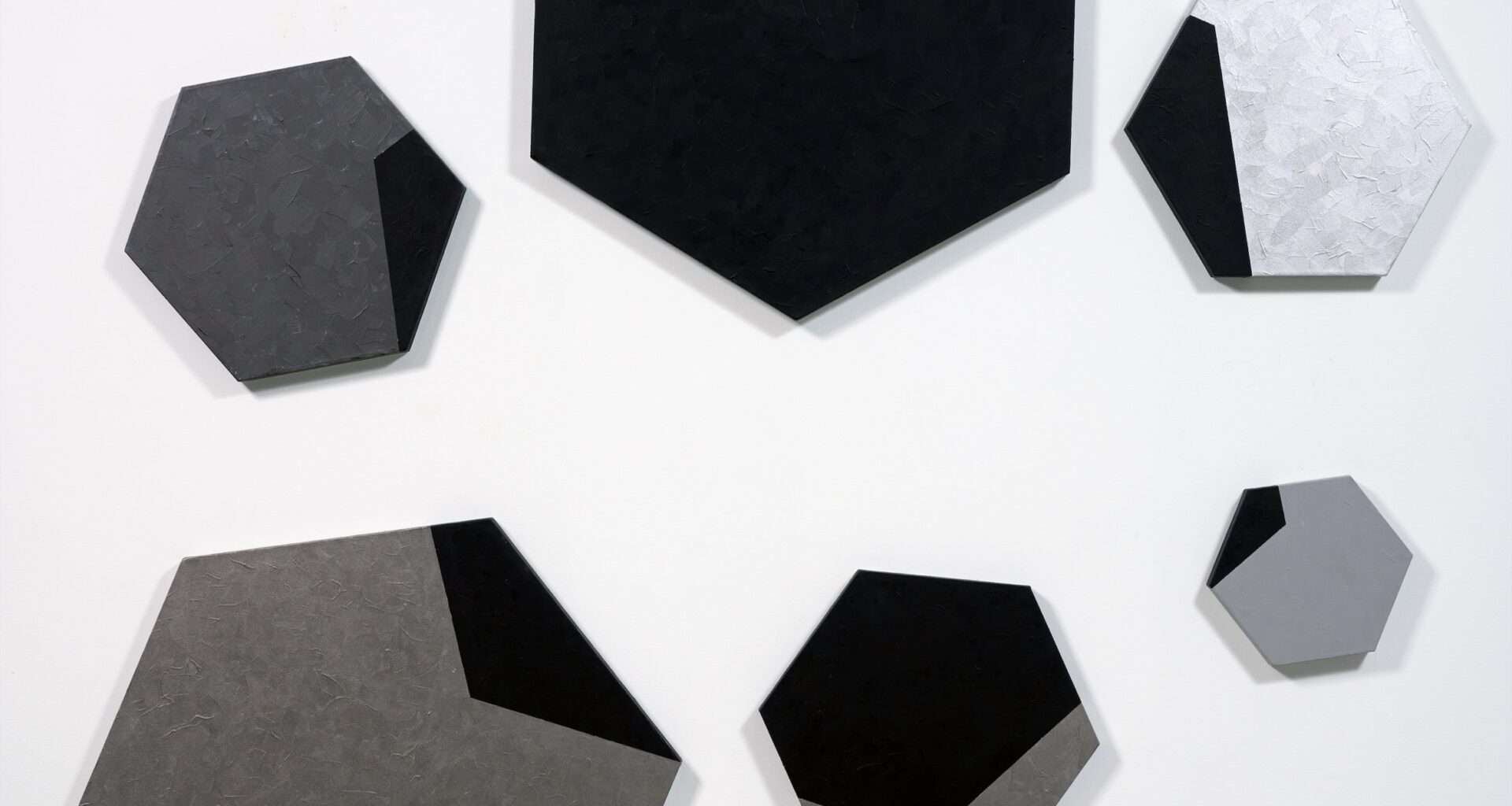
Susan Weil : Moving in Time Space
Sundaram Tagore Gallery
September 10-October 10, 2026
New York
Susan Weil’s work first came to wide public prominence very early in her career, when an example of her “blueprint” series Female Figure (1950), a collaboration with her then husband Robert Rauschenberg, was both exhibited at MoMA, and featured in Life magazine, in 1951. The curator of photography at MoMA at the time, Edward Steichen, recognized the contemporary significance of these non-traditional, camera-less collages, inspired in part by Weil’s childhood experiments with cyanotypes. Alternate modes of presentation have since been an integral part of Weil’s approach to her painting, drawing and sculptural practice, yet strongly influenced by the methodical approach to color and structure exemplified by one of her most important mentors at Black Mountain College, Josef Albers. This current exhibition offers a selective survey of most recent and historical works that elucidates Weil’s ambition to stretch the synaptic connections between aleatory improvisation and procedural heuristics in her work.
The very lively installation of the works tends to disrupt any progressive chronology which sets distinct bodies of work in relative motion. Sculptures, works on paper, paintings and kinetic structures from different phases of the artist’s career underscores the show’s title explicitly instigating a Time /Space condition. A composition from an earlier phase of Weil’s practice, Revolution (2009) could effectively work as an analog index to the notion of relative time and movement as its six repetitive hexagonal canvases diminish in size in an approximate spiral. The artist cannily avoids an even progression though, as the composition gets upended by her inclusion of a larger hexagon toward the end of the spiral. In addition to this visual curveball, Weil paints a seventh, larger hexagon that transects the entire spiral. All of this is done in a scale of achromatic values that add their own dynamic counterpoint. The piece combines the timeless authority of a geometer with the evanescent improvisation of a jazz musician. Memoremem (2005) offers an interesting contrast to Revolution in that a base note gray scale progression of vertical panels, almost as if a falling sequence of fence slats, organizes time in a more linear fashion from left to right. In this instance however each panel is embellished with gestural painting that invokes a grassy landscape which impression is augmented by natural collage elements like a bird’s wing and a copper “necklace” that nevertheless calls to mind falling leaves strung together in a backyard lapidary. In both works one discerns the influence of Albers in how color and structure are strongly interdependent.