
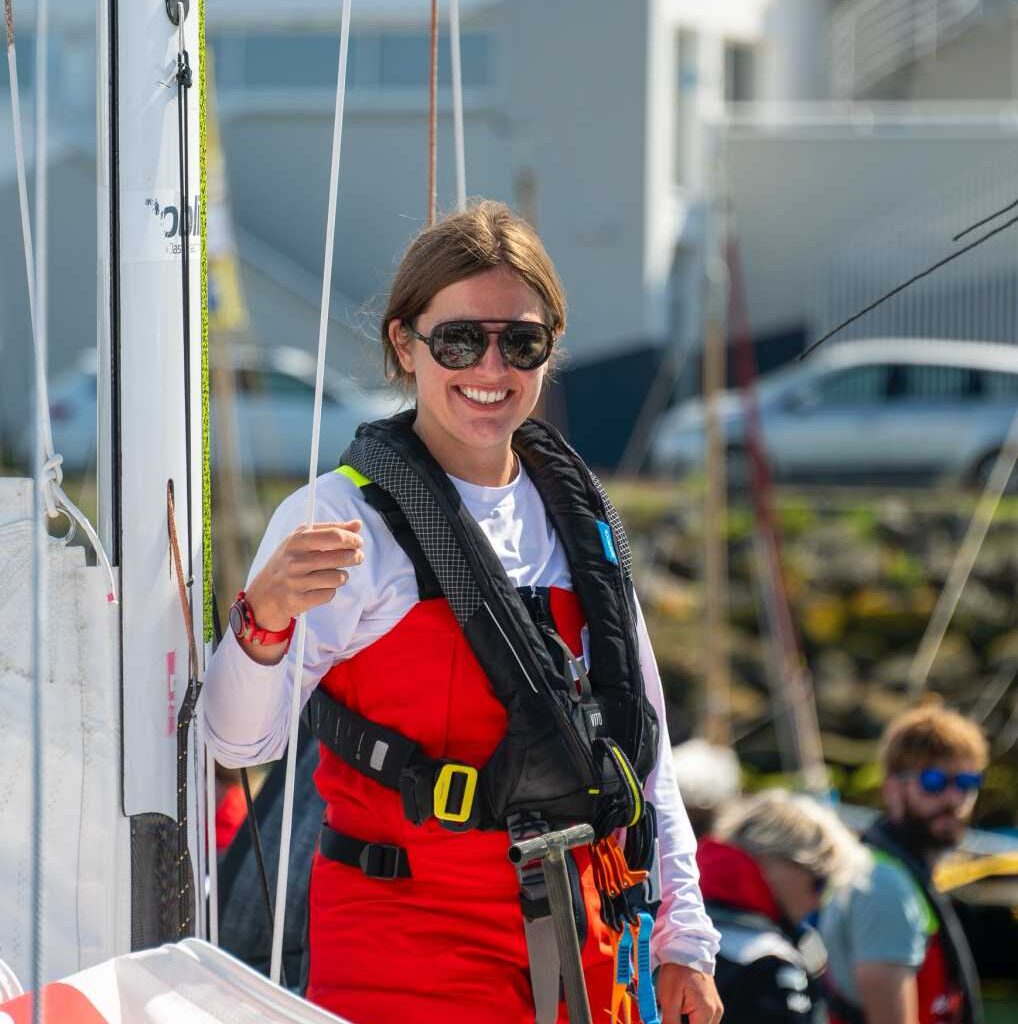
If the wind is right, Ambre Hasson will be sailing away across the Mediterranean and beyond…
The 1980 hit song, “Sailing,” was inspired by the singer’s sailing adventures as a youngster, on a kind neighbor’s boat. In a 1995 interview with Howard Stern, Cross recalled how those amazing experiences on the water helped him escape his troubles and would later become the inspiration for his song.
Free-spirited and fearless French American offshore sailor, racer and Class40 skipper Ambre Hasson told QNS: “I love where sailing takes me, both geographically and personally. You keep learning because every boat, coastline and weather system presents something different.”
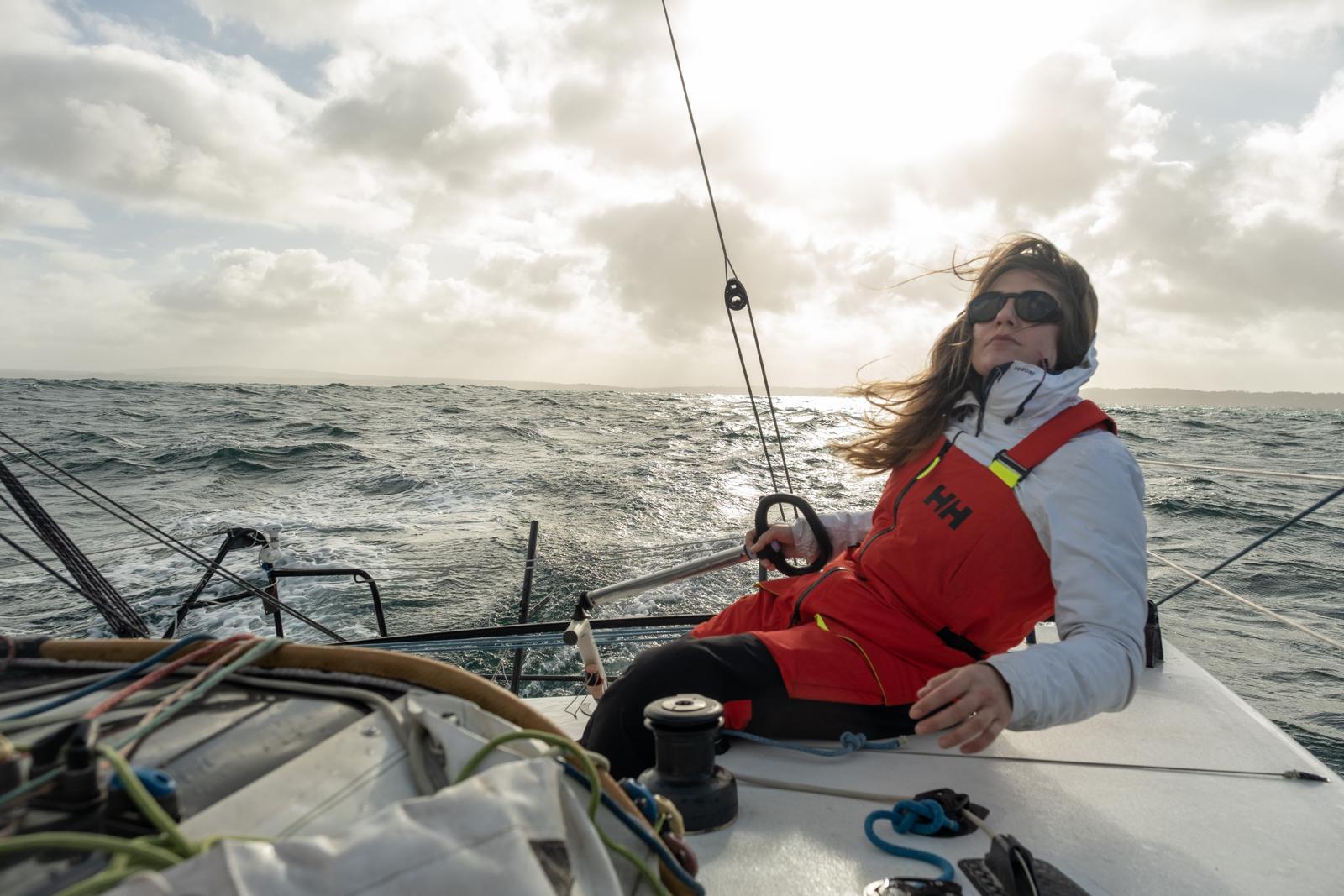 Photo courtesy of Ambre Hasson
Based in Lorient in Brittany, on France’s Atlantic coast, the former Long Island City and Astoria resident races extensively around Brittany, but also completed the 2025 Mini Transat solo across the Atlantic and recently raced a full Class40 (a 40-foot, ocean-racing boat) season in the Mediterranean.
The unassisted transatlantic race in the 6.5m class (21-foot boats), Mini Transat is known for blending performance, strategy and resilience. But the exciting event was marked by a dramatic start: Rapidly deteriorating conditions — shifting winds, rough seas and a severe storm forecast led to neutralization of the first leg on Sept. 25, with a safe haven in Portugal. Participants included 90 sailors (the youngest was 22), 30 women and 30 nationalities.
 Mini 6.50 Training. Photo courtesy of Ambre Hasson
“Offshore racing is my favorite because it combines strategy, weather, endurance and technical problem-solving. The race continues day and night, so you have to manage yourself as carefully as the boat,” Hasson explained.
“I spent several seasons competing in the Mini 6.50 class. I finished second in a demanding 500-nautical- mile solo race in the English Channel and completed the 2025 Mini Transat.”
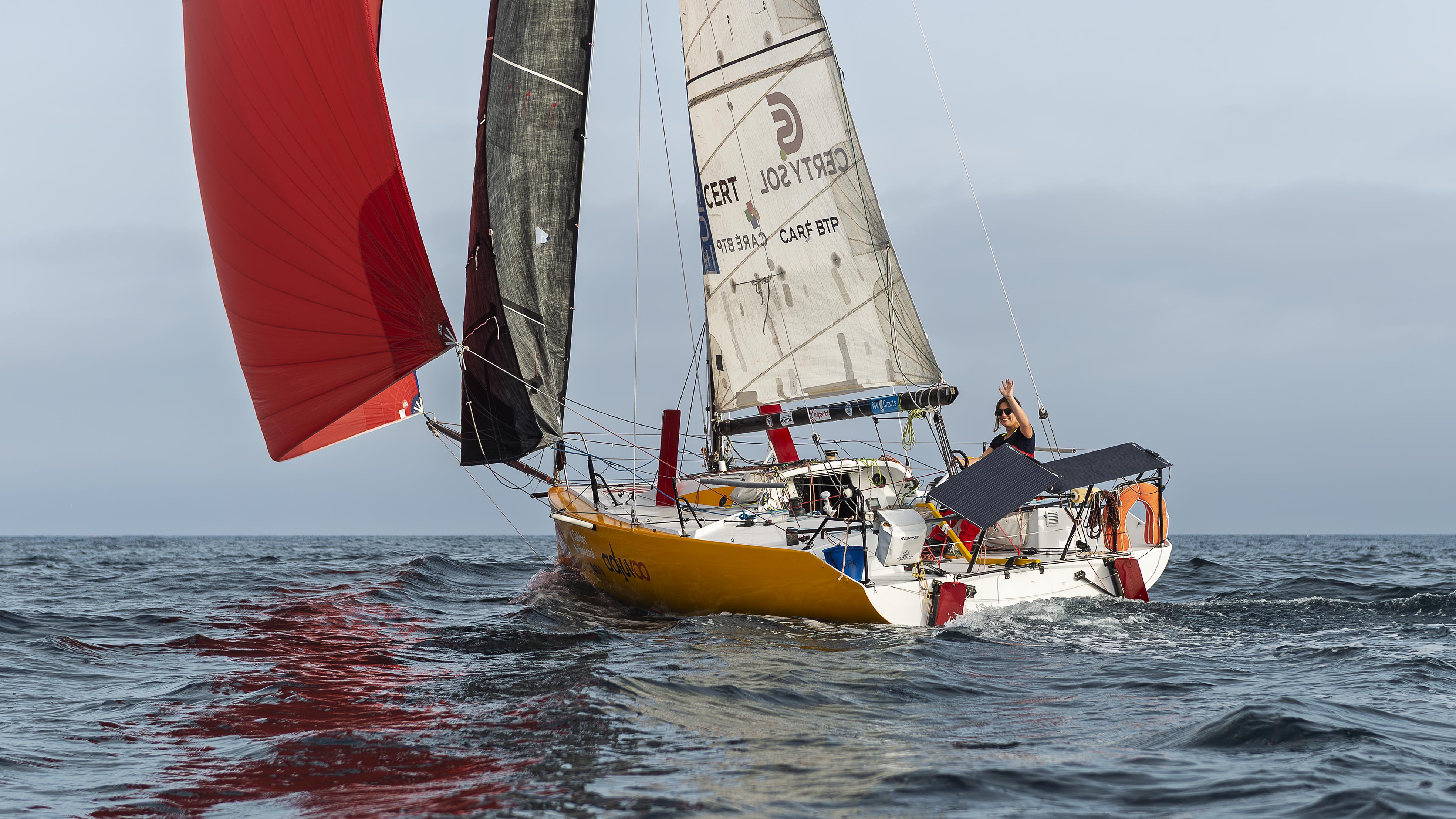 Photo courtesy of Ambre Hasson
She added: “Coastal racing gives you more immediate tactical battles with other boats. Offshore racing adds weather systems, fatigue and the question of whether the repair you made at 3 a.m. will survive until land.”
And when she’s back on land, the sailing enthusiast speaks at corporate and community events and hosts film screenings and conversations about offshore racing, uncertainty and ambitious projects.
Between hair-raising jaunts on the ocean blue, Hasson took the time to share her surprising backstory and extraordinary experiences with QNS readers.
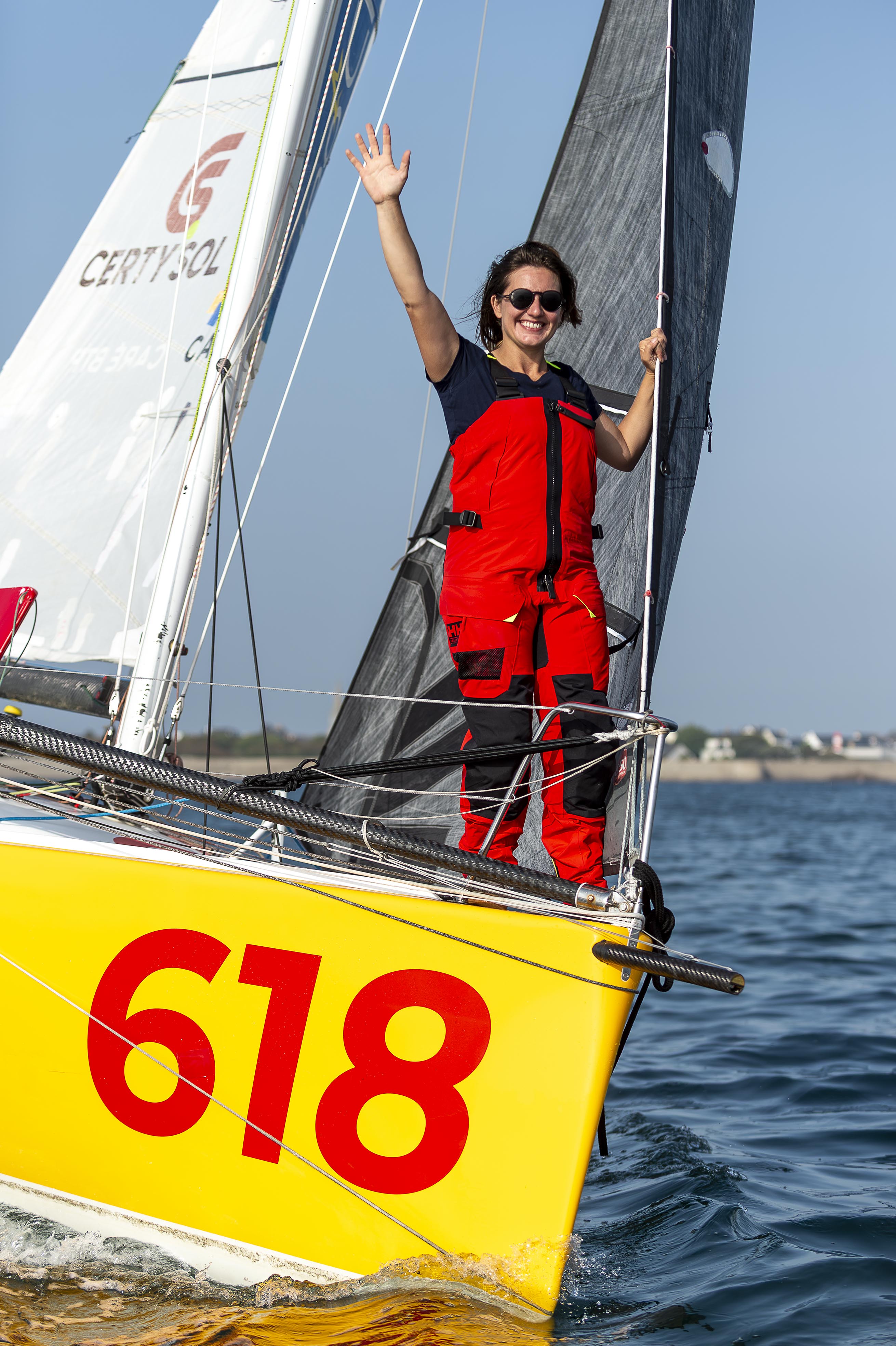 Photo courtesy of Ambre Hasson
QNS: So, why is a former Queens girl sailing the ocean blue?
Ambre Hasson: I was born in Paris, raised in central Virginia and moved to New York after university. I lived in Long Island City and spent some time in Astoria, while working in tech.
New York was also where I got into endurance sports. I ran two New York City Marathons and completed the NYC Triathlon. I loved running along the Queens waterfront. It became my escape from startup life.
Today, I live in Lorient, one of the main centers of professional offshore racing. Brittany is home, but the racing takes me much farther.
QNS: Tell readers about your passion for boating and seamanship.
AH: I didn’t grow up sailing, so I still approach it with a lot of curiosity. A boat can be your home, your transportation, your workshop and, in my case, a slightly unreasonable racing machine.
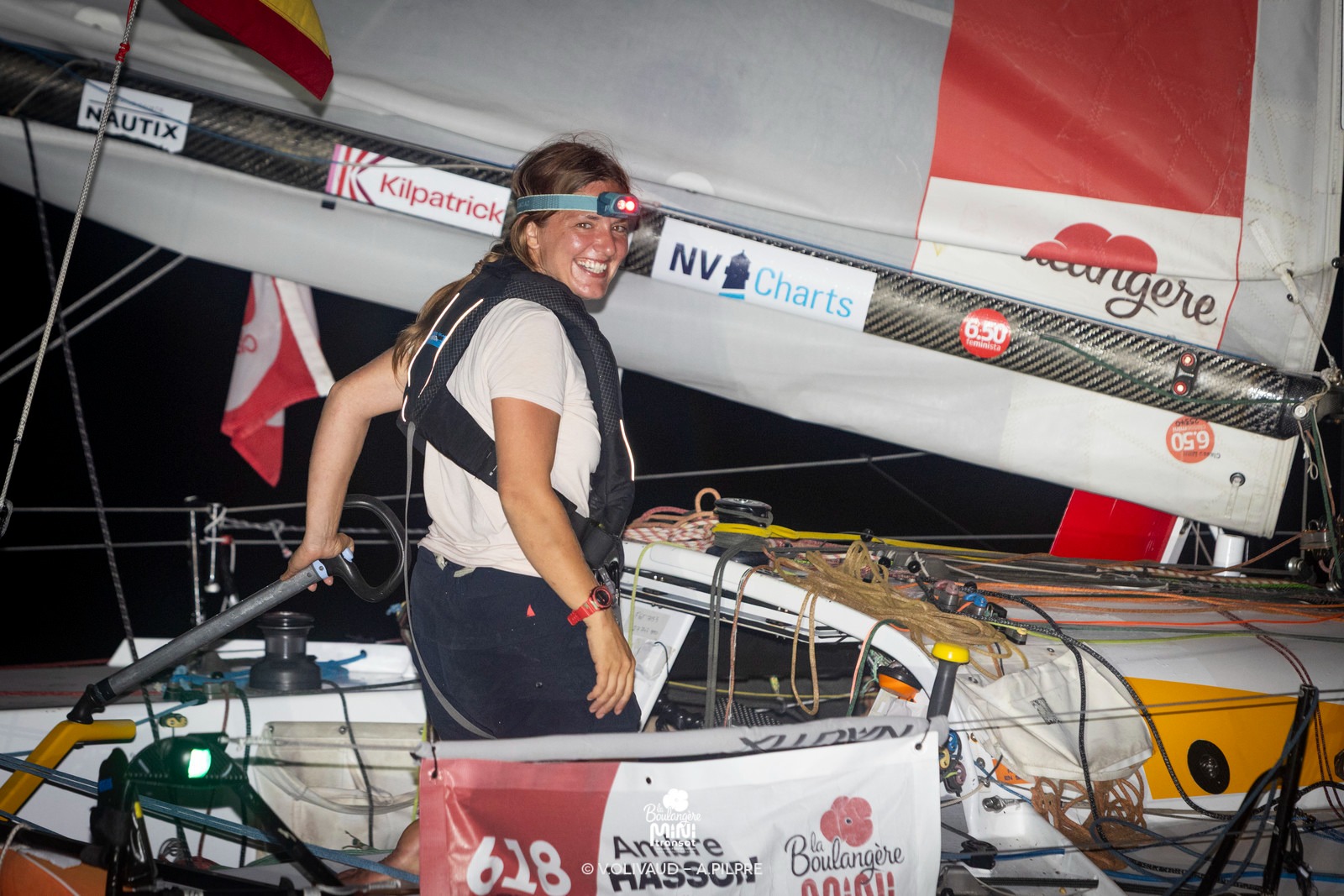 Photo courtesy of Ambre Hasson
Seamanship is part of that fascination: learning to care for the boat, understand the conditions and become someone others can trust at sea. Despite all the preparation and technology, there is still something wonderfully simple about using the wind to go somewhere.
QNS: What first drew you to sailing, and how did you learn the ropes?
AH: I discovered sailing in 2020. I was working in tech in New York and wanted a life with more adventure and time outdoors, so I volunteered at a sailing school in the Florida Keys.
I learned my first maneuvers and started living aboard one of the school’s boats. I became obsessed quite quickly. I bought my first sailboat in February 2021 and started a small boat-repair business a month later. I learned by sailing, fixing things, making mistakes and asking experienced sailors a lot of questions.
A few years later, I was racing alone across the Atlantic on a 21-foot boat! It was not a conventional progression.
QNS: Do you have a “regular job?” What were you doing previously?
AH: My work today combines professional offshore racing, speaking and building partnerships behind a sailing campaign.
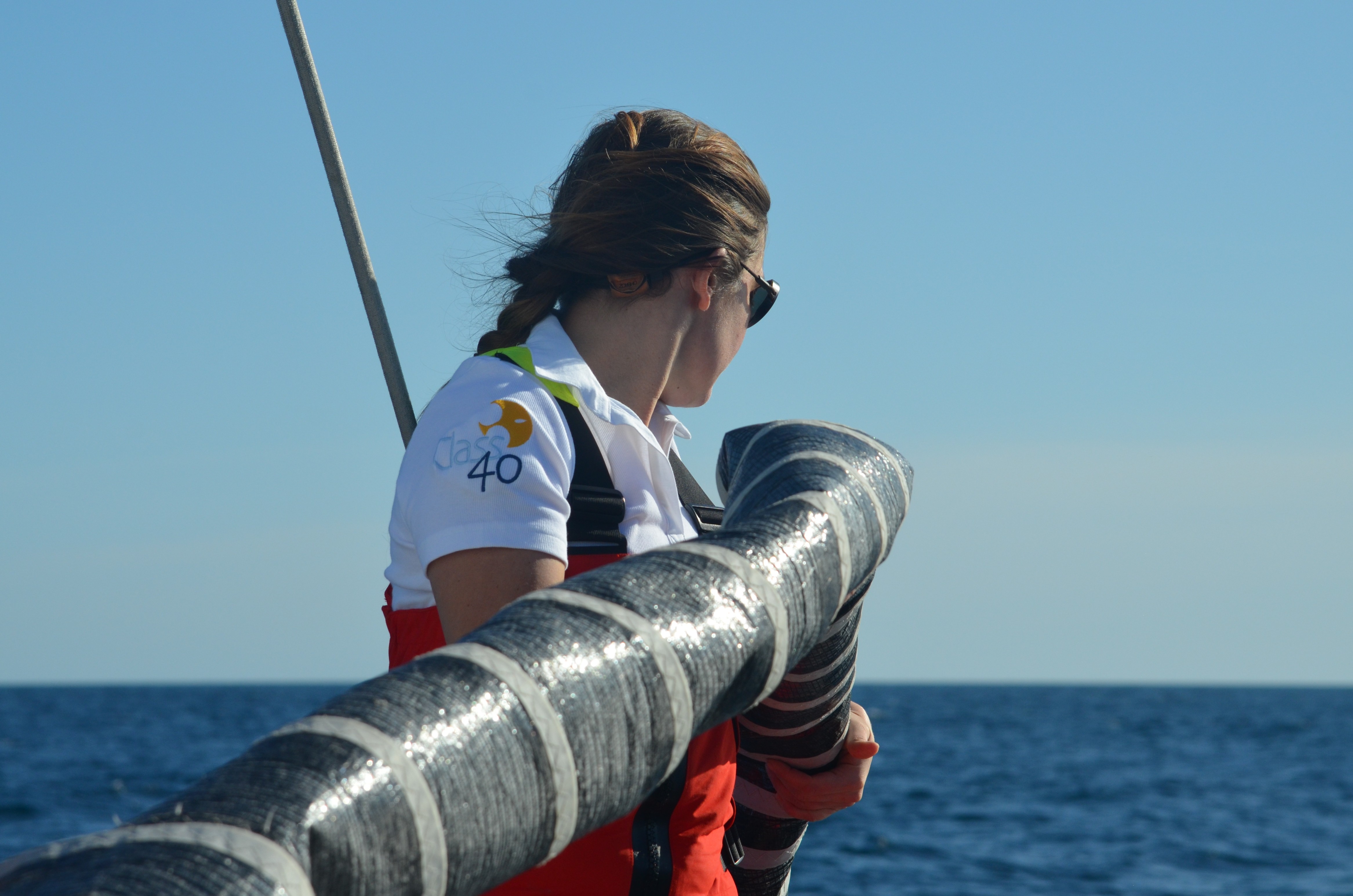 Photo courtesy of Ambre Hasson
I speak at company events about adapting when a plan fails, making decisions with incomplete information and keeping people engaged through change. The stories happen at sea, but the situations are familiar to anyone who has tried to build something difficult.
I also host screenings of the film about my Atlantic crossing, followed by conversations about the race and everything required to reach the starting line.
Before sailing, I worked in New York’s tech startup world. I was the sixth employee at a small AI startup, where I worked across sales, marketing, investors and client relationships. I later worked in enterprise sales at a CDP company, with clients including WeWork and Airbnb.
I studied economics at the University of Virginia. That background still serves me because a professional racing campaign involves fundraising, budgets, partnerships, communication, logistics and team building. It is a startup that happens to involve an ocean!
QNS: What was your incredible transatlantic journey like?
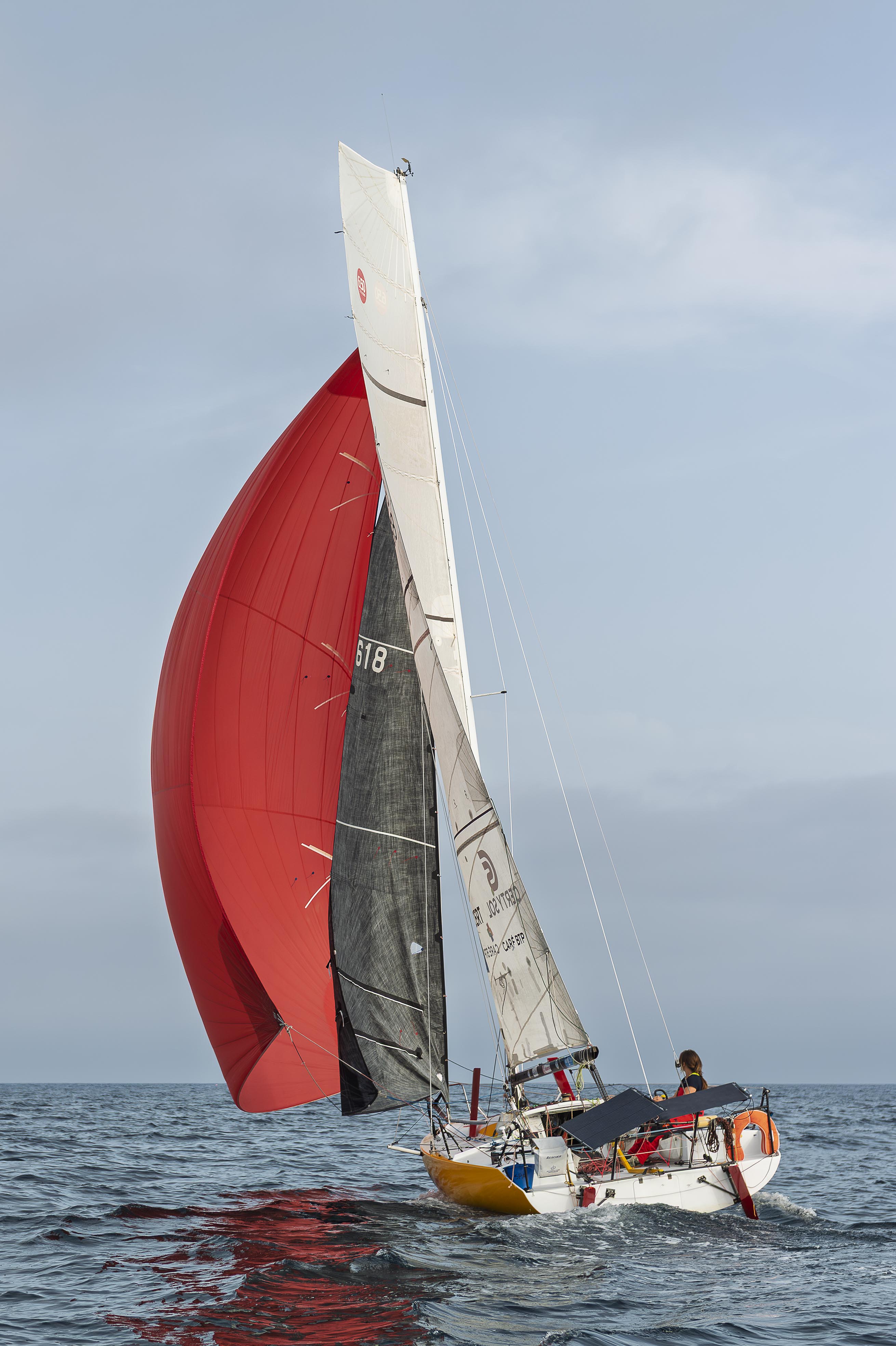
AH: In 2025, I completed the Mini Transat, a solo race across the Atlantic on boats only 21 feet long. The experience strips life down to a few essentials: You navigate, manage the weather, adjust the sails, repair whatever breaks and try to keep yourself fed and rested. Nobody else is aboard, and the race continues around the clock.
 Loxo 40Photo courtesy of Ambre Hasson
Some moments feel almost unreal. One night, I watched meteors falling across the sky and thought that something enormous could happen to Earth and I might have no idea. I would just continue sailing toward the next waypoint.
Finishing carried extra meaning because I had lost my first Mini near the end of a solo qualification. I had to rebuild the campaign, find another boat and qualify again before I could reach the starting line.
I later crossed the Atlantic back to Europe aboard a Class40, a 40-foot ocean-racing boat that is much faster and more powerful than a Mini. Crossing in each direction on two very different boats gave me two completely different views of the same ocean.
QNS: What are some favorite ports and destinations?
AH: Brittany remains my favorite place to sail. The coastline is beautiful and technical, with strong tides, rocks, currents and weather that changes fast. You have to pay attention.
The Florida Keys will always be special because that is where I learned. Lorient now feels like home because of the offshore-racing community.
I also love making landfall after a long passage. After weeks of water, ordinary things become exciting. A tree, a fresh vegetable or a building that stays in one place can feel remarkable.
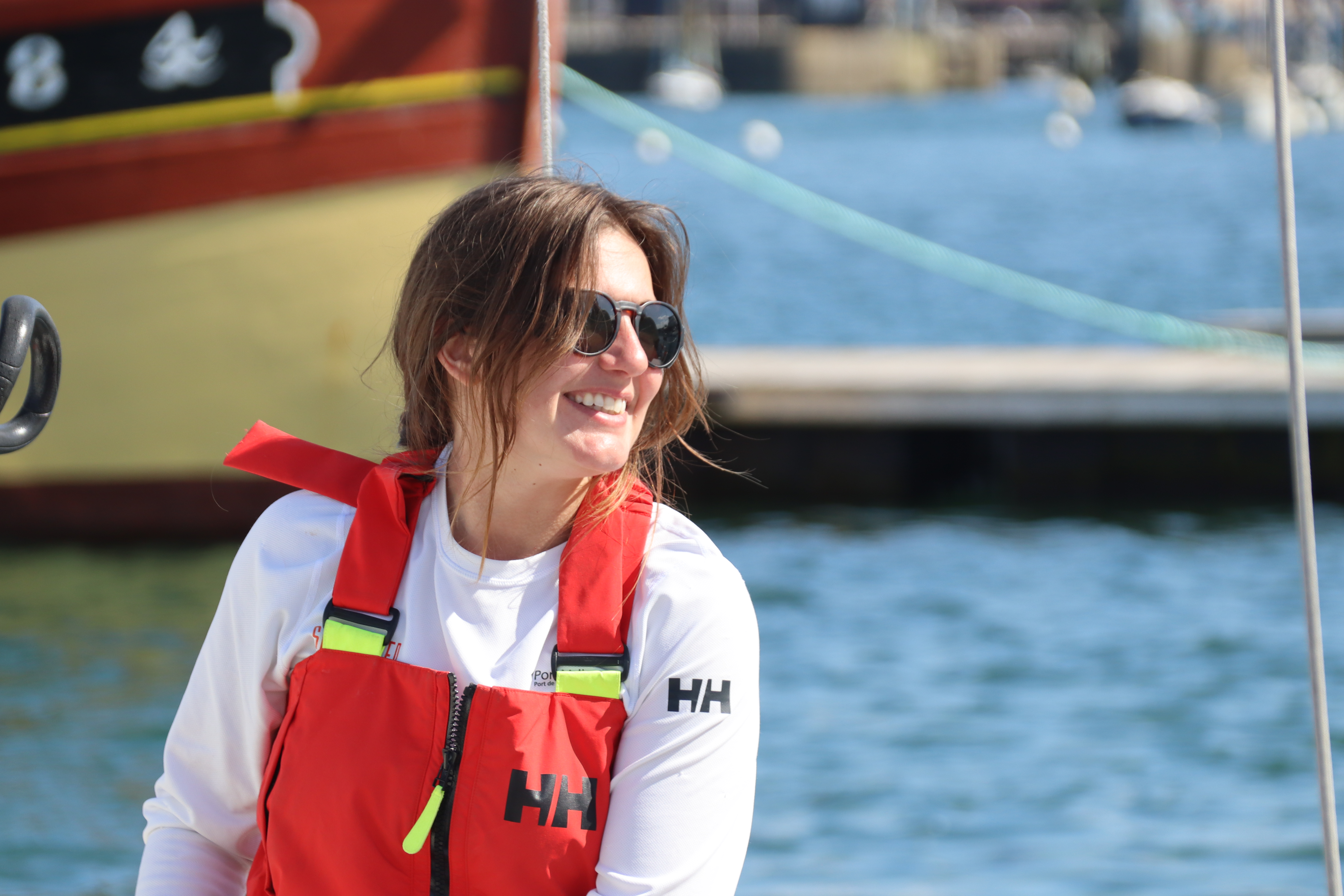 Photo courtesy of Ambre Hasson
QNS: Describe life on the water. Do you sail solo?
AH: Yes, I race solo, although I also sail with crews on larger boats.
Life aboard is a strange mix of extraordinary and deeply unglamorous. You might spend the night watching meteors fall into the Atlantic, then find yourself trying to pull on waterproof pants inside a cabin where you cannot stand upright.
Everything becomes gymnastics: Cooking, sleeping and going to the bathroom require planning because the boat may be heeling at 30 degrees and launching off waves. On the Mini, the toilet was a bucket. There is no elegant way to explain that.
Solo racing also does strange things to your brain. My first Mini race was about 300 nautical miles from France to England and back. I had never managed sleep like that before and, at one point, I hallucinated Jar Jar Binks. That was my introduction to one of offshore racing’s less glamorous skills: learning to sleep before your brain begins adding unsolicited Star Wars characters to the crew.
QNS: How do you handle severe weather or high-stress situations at sea?
AH: I try to make decisions while I still have good options. If the weather is building, that may mean reducing sail early, changing course or preparing equipment before the boat becomes difficult to manage.
When something goes wrong, I narrow my attention to the next useful action. Is the boat safe? Am I safe? What needs to happen in the next five minutes?
Fear is useful information. It tells me that something has changed, that I may have missed something or that the situation deserves more attention. I listen to it and check the boat, the weather and my own condition. But fear cannot make the decision for me. Once I understand what it is pointing toward, I still have to choose the next action and do the work.
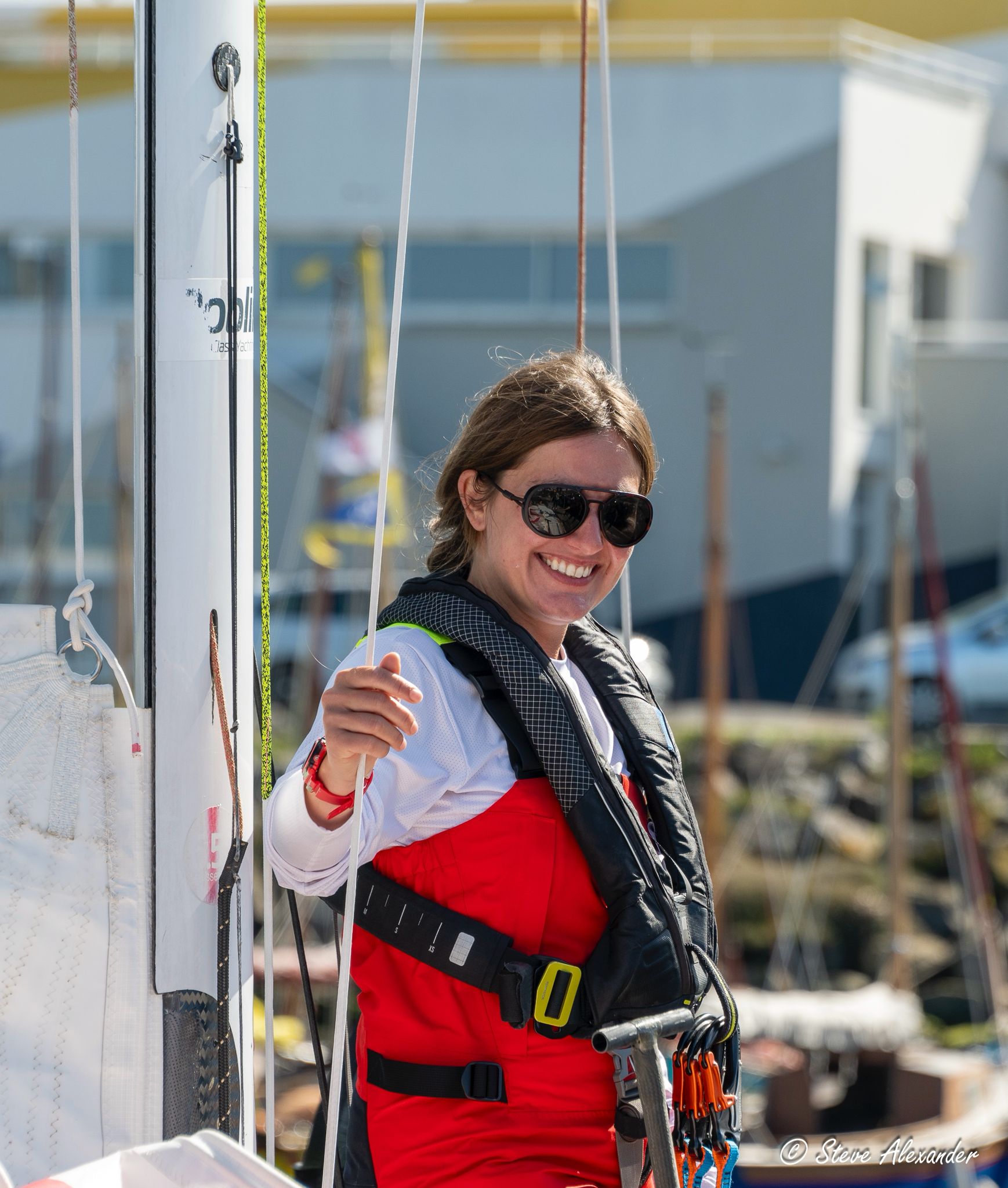 Photo courtesy of Ambre Hasson
QNS: Describe your favorite boats.
AH: I crossed the Atlantic aboard On the Road Again II, a Mini 6.50 measuring 6.5 meters, or about 21 feet.
Imagine fitting into an ocean-racing boat, a bedroom, kitchen, navigation station, workshop and bathroom? All that into something roughly the length of a large car! The word “bathroom” is generous…it was the bucket.
A Mini is designed to cross an ocean with one person aboard. It has very little living space and almost nothing that exists purely for comfort.
I now race Class40s, which are 40-foot offshore-racing boats. They are far faster and more powerful, with large sails, proper navigation equipment and enough room to stand. This feels luxurious until the boat starts surfing down waves at 20 knots, and everything not tied down begins flying through the cabin!
QNS: How do you handle boat maintenance and repairs? Do you prefer the DIY route?
AH: Very much so. I started a boat repair business soon after buying my first sailboat because I wanted to understand how boats were built and how their systems worked.
Offshore, the repair technician is you. Things tend to break at night, in bad weather and as far from land as possible. You diagnose the problem, decide whether it threatens the boat and build a solution from whatever you have aboard.
I enjoy that independence. I also know when a job requires a specialist. Part of gaining experience is learning the difference before you make the problem worse.
QNS: What is the hardest part of being away from home for extended periods?
AH: You lose your connection to ordinary life. At sea, there are no weekends, news alerts or casual conversations. Time follows the weather and the boat rather than a calendar.
I have returned to land and discovered that a war had nearly broken out while I was away. Meanwhile, I had been worrying about wind shifts, sail choices and whether my socks would ever be dry again.
You become disconnected from what we call the real world while immersing yourself in something that feels much more immediate: wind, water, weather and your own physical state.
That freedom can feel extraordinary. It also means you miss what is happening in the lives of people you care about. Everyone else continues living while your entire universe consists of a few square meters of boat.
QNS: What do family and friends think about your passion for sailing? Have they sailed with you?
AH: They have learned that the glamorous photographs represent a small percentage of the job. They also see the boatyards, logistics, fundraising, exhaustion and uncertainty behind each race.
Some friends have sailed with me. Others experience the sport through race trackers, delayed messages from sea and stories that emerge afterward.
My family does not always understand why I choose the hardest available version of an activity, but they know this has become much more than a hobby. Their support, and the support of the wider community around the project, makes the racing possible.