
With Election Day approaching, on Nov. 3, the Peekskill Herald is profiling local candidates through a Q&A format, to help readers make informed decisions. (For each race, candidates are listed in alphabetical order of surname.)
Sergio Esposito (R), a Yorktown councilmember and deputy supervisor, seeks to unseat incumbent Pete Harckham (D) in District 40 of the New York State Senate.
Pete Harckham (D) of South Salem is seeking his fifth two-year term in the New York State Senate.
New York State Senate District 40 includes in Putnam County the towns of Carmel, Kent, Patterson, Southeast, the village of Brewster; in Rockland County the town of Stony Point; in Westchester County the city of Peekskill, the towns of Bedford, Cortlandt, Lewisboro, New Castle, North Salem, Somers, Yorktown, the towns/villages of Mount Kisco, Ossining, the villages of Briarcliff Manor, Buchanan, Croton-on-Hudson.
Sergio Esposito
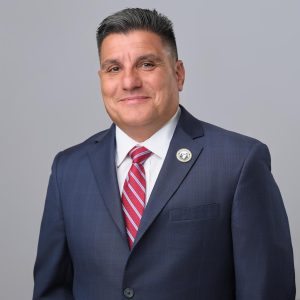 Sergio Esposito. (Supplied)
Sergio Esposito was born in the back of his mother’s salumeria [store] in the town of Sarno in Salerno, Italy, in 1971. A year later, Esposito’s parents took him and his three older siblings to the United States in the Bronx, later moving to Yorktown. Esposito initially went to the College of Aeronautics before transferring to Iona College where he graduated in 1984 with a Bachelor’s of Art in philosophy and political science. He went to grad school at the New School for Social Research for a master’s in philosophy but ended up putting that on hold when he started a new computer business and got married in 2000.
He joined the Yorktown Chamber of Commerce in 2008 and later served as its president. He ran for town board and assumed office in 2021. Esposito, Yorktown’s deputy supervisor and owner of American Arms, previously served as the secretary of Yorktown’s Ethics Committee and was a member of the Yorktown Heights Volunteer Fire Department.
What are the top issues facing Senate District 40?
Affordability, property taxes, and public safety. Public safety is a big deal. While we’re trying to curb the unfair treatment of people that break the law, we’re treating people that are law-abiding unfairly, so it’s a delicate balance. Affordability.
The first thing is attack the energy crisis. End the partisan bickering about what technology works best. I want all of it. I want wind. I want hydro. I want nuclear. I want gas and I want solar because not any one technology is going to work ideally in specific locations.
Our property taxes are through the roof. This is runaway spending. Last year our state budget was 254 billion dollars, now it’s 270 billion dollars. Eight years ago, our budget was $155 billion. Do we have better roads? Are our energy prices cheaper? Is healthcare better? Where is all of this money going? Plus, New York is really unaffordable. Especially people on a fixed income. Our utilities are through the roof, gas is crazy too. There are things that we could do at the state level. We could do a gas tax holiday. On my day one, I want to see if we could do something with healthcare. I know at the state level it’s difficult. My parents are in their 90s. These big companies are sucking up mom and pop doctors’ offices, which were wonderful. Now you can’t get a hold of anybody unless you have an app.
We have to fix public safety. The cashless bail reform that they wrote misses the mark. If you’re already struggling with affordability, with your taxes, with your electric bills, you’re going to rely on law enforcement to keep your neighborhood safe, and if you have cashless bail where you pick somebody up and it becomes this revolving door, it degrades the morality of law enforcement. It makes neighborhoods unsafe.
What would you bring to the table as a state senator?
I bring a unique perspective as an immigrant, born in Italy. Reform for immigration starts at the Department of Immigration at the federal level. Something I would not have any influence over, but I do understand the entire plight of an immigrant in this country. It takes entirely way too long to become naturalized. The supervisor of Yorktown tells everybody that I am the most patriotic person he knows. As a deputy sheriff, I bring the law enforcement perspective, what their needs are, how we could make their lives better, how we could make the interaction between law enforcement and the public better.
As a small business owner, I recognize the needs of small businesses, and we really need to expand the commercial base. Right now, small businesses with all these mandates are getting crushed. I am a small business advocate. I’m a proven tax cutter. In the last five years that I’ve served in office, I’ve never voted to raise town taxes and voted against it a couple of years ago. I know what it takes to help people make things more affordable.
Our property taxes go up due to unfunded mandates that come from the state. And that money comes from the taxpayer. A lot of people in the state senate and assembly have never served at the local level, but I understand how it works and I’m going to fight against unfunded mandates. We got to keep our property taxes down and we got to get control of our energy crisis despite a lot of state mandates. We have to fight against them.
What can be done about affordability and housing in District 40?
We’re trying to increase housing inventory. For affordability, we’re looking at a set-aside law [makes exceptions for special populations] or a density bonus [for builders to add more units than otherwise allowable]. When someone wants to put up an apartment, for example, and wants dispensation from some of our regulations, we ask what are they doing for us? A builder wanted to put up 18 units in Yorktown but was allowed only 16. I cleared it with the town board and told him he could have the extra two units if he made them affordable.
Houses everywhere are ridiculously expensive. And nobody is speaking up for our first responders, our nurses with affordable housing. If you look at the current AMI [area median income] standards, they pretty much exclude first responders because they’re making barely too much. Our first responders deserve the ability to live in the community they serve.
What do you see as the future of Indian Point?
Indian Point used to provide 25% (2000 gigawatts) of clean power, and I’m upset at the way it was decommissioned. Now they’re sidestepping it, saying the state never wanted Indian point closed. It’s a bunch of nonsense. The 2000 gigawatts of electricity has yet to be replaced, and so we’re suffering from it. The state comptroller tied the incredible increase in our energy bills directly to the closure of Indian Point. I recommend they get small modular reactors (SMRs). They’re safer, they’re smaller, they produce electricity. Indian Point already has all the other infrastructure for a nuclear plant. Reopening Indian Point with these SMRs is a smart thing. When we closed Indian Point, we also lost 1000 good-paying union jobs. They were all displaced workers. We are now importing energy from Canada, which has threatened to cut our electricity off. We gave other countries the ability to put some pressure on us. [Governor] Kathy Hochul was lieutenant governor at the time, and admitted that it was a mistake and they did it wrong. A bipartisan conversation is important, and I think we can make significant gains.
What inspires you about public service?
In 2008 when the economy crashed, I had my own computer business, and I joined the Yorktown Chamber of Commerce – I went from secretary to vice president to president. When Covid hit, I started delivering information on the PPP [Paycheck Protection Program] loan process, stimulus checks, all of that. I dropped all fees to join the chamber, and I realized I was making a difference. People started asking me, “When are you running?”
When I won a seat on the town board, it elevated me to where I can make even more of a difference in people’s lives. Last year, I was the top vote getter in Yorktown, so I’m good for a few more years on my second term as a councilman. I was offered the opportunity to run for state senate, and I said, “This is just another level of being an advocate for people and trying to be a positive force for people and change to make things better in people’s lives. That’s why I did it.
Do you have a final message to voters?
I’m looking to fight for the average person. I don’t think that’s happening. I think with the one-party rule [in Albany], we have a lot of ideals that are being forced down our throat, and I think it’s time for change. People are leaving this state in droves. State Comptroller Tom DiNapoli has said that the state’s insolvent. We’re spending more than we’re bringing in, and that has to be tamped down. It’s time for change. I’m not recommending we go full one-party rule Republican. I don’t think that’s healthy either. If we have Democrats and Republicans and independents all working together, we could get to a place where all of our ideas are being heard. Right now I don’t think that’s happening. It’s time for new leadership.
Pete Harckham
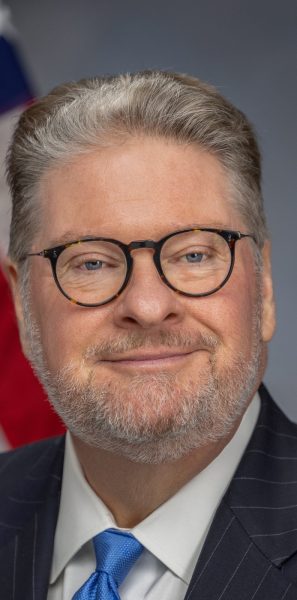 Pete Harckham. (Supplied)
Pete Harckham grew up in Rockland County. He graduated from Dickinson College in 1982 with a Bachelor of Arts degree in English. The father of two adult daughters moved to Katonah in Westchester in 1991 and now lives in South Salem. His start in organized politics came while working in the communications business with a client who ran unsuccessfully for Congress in 2000, attributed by Harckham to a lack of organized democratic committees, leading him to join the Bedford Democratic Committee.
Harckham, then president of A-HOME, an organization that builds and manages affordable housing, ran for the Westchester County Board of Legislators successfully, serving from 2008 to 2015. He also made a bid for State Assembly in a 2010 special election but was unsuccessful. Upon leaving the board in 2015, Harckham worked for former Gov. Andrew Cuomo for three years as an assistant director of the Office of Community Renewal. In 2018, he ran successfully for Senate District 40 and is now on his fourth term.
What is your vision as a state senator?
We always have things that we want to do in subject areas we work in, but it’s wherever the work leads us. When I first was elected a senator [in 2018], I never knew we’d be in the food business, and the pandemic came along and a municipality reached out. They had shut-ins. Their pantry was empty. And 22 food drives later, and 30 tons of food later, we’re still doing it. Whatever the community needs, that’s what the team will do. I love the work, love being of service.
What are the top issues facing Senate District 40?
Affordability continues to be an issue nationally, and we can’t do anything about Trump’s ridiculous tariffs or his reckless wars in the Middle East that are driving up fuel prices. What can we control? Taxes and things within the state purview. Since I’ve been elected, we did the 2% property tax cap. We cut middle class income tax rates six times to the lowest level in 70 years, enhanced exemptions for seniors, for veterans, for first responders. We raised the minimum wage, indexed it to inflation. For our small businesses, we paid off $6 billion in unemployment trust fund arrears, and then the investments that we bring back. The biggest tax is the property tax, and the biggest chunk of that is school tax. So we increased funding to [the] schools of my district by over 350 million dollars. That’s money to lift our students and teachers up, and also hold property taxes down. We brought back 40 million dollars in discretionary funding for our municipalities, our first responders, and the nonprofits in the district.
What are among your proudest accomplishments as a state senator?
When the Democrats took the majority after decades of Republican rule in the Senate, our number one objective was equalizing foundation aid. There were schools like Peekskill, Ossining, Brewster, North Rockland that had been systemically underfunded. We have increased funding to the Peekskill Schools by 93% since I’ve been in office, and that number is [a] 40 million dollar increase. Every student has a right for high quality education, and that includes the students of Peekskill. They should have the same opportunities that the students of Scarsdale have.
Also to be able to help constituents during the pandemic, when so many people were out of work, and the Department of Labor essentially crashed, our office became a de facto unemployment office, and we processed over 1,000 claims to get folks the benefits that they needed to sustain them through the pandemic. The food drives, the Narcan trainings, the blood drives. Those are the things that really sustain us.
What can be done about affordability and housing in District 40?
We are not keeping pace with housing starts [compared] to the number of jobs we’re creating. It creates an upward pressure on prices, and folks have to live farther outside of where they work. If you speak to, say, corrections officers from Sing Sing, many of them are coming from Orange and Sullivan counties.
We have a $5 billion capital plan for affordable housing, where we’re addressing new concepts like affordable condo ownership. The first project is in Croton, where part of the issue is to build out infrastructure. So, 10 million dollars in the Mid-Hudson Momentum Fund is for infrastructure tied to housing. We increased water quality improvement funding by 250 million dollars this year.
What do you see as the future of Indian Point?
My opponent’s been big on re-opening it. They are selling people a false hope. Indian Point will not reopen because the closure agreement expressly says all parties must agree [on that]. County Executive [Ken] Jenkins has been very clear that Westchester County will not agree to that and the governor does not believe in nuclear at that site, so with the state and the county out of the picture, Indian Point is not going to re-open.
Nuclear is the most expensive form of power. Entergy got out of the nuclear business because they were no longer cost competitive with natural gas. The only nuclear power plant built this century in this country was built in Georgia at a cost of 37 billion dollars. When they powered it up, everyone in Georgia received a 25 percent increase in their utility bills.
The lowest cost is solar. In Texas, virtually all of the new generation [of energy] they built in the last 10 years has been renewable –wind, solar, and battery — because it’s the fastest to scale and it’s the least expensive. If we want reliability, and we want low-cost power, the way we drive down the wholesale market price is by adding lower-cost kilowatts, and that’s solar.
I have a bill to promote floating solar in New York. It’s a great way to site solar without taking open space or farmland. It actually is good for the water because it cools the water, and so it retards the growth of blue-green algae. The city of Cohoes, outside of Albany, is doing it because it’s a great way to hold water rates down, to provide low-cost power to the municipality and folks who want to subscribe to community solar.
We have a law to create what’s called an adder for floating solar. An adder is additional financial support and to set up program guidelines for NYSERDA. We have one for floating solar. We have one for parking lot canopies. We have all these large shopping centers, office buildings. They spent years going through the planning process, and if they want to put a solar canopy over their parking lot, then they have to spend years going through the planning process all over again. That’s crazy. So we have a number of bills for solar.
Do you have a final message to voters?
[Since I took office in 2019] we’ve passed 165 bills into law, which is one of the highest in the Senate for that period. We work on a broad swath of issues. My focus is environment because I chair that committee.
We also do substance use disorder work. We had a big win this year. We’ve been trying for years to get a single license from OASAS [Office of Addiction Services and Supports] and OMH [Office of Mental Health] to address co-occurring disorders, which we find the science now shows that most people presenting with substance-use disorders have a co-occurring mental health disorders, and yet for years we’ve had two siloed systems, and now for the first time, we’re going to have a unified license so that that providers can treat people holistically, and there’ll be what’s called “no wrong door.” So we continue to work in that space. We work with our veterans, work with our seniors. So the message is we’ve delivered tax relief, support for our schools, support for our municipalities, our seniors, our first responders, and we’ve been out in the community, and so we would appreciate another two years.
I don’t do anything without the accomplishments of our team. We have 12 people who are committed public servants themselves. They work seven days a week the way I do, and so nothing that my name goes on happens without a great team, whether it’s up in Albany on the legislative side or down here on the constituent side.