
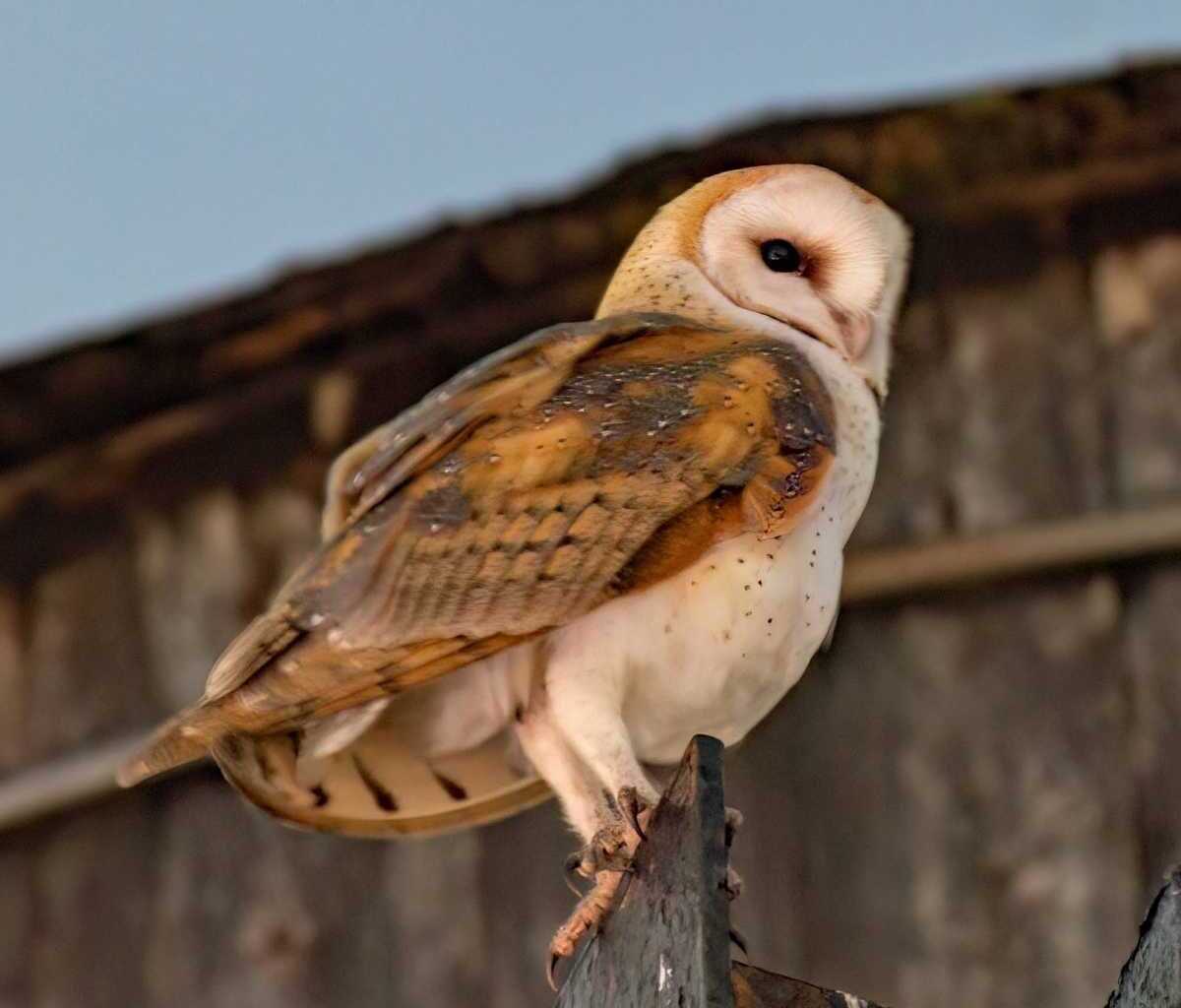
Things have been looking up lately in and near Central Park, or at least people have been looking up more than usual, ever since a barred owl was spotted in in the park and a barn owl family was spotted on the Upper West Side.
A barred owl was spotted in the Ramble, and various American barn owls have been spotted in the West 70s near Central Park, prompting social media posts and coverage in local media.
Manhattan Bird Alert, run by David Barrett on X, posted numerous pictures of a water tower with as “many as five barn owls, apparently all young siblings by behavior, in addition to two parents who occasionally come by to deliver food.”
And groups of birders with binoculars in recent weeks have been busy photographing a barred owl in Central Park.
“Our parks are the perfect places to spot owls that live in New York City,” according to the New York City Department of Parks and Recreation. “The winter is the best time of the year to see owls because the trees are bare—making it easier to see them—and owls breed in the winter.”
Where does one look to spot an owl on an “owl prowl” in parks? They’re nocturnal birds, but can be seen day or night, according to the department which hosts walks to look for owls and other wildlife.
“You can spot them high up in our trees during the day or hunting around the parks when it’s darker out,” according to that agency.
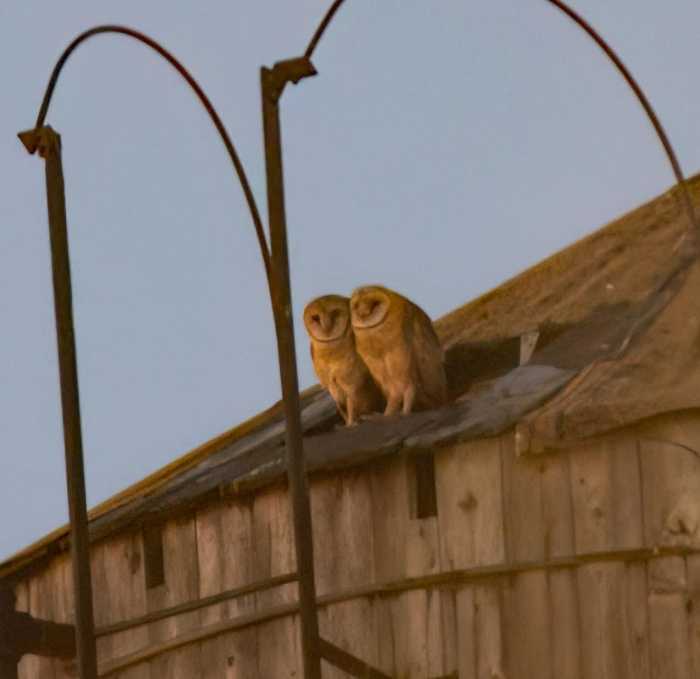 Barn owls on the Upper West SideCourtesy Manhattan Bird Alert
Hendrik Weideman, wearing black pants, dark top, North Face backpack, blue hat and hiking boots, and volunteering for the Wild Bird Fund, led a group recently that spotted the Barred Owl.
“Barred owls are nocturnal: they roost during the day and hunt at night. This is also why it is so important always to give owls plenty of space while observing them,” Weideman wrote after a bird watching trip. “They need to be able to rest during the day to ensure that they can pursue a successful hunt at night.”
Barred owls have dark barred stripes across white plumage, dark eyes, and round heads, according to the Department of Parks and Recreation. “They sleep high up in eastern white pine trees in Central Park, Inwood Park and Pelham Bay Park,” the agency added.
While owls come and go, Flaco, the most famous New York City owl, made history when he in 2023 escaped from the Central Park Zoo after someone cut his protective netting, although these
Flaco, named while in the zoo, had a moniker, but most owls never get a name. This Barred owl, who appeared in mid-September seemingly out of nowhere, and a family of barn owls on the Upper West Side as of yet are unnamed.
No one knows if they will remain in New York City long enough to be named, or where they might settle, if they do.
At least for the moment, the barred owl with no name (call him “Shakespeare,” since it sounds as if he’s the “Bard” owl) was believed to still be in the Ramble, as bird watchers wandered through the woods.
“We’ve been birding. We came back and saw the big group of people. That’s how we found it,” Michael Krauss, a biology professor, said beside his Cannon camera, photographing the barred owl, said recently. “I don’t know who found the roosting spot. owls are always a big deal. You don’t see them very often, because they’re nocturnal.”
Like many other serious birders, Krauss is hardly new to Central Park or to birding, photographing what some mistaken called “the bard owl” not the bard who is easily found in the nearly 2,000-seat Delacorte Theater during summer.
“I’ve been birding in Central Park for 45 years, something like that,” Krauss continued, between looking at the owl and its image on his view finder. “I saw him, took his picture.”
Barn owls, on the other hand, have long legs and beaks, dark eyes, spots on their plumage, heart-shaped faces.
“Barn owls are extremely rare sights in most New York City parks,” according to the Department of Parks and Recreation, adding they have been sighted in Pelham Bay, the New York Botanical Garden, and Floyd Bennett Field. “Their calls sound like a harsh, raspy scream.”
Krauss remembers Flaco when, after being freed from the Central Park Zoo, he wandered into the semi-wild of Central Park for nine months before flying into the stone canyons surrounding it and colliding with a building.
“It’s different because this is a wild owl,” Krauss said. “Flaco was released from the zoo by a bunch of lunatics.”
Weideman said when Flaco died, they found toxins in his blood. You’re not supposed to poison rodents, but some people do, he said. Birds that eat those rodents indirectly ingest that poison.
Flaco seemed to have feasted on poisoned animals, yet he survived until that forbidden flight as he exited his Eden in New York, striking a building.
Owls are “challenging to find”
Some people used the Merlin app to identify birds, although Weideman showed that knowledge is the best tool. “I look for movement,” one bird watcher said when asked how she spots birds.
A few children, budding birdwatchers, bounced around, excited about each bird they saw and seemed able to name.
“It’s good to see you out birding,” Weideman said before his little flock of birders disappeared into the semi-wild, after spotting the barred owl.
Eastern screech owls — small owls with grey or rusty-red plumage, and short ear tufts – sometimes appear in Central Park and Inwood Hill Park.
Great-horned owls, large with long earlike tufts, start nesting early in the year in tree cavities in January and raise owlets in the winter in Prospect Park, Inwood Hill Park, Alley Pond Park and Pelham Bay Park.
Northern saw-whet owls — six to eight inches tall, with speckled brown plumage, and bright yellow and black eyes – roost in Central Park, Inwood Hill Park and Pelham Bay Park.
Snowy owls, what the Department of Parks and Recreation calls the “crown jewel of the owl kingdom” are “challenging to find.”
“These owls are large and white with black markings. While most owl species perch in trees, snowy owls tend to hang out in low-lying areas, usually on fences, dunes, and on the ground near shorelines,” according to the Department. “They hunt both in the day and night.”
Snowy owls migrate from the Arctic, but have been spotted at Rockaway Beach “perched on sand dunes.”