
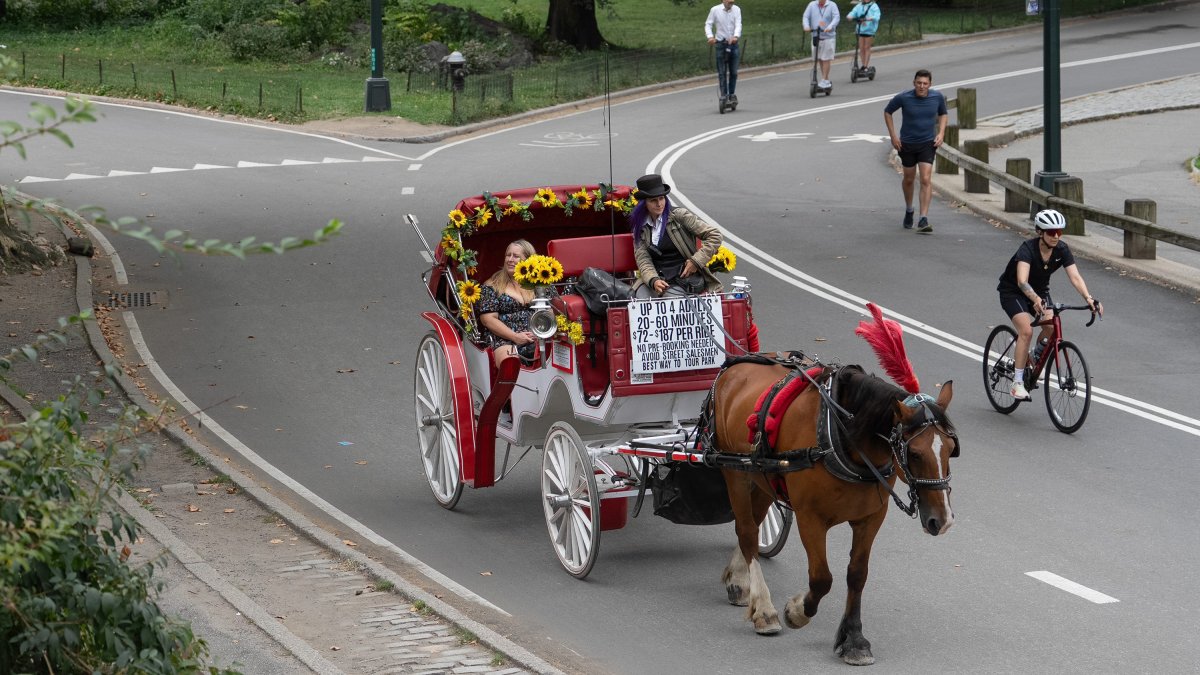
The New York City Council is set to vote on a proposal that would bring an end the horse carriage industry in New York City, according to the speaker’s office, after decades of political back-and-forth regarding the hot-button issue.
City Council Speaker Julie Menin is set to bring the bill up for a vote on Oct. 22, according to the speaker’s press secretary. The proposed ban on all for-hire carriage horses would take effect on June 1, 2028. Exceptions would be made for temporary exhibits, performances or displays, the bill states.
The existing licenses would expire by May 31, 2028, with no new applications or license renewals accepted, according to the bill.
There would be a requirement to develop a full plan for job transitions for those working in the industry by April 1, 2027, according to the proposal. That is a key difference from previous versions of the bill, the speaker’s office said, as it would include things like job placement, training, career counseling, educational opportunities and financial compensation.
The bill also includes steep penalties for any drivers who continue operating after the ban takes effect, including hundreds of dollars in potential fines, up to 15 days in jail, or both. A civil violation would carry a penalty of at least $10,000.
A City Hall spokesperson said the administration has been “working closely with the City Council, union partners, carriage drivers, animal welfare advocates, and community leaders to deliver a just transition that protects workers while ending horse-drawn carriages in Central Park once and for all.”
The mayor’s office has been working on a detailed transition plan for workers, a source told NBC New York.
The bill, called Romanch’s Law, would come up for a vote just over four months after the death of 18-year-old tourist Romanch Mahajan, who was killed in a crash involving a runaway horse in Central Park while he and his family had visited from India on their first trip to New York City.
During the family’s carriage ride, the driver stepped out of the seat to take a photo of them, and the horse suddenly started running. Mahajan was thrown off and hit his head on the pavement, killing him.
Mahajan was believed to be the first person to die in a horse carriage accident since the rides were introduced in Central Park more than 150 years ago, according to the labor union representing the industry and the Central Park Conservancy. The conservancy said the teen’s death was the eighth horse-related incident in the park in just over a year’s span.
Menin said the tragedy made it clear that “the status quo is no longer acceptable” when it comes to horse carriage rides in the five boroughs.
“Horse-drawn carriages have long been part of New York City’s history, but in an increasingly busy Central Park, this tradition has become a growing public safety liability. Next week, the Council will take decisive action by voting on Romanch’s Law to protect New Yorkers, visitors, and the horses themselves,” said Speaker Menin. “Just as importantly, the legislation will require the Administration to develop a plan to connect hardworking New Yorkers employed in this industry with new economic opportunities. We can honor our city’s traditions while recognizing when it’s time to move forward.”
A statement from NYCLASS, which has been calling for a ban for years, thanked Menin for bringing the legislation “across the finish line” and finding a way to end carriage-horse rides in the city.
“With the support of the Council and the mayor, this long-overdue ban on cruel and dangerous horse-drawn carriages will pass,” Edita Birnkrant, the executive director of NYCLASS, said in a statement. “This moment belongs to the advocates and supporters who have spent years fighting with NYCLASS to protect horses and people on our city’s streets. Romanch’s death was a heartbreaking loss that laid bare the devastating consequences of this deadly industry.”
Animal rights activists have long said that carriage horses are overworked, can get easily spooked on city streets and live in inadequate stables while their drivers regularly flout city rules. All of those allegations have been denied by the horse and carriage owners, who say the animals are well cared for and the stables are fine.
The Transport Workers Union, which has been opposed to any bans on carriage-horse rides, said the proposed bill “has no meaningful economic relief for workers,” while blasting the measures it includes for drivers and carriage owners as not enough.
“It only says the city should prepare a worker transition plan by April 2027 and include weak measures like job fairs and job counseling. It says the city should ‘consider’ financial compensation for carriage owners who spent hundreds of thousands of dollars to buy city-issued medallions and build up their businesses,” said TWU International President John Samuelsen. “Council Speaker Menin used the tragic death of a tourist to contrive a public safety crisis. This is disgraceful political opportunism, and Zohran should not simply go along with it, particularly when immigrant families’ livelihoods are being destroyed. This entire situation is reprehensible.”
The conservancy has previously argued that horses can no longer safely share park roads teeming with joggers, cyclists, pedestrians and motorized scooters, noting that other U.S. cities, including Chicago and San Antonio, have also recently done away with the nostalgic rides.
Horse carriage industry leaders said June’s fatal crash underscored the need for better protections, not outright elimination of the quaint attraction that harkens back to a romanticized, bygone New York. The union also called for hitching posts to be installed throughout the park, something the animal rights groups say would not help.