
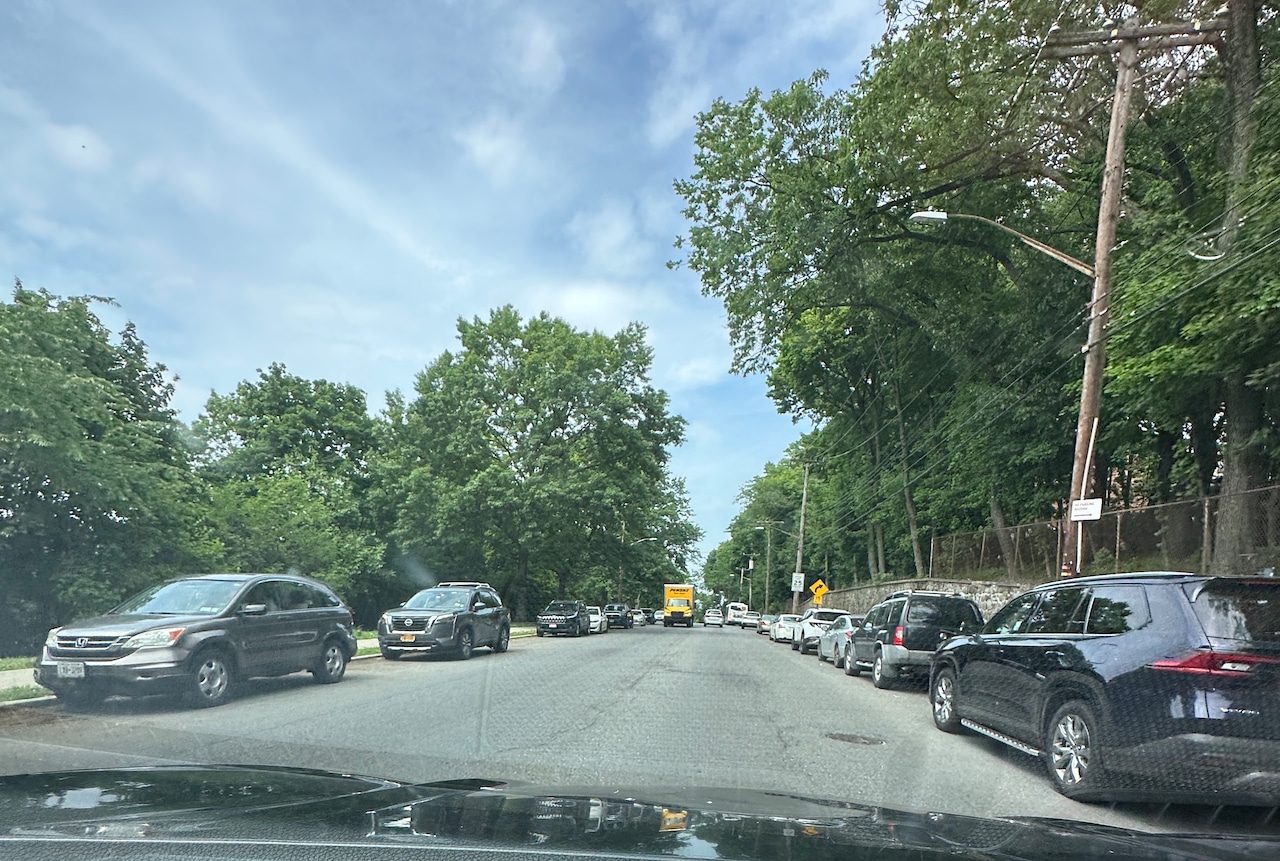
Unlike the old line from the Pogo comic strip, this is no cartoon. For Staten Islanders, it’s real life.
For years, we have said there is a war on cars. Now we have confirmation. Last week, the New York City Department of Transportation commissioner declared that car owners in New York City are “more than twice as wealthy” as those without cars. He called parking a public land “giveaway” and made clear that the city’s goal is to make driving and parking so difficult that people give up their vehicles.
That may sound progressive in certain Manhattan zip codes. It lands very differently here.
About 85% of Staten Island households have a vehicle, the highest rate in the city by a wide margin.
That is not a sign of excess wealth. It reflects geography, limited transit, long distances, and the daily realities of work and family.
A parent cannot take two children to school, stop at the supermarket and get to a second job by bicycle.
A nurse finishing a night shift will not find a subway waiting nearby.
For seniors with regular medical appointments and workers whose hours fall outside peak service, a car is often the only realistic option.
Even the Hunter College report the commissioner cited undercuts his argument. It found that low-income residents often need cars more than higher-income ones, and that housing type and neighborhood predict car ownership better than income does.
Calling parking a “giveaway” is tone-deaf.
Drivers already pay for registration, insurance, gas, tolls, and, more recently, congestion pricing.
Parking is not a free luxury. It is a necessity that lets people live and work in this city.
The city calls this “transportation equity.” But making driving deliberately more expensive and inconvenient does not create better transit on Staten Island. It raises the cost of living for residents who already have fewer alternatives.
We should improve buses, expand ferry service, and make streets safer for everyone.
No reasonable person opposes better transit.
But making life harder for drivers is not the same as building a functional system. It is social engineering that treats outer-borough residents as obstacles instead of citizens.
We are not asking for special treatment.
We are asking for policies grounded in reality instead of ideology.
Stop telling working families that their practical choices make them the enemy.
Staten Island is not asking to be Manhattan. We are asking to be heard.
(Vito Fossella is the Staten Island borough president.)