
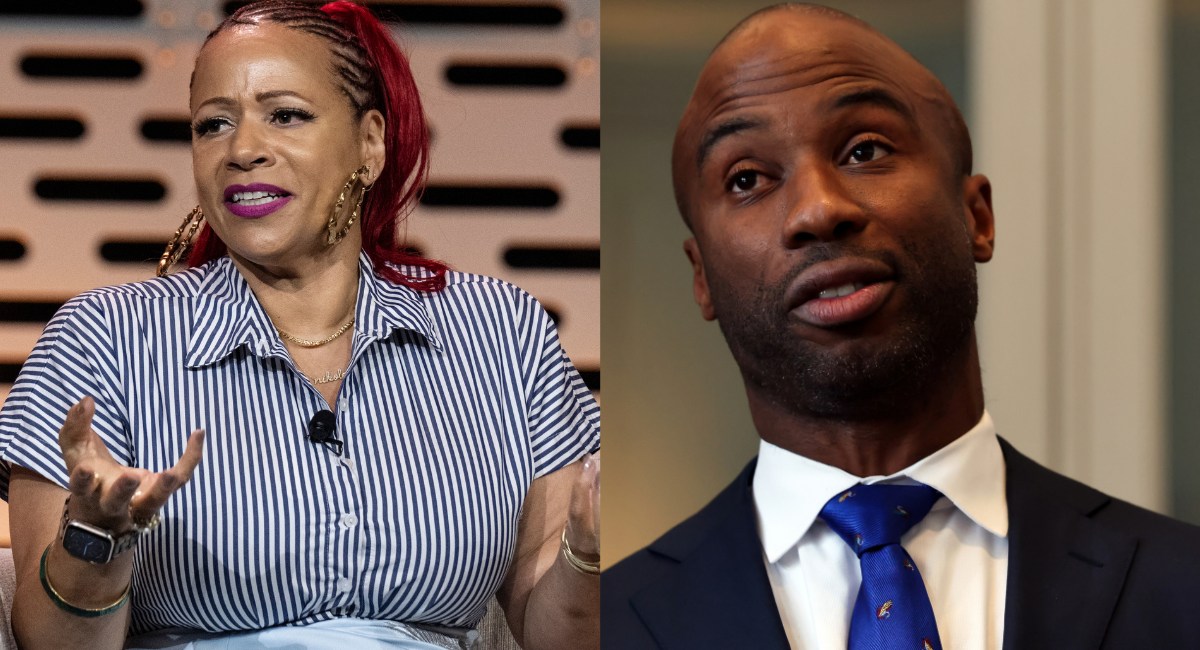
Journalist Nikole Hannah-Jones and New York City Schools Chancellor Kamar Samuels will cross paths again next week at a high-stakes town hall on school integration.
Years ago, Hannah-Jones sought help from Samuels when she was a prominent Brooklyn parent alarmed by massive gaps in her daughter’s elementary education due to neglectful teachers. Samuels was then a superintendent, and sent an additional teacher to help Hannah-Jones’ daughter and her classmates catch up.
On Tuesday, Samuels will address a crowd of student journalists, parents, and advocates at the town hall inspired by Hannah-Jones’ article on her daughter’s experience in New York City’s deeply segregated school system. Hannah-Jones is also expected to speak at the event, which is sponsored by the student journalism nonprofit The Bell and New York Appleseed. It amounts to a test for Samuels, who took over his job with a reputation for integrating schools through fraught school mergers.
“He was a tremendous advocate for integration,” Hannah-Jones said of Samuels. “Advocates saw Kamar being appointed as chancellor as a sign that integration and equality were going to be taken seriously. Now, of course, we haven’t seen much follow-through on that.”
Hannah-Jones’ article has raised criticism that Mayor Zohran Mamdani and Samuels have not delivered a coherent plan for city schools. In an interview ahead of the town hall at M.S. 131 in Chinatown, Hannah-Jones sounded skeptical about an integration breakthrough.
“I also know there are political realities, and the political reality is this has never been a winning issue in New York City, despite New York believing that it is a progressive city,” she said.
She said she hopes the town hall will “harness this energy that has ignited around this essay, forcing some accountability … and really pushing the mayor to release the promised plan to address this immoral inequality.”
During an appearance on WNYC’s “The Brian Lehrer Show” earlier this month, Mayor Zohran Mamdani called Hannah-Jones’ article a “devastating piece.”
“It is an articulation in many ways of the systemic nature of the way that the public school system in our city failed her child, and the sad truth is that she is not alone in that,” he said.
He said his administration is working on “building blocks” of a plan to deliver a high-quality education. Hannah-Jones has called that a “non-answer.”
Hannah-Jones’ article chronicles her decision to send her daughter to high-poverty elementary and middle schools serving mostly students of color, rather than enrolling her in schools with whiter student bodies, higher test scores and more affluent families.
She has said her decision was driven by the belief that families with resources need to invest in underfunded schools to improve and desegregate the system.
But Hannah-Jones and her daughter found themselves navigating schools where key concepts were not taught. Classrooms, hallways and cafeterias were often chaotic. Hannah-Jones turned to Samuels for help after realizing none of her daughter’s fourth grade math assignments had been reviewed by her teacher and many of the problems were wrong, according to her article.
Hannah-Jones did not name Samuels in the article, but she confirmed in an interview that he was the superintendent. Hannah-Jones’ daughter pressed her mother on why she’d sent her to a “bad school,” and told her mother she made the wrong choice.
Hannah-Jones’ daughter ultimately chose to enroll in a selective high school, despite her mother’s convictions that selective admissions policies perpetuate segregation.
Nyah Berg, executive director of New York Appleseed, said she views the coming forum as a way to foster conversations that start moving beyond rhetoric “and start actualizing policies that can make a difference.”
She said the event also aims to put students at the forefront of the discussion, and students will be serving as both speakers and emcees.
“We’re hoping to center students and their lived experiences in New York City Public Schools,” she said.
Hannah-Jones said she recognizes school integration is a “toxic issue,” but hopes more attention will translate to more action.
“What I also know is that politicians respond to political pressure, and if there is a political will to do something about segregation, then they will,” she said. “So I’m just waiting to see.”