
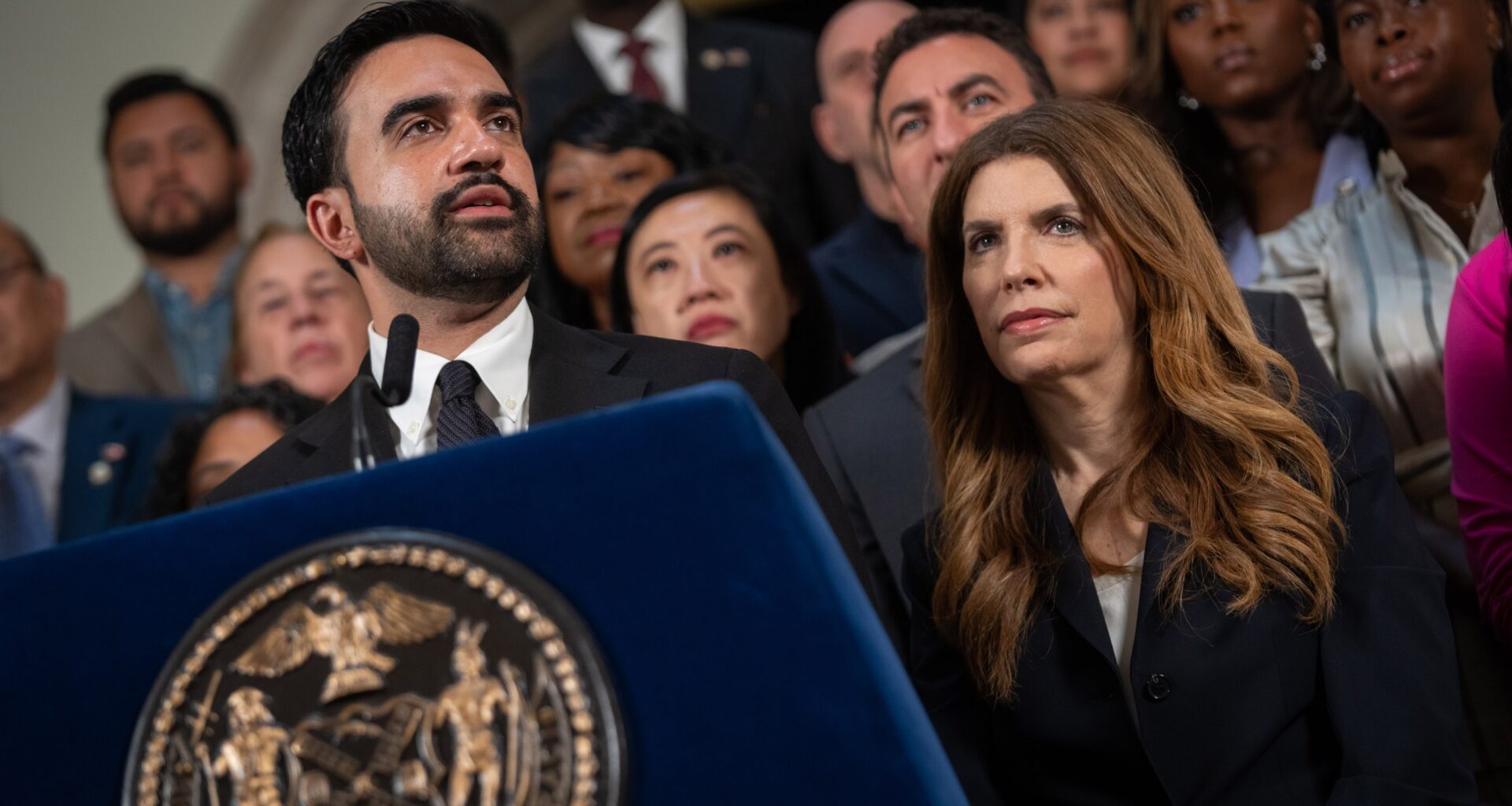
Mayor Mamdani and City Council Speaker Julie Menin are celebrating the end of the historic Central Park carriage horses without doing any of the hard work that would be necessary to unwind a beloved tourist trade that is not only legal, but explicitly licensed by the city.
It is reminiscent of the Council and then-Mayor Bill de Blasio cheering in 2019 their passing of a law to totally close down Rikers Island as of Dec 31, 2026, which won’t happen even though the date was pushed back eight months to Aug. 31, 2027.
You can pass any kind of law, but it has to be real and workable, otherwise it’s just hot air.
The bill that Menin is putting for a vote next week, Int 0943-2026, contains close to 7,000 words, but “medallion” is not one of them. And that’s what this is all about. There are 68 horse carriage medallions, granting the owner the right to operate a carriage horse business in the park and the adjacent sections of Midtown.
Like yellow taxi medallions (of which there are 13,587) the carriage horse medallions were originally sold by the city to confer the license to cruise for fares on city streets. The initial price of the 1937 taxi medallions was $10. In the intervening decades, medallions of both kinds have been repeatedly sold and resold privately. The prices of horse carriage and yellow taxi medallions are now in the range of hundreds of thousands dollars.
These are serious investments, supported by loans and generating the income needed to both repay the borrowed funds and interest and also throw off some profit for the owner.
That value the Council can’t just legislate away to zero. In 2021, a freshman assemblyman named Zohran Mamdani went on a hunger strike for 15 days in support of relief for yellow taxi medallion owners weighed down by onerous loans and a market for fares severely undercut by the impact of Uber and Lyft.
So now, as mayor, Mamdani is going to sign a law that these 68 medallions are being rescinded by the city? Sure, 68 carriage horse medallions owners is a lot less than 13,587 yellow taxi medallions, but the concept is the same.
The bill has other flaws, such as claiming jurisdiction over the 160 privately owned horses as to where they can and can’t be sold. And a ban will also throw 150 union drivers as well as the groomers and stable hands out of work.
Like the flawed Rikers law, which is still on the books requiring an impossible shutdown for next August, the horse carriage bill has a final date: May 31, 2028. That day, horse carriages will be allowed. But the next day, June 1, they will be illegal.
We would keep the carriage horses legal and confine all fares to only Central Park. Anything other than that would need to fully compensate the medallion owners for their property and their investments, be unrestricted in how horse owners choose how to handle their animals and provide employment operations for everyone who would lose a job.
The bill does none of these things, but that won’t stop the Council from going ahead and passing it anyway.