
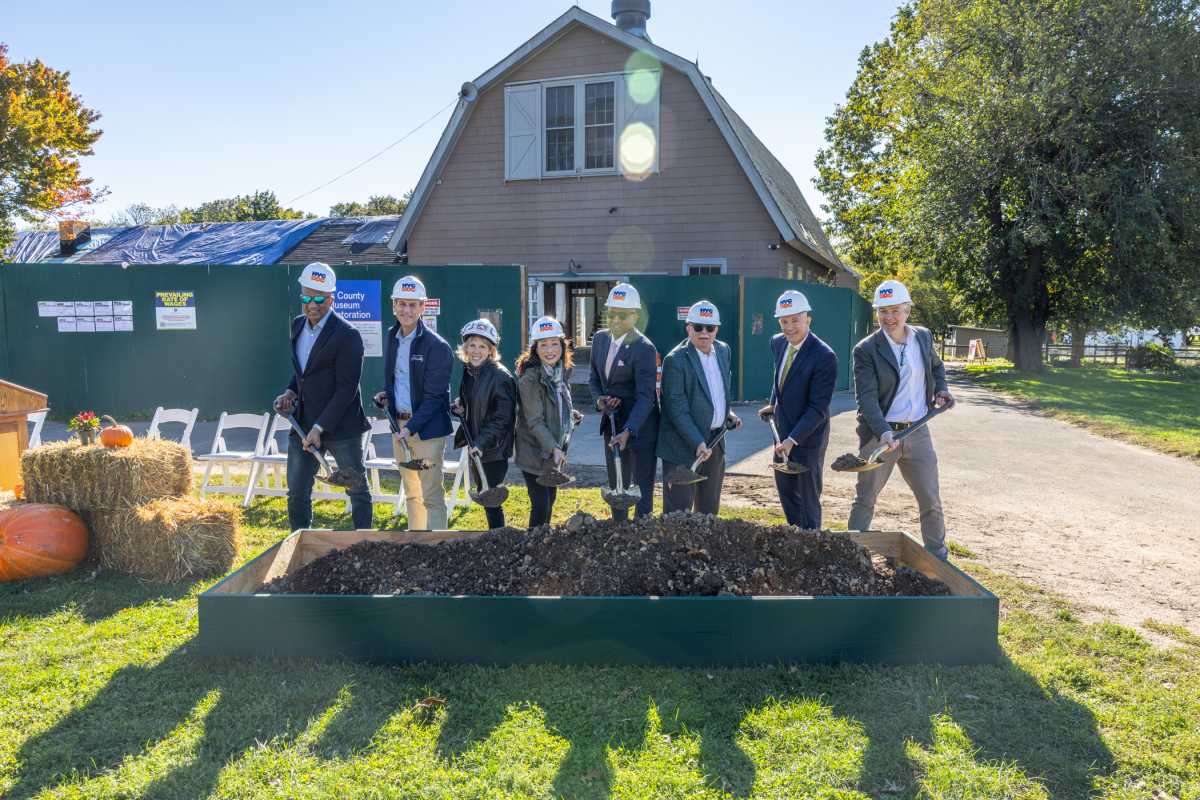
The historic barn and garage make the building a designated New York City Landmark. The building is also on the National Register of Historic Places and part of the Historic House Trust of New York City.
In addition to the barn and garage being restored, work will also consist of upgrades to the HVAC system and building envelope improvements to create better insulation and energy efficiency. Electrical, plumbing, fire alarm and sprinkler systems will be upgraded and a new boiler will be installed. Restoration work will be performed on the barn’s roof and skylight to replicate the old look of the building. The exterior of the building will be painted over. An ADA-accessible entry ramp will also be installed. Asphalt will be paved outside the building and the surrounding sidewalk will be restored. A new tree, shrubs, grass, ferns and more than 120 perennials will also be added.
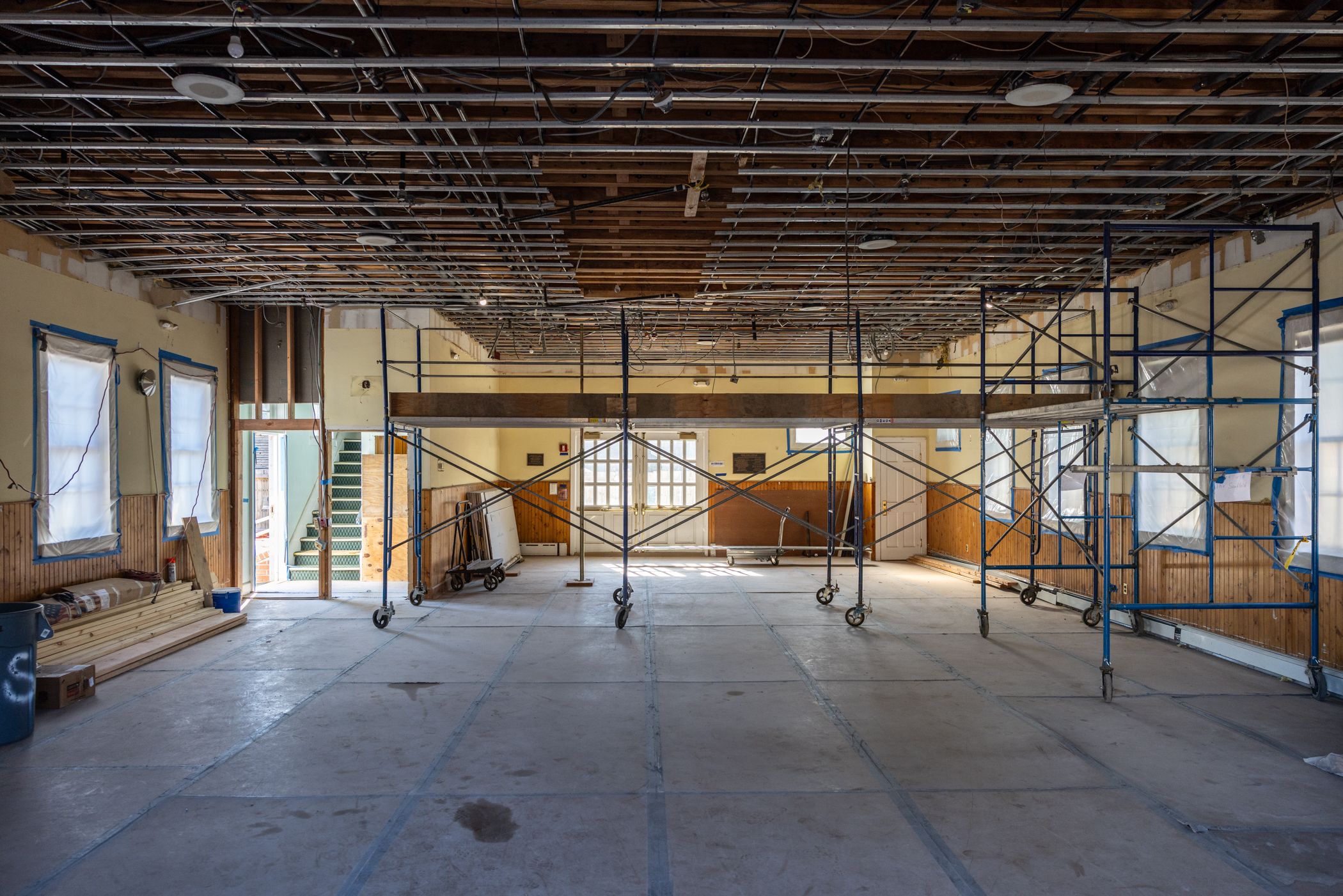 Photo courtesy of NYC DDC
“We are lucky to have a legen-dairy site like the Queens County Farm Museum in New York City where guests, entire families and students can have a great time and learn about agriculture and the history of the land. With this $10 million project, we will make the upgrades needed so it can continue to serve visitors for many more years,” Ochoa said. “The overall restoration will repair the roof and upgrade the façade, windows and other interior spaces of the museum’s historic barn house and garage. We will also install a new ADA-accessible ramp for a more welcoming entrance, as well as a new road, sidewalk and additional greenery outside the building.”
“Historic houses are where our city’s history comes to life. This $10 million renovation will help the Queens County Farm Museum continue to serve as a gateway into New York City’s past, connecting New Yorkers over our shared history and inspiring generations to come,” Shimamura said. “We’re proud to work with our partners at the Historic House Trust to care for the 23 historic houses throughout the five boroughs and make sure all New Yorkers can visit, enjoy and learn from these sites. We’re grateful to HHT, DDC, LPC and our partners across City government for helping make these enhancements to the historic barn and garage building.”
During the construction process, temporary trailers are being provided for the Queens County Farm Museum to use as classroom and office space. Work on the building is expected to be completed in Spring 2027.
 Photo courtesy of NYC DDC
“The Queens County Farm Museum tells a story of New York City’s agricultural past, and this project affirms the museum can continue to do so well into the future,” Deputy Mayor for Operations Julia Kerson said. “By improving accessibility, restoring the historic barn and delivering essential upgrades to the museum’s electrical, plumbing and fire safety systems, we are ensuring this local landmark can continue to welcome hundreds of thousands of visitors each year.”
“The Horse Barn stands within the historic core of Queens County Farm Museum and carries forward the continuum of agricultural work that has shaped this land for more than three centuries,” Queens County Farm Museum Executive Director David Hughes said. “This restoration protects an essential part of New York City’s farming history while ensuring the building can continue to support our staff, educators, animals and visitors for generations to come.”
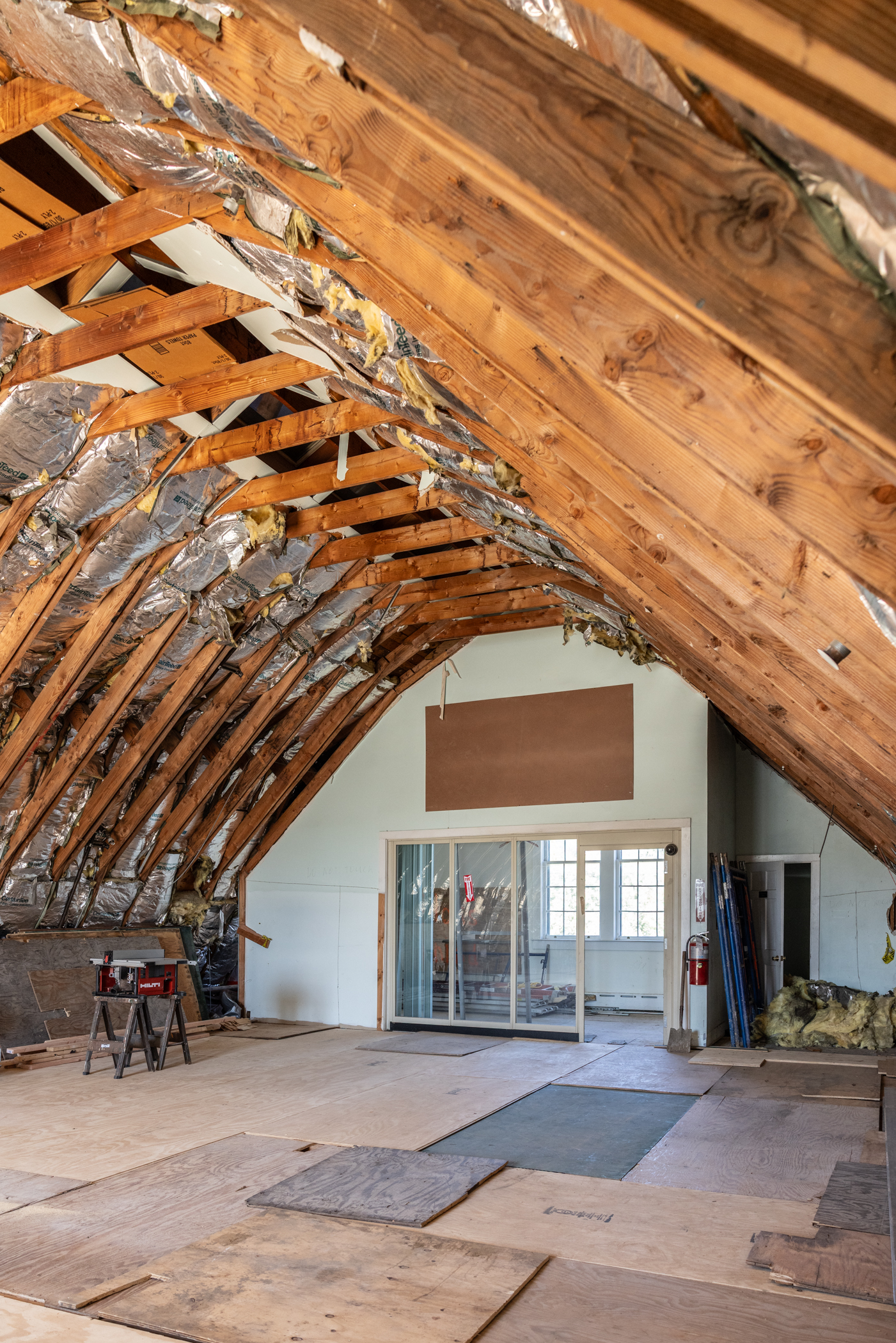 Photo courtesy of NYC DDC
Located at 73-50 Little Neck Pkwy. in Glen Oaks and spanning 47 acres, the Queens County Farm Museum is on the largest remaining tract of undisturbed farmland in New York City. Dating back to 1697, the site features historic farm buildings, a greenhouse complex, livestock, farm vehicles, planting fields, an orchard and an herb garden.
“The Queens County Farm Museum is one of New York City’s last operating farms and the longest continually farmed site in New York State, making it a rare and invaluable survivor of the city’s agricultural past,” Historic House Trust of New York City Executive Director Giulietta Fiore said. “First established in the 17th century, this nearly 50-acre landscape has sustained agricultural production and community engagement for more than three centuries. This restoration project focuses on renewing the heart of staff operations within the historic core buildings, ensuring they can continue to support the museum’s daily work. We are thrilled to be partnering with DDC, NYC Parks and the Queens County Farm Museum to adapt the property for future use, strengthening its role as a working farm, educational resource and public destination for generations to come.”
“Eastern Queens is fortunate to have a local gem like the Queens County Farm Museum, a truly unique cultural, educational, environmental and agricultural institution, in the neighborhood,” New York State Assemblymember Edward Braunstein said. “I celebrate the City’s $10 million investment to upgrade Queens Farm’s barn and garage, which will help ensure that the staff and volunteers at the historic site can continue doing the important public-facing work that reaches students, families and visitors from throughout New York City. Thank you to the NYC Departments of Design and Construction and Parks and Recreation for stewarding this project.”
The museum was built in the 1920s. It annually receives over 600,000 visitors. These visitors are educated on topics like biodiversity, nutrition, climate change and preserving local history.
“Designated by LPC as an individual landmark in 1976, the Queens County Farm has connected generations of visitors to New York City’s agricultural heritage,” Landmarks Preservation Commission Chair Lisa Kersavage said. “This project shows how thoughtful preservation can protect the site’s historic character while making it more energy efficient and accessible, ensuring this unique landmark continues to serve as a welcoming place to learn, explore and experience our city’s rich history.”
“The Queens County Farm Museum is a cornerstone of our borough and our city. As the last operating farm in New York City, it offers visitors unique educational and interactive experiences,” New York City Council Member Linda Lee said. “I am proud that the City’s $10 million investment to repair the Farm Museum’s barn and garage will help ensure that the farm continues to serve our communities. As we remain committed to preserving our green spaces, especially historic sites like the Queens County Farm Museum, this investment will strengthen and restore the farm so it can be enjoyed by generations of New Yorkers to come.”
While a fire destroyed the barn/administration building in the 1960s, the structure was reconstructed in 1992. However, since then, the roof and façade have deteriorated, and the building has suffered from water infiltration and other structural issues.
“They say you can’t turn back the clock. At Queens Farm, we did,” Queens County Farm Museum Founder, President and Board Chair James Trent said. “We revived a farm whose story began in 1697, reconstructed buildings that had disappeared and restored a farmhouse built in 1772. Today, at 47½ acres, Queens Farm remains the largest tract of undisturbed farmland in New York City.”
“The Queens County Farm Museum is a cultural crown jewel of our borough, a model of sustainability and a critical player in our efforts to combat food insecurity, climate change and more,” Queens Borough President Donovan Richards Jr. said. “This renovation project will not only help stabilize its aging barn and optimize its energy efficiency, but make it more accessible for all New Yorkers and cement it as a must-visit during trips to the farm. Thank you to our partners at DDC for this critical investment.”