
Share
Post
Viber icon Viber
Email
By Janet Susan R. Nepales
Every Filipino family seems to have a tsismosa in the group, whether it be a tita, a cousin, a sister or a distant relative.
A tsismosa, or a woman who loves to gossip, is a familiar figure in the Filipino community and can be a source of laughter or family drama.
Put several of them together, and you can imagine the chaotic laughter, lively conversations and occasional confusion that might follow.
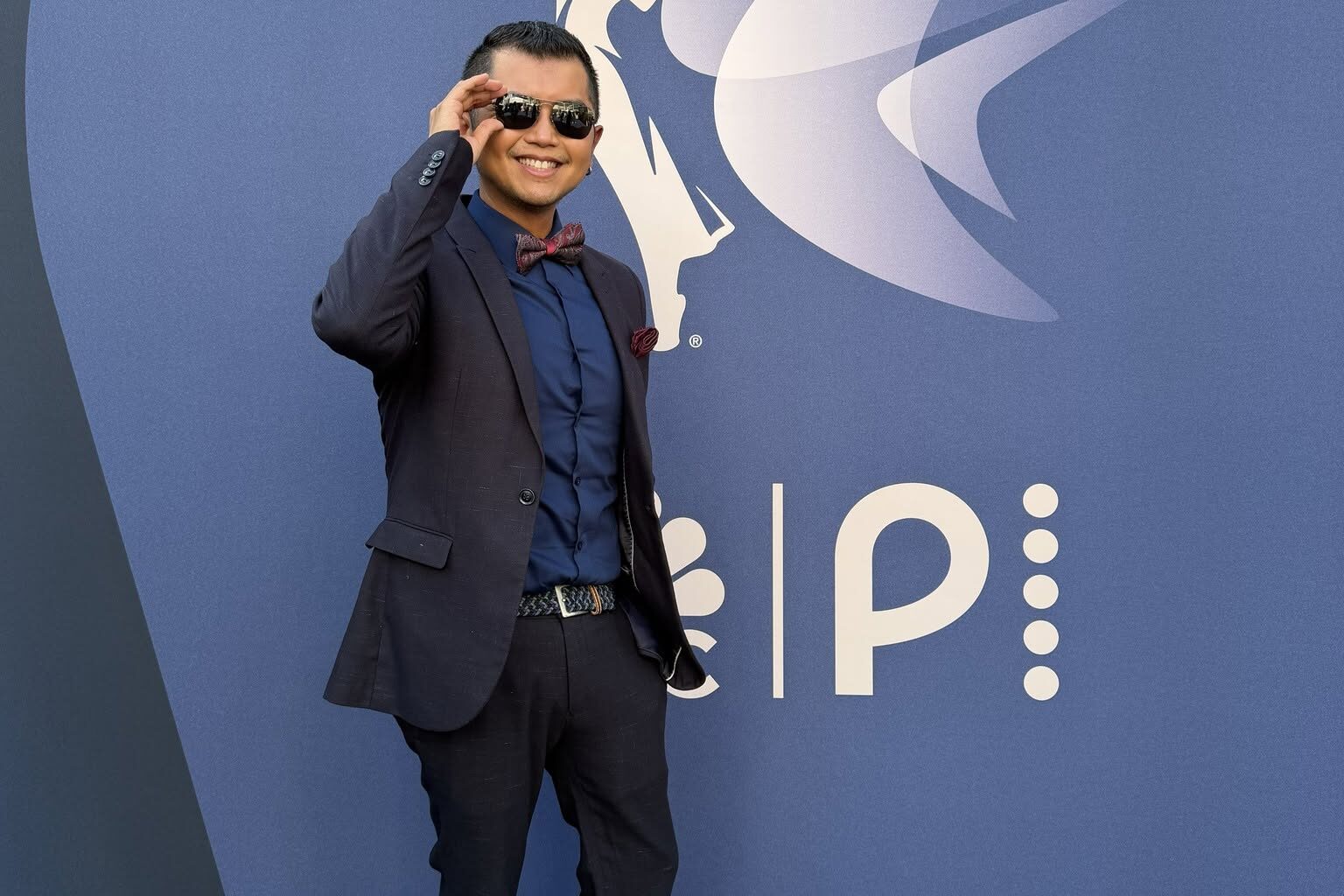
Myhraliza Aala of Aala Is Possible Productions and Mark Nazal of SurrealArts Studios have combined their creative forces to bring to life “Tsismosas: Gossip Queens,” an independent Filipino American family comedy with fantasy elements currently in development.
Emmy Award-winning producer Nazal is co-directing alongside Aala to bring her dream project to fruition.
Created by Aala (“It’s What’s Inside,” “50 First Kisses”), the project transforms tsismis (gossip), a familiar part of Filipino family life, into a comedy about sisterhood and familial misunderstandings. The story centers on Filipina voices while exploring experiences that resonate across cultures.
Key talents include producer Angela Laprete (“Wrecking Crew,” Apple TV+’s “Chief of War”), director of photography Leah Anova (“Every Body”), Academy Award-nominated director Julie Cohen (Tribeca/Focus Features), and co-writer and producer Geri Carillo (WGA, “Walker”).
Joining the film is Tia Carrere (“True Lies,” “Wayne’s World,” “Lilo & Stitch”), who will star as Auntie Rose.
“I am beyond excited to have the honor of working with such an icon,” said Aala. “Tia leading this all-Filipina powerhouse is a gift to the Filipino community and beyond.”
“Tsismosas: Gossip Queens” is a family comedy with a fantastical twist. It follows Tes as she tries to escape her Filipina aunties’ judgment by slipping into storybook fantasies and superhero sequences, where she ultimately finds the confidence to confront her most intimidating, gossipy auntie in the best way she knows how.
The short film seeks to advance Filipino American representation in independent cinema, combining family comedy with fantasy elements.
In an exclusive interview, Nazal and Aala discussed their inspiration for the project, their creative collaboration, the challenges of production, their own family experiences with tsismosas, and what they hope audiences will take away from the film.
Mark Nazal (co-director) and Myhraliza Aala (co-director, writer, actress)
Mark, can you please let us know what interests you in joining this project?
Mark: Yeah, absolutely. I’m the co-director of this project called “Tsismosas: Gossip Queens” that will star the amazing Tia Carrere with our fabulous cast. That includes a lot of up-and-coming fantastic folks that we are excited for you to meet. I think I got really excited about the project because I think it’s a project that resonates with a lot of us in immigrant communities in particular.
I know for myself, like when I was getting started in the industry, being in the entertainment industry is not the usual pathway for people in our culture. I would argue that I resonated with Tess, our main character, who herself is an artist and is taking a non-traditional path to what she wants to do in life. Because of that, she’s getting picked on by her aunties in so many ways, which is the crux of the story.
It hasn’t been lost to me as to how she copes with it. That’s what makes the film interesting: she copes with it by going into her own head. In that way, it goes from a grounded story to a mythical, fantastical story that I’m pretty sure is exactly what I did because during those hard moments I do remember having a very vivid imagination and also just thinking of how life could be when things get better.
How did you meet Myhraliza?
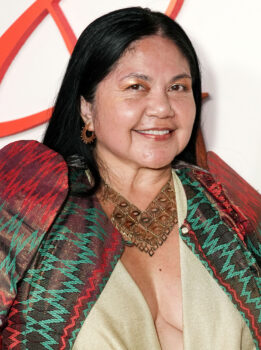
Mark: Well, it’s interesting. I didn’t realize we’ve really been in very similar circles, but I met Myhraliza when I met Leah Anova, the DP in Virginia, where I spoke for the Virginia Film Commission. I got introduced to this project because Leah Anova is also DP-ing it.
Myhraliza, can you talk about your inspiration for this short film and why you chose Mark to work as co-director?
Myhraliza: So, I’ve been writing, I’m an actor and I started writing and creating my own films because I wanted to see more Filipinos, and I didn’t want to wait for a job. So, I will write from a place of personal experience. Most of my projects have involved my experiences growing up in Indiana, where it’s mostly Caucasian and I don’t see a lot of Filipinos. So, I wanted to write something that was fully Filipino, fully female. I thought about how I often would go back to the Philippines and have to prepare because of the onslaught of why you aren’t married or, oh, you’ve gained some weight. And so, and I wanted to take my power back and make it a comedy. Because I wouldn’t go in fantasies, but I would always have to say, okay, this is how you’re going to answer. You’re going to be calm about it. And then I thought, well, wouldn’t it be cool if I had a similar character, but she had these ways of battling her aunties, even though she can’t because we have to be respectful to our aunties, right? And so that’s how I came about creating the story. I did have in mind Tia Carrere as the villainous auntie. And so, I’m very grateful that through my relationship with Angela Pratt, who’s the producer, I was able to secure Tia to be part of this project.
And why did you choose Mark?
Myhraliza: I learned about Mark through Leah, as Mark mentioned, and I just saw his incredible experience with VFX. And to be honest, I have not directed, I’ve produced and I’ve assisted directed. And so, one of the things that I really appreciated about Mark is his calmness and his creativity.
He was very supportive and championed me to direct. I said, well, I wasn’t as confident. Mark gave me the confidence to do it. He even thought, well, with your experience in this industry, I would love it if you would co-direct with me because there’s a lot of fantasy aspects. He would be able to help navigate that for me because I’m definitely not as knowledgeable about the effects of fantasy components of a film. So that is why I was so very grateful to have Mark co-direct with me.
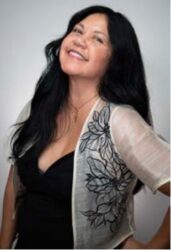

Which goes to my question to Mark: how would you approach the film when it comes to the use of the special effects? What areas do you think you would mainly use it?
Mark: Absolutely. But before I do go into that, I do want to acknowledge something that Myhraliza said, which I think the audience, and you as well would definitely want to know. I think what’s very empowering about this film is it’s a women-driven film, both in front and behind the camera. And so, for me, I didn’t want to be the one person that kind of took away that power. So instead of fully directing it, I thought I said, I think you should co-direct it. It’s also your story. You can connect with the emotional beats, and I’ll be there to support.
But I really like the idea that it was a Filipino woman co-directing, writing, co-producing, DP-ing and an AAPI woman on the production design. But you get my point. It’s just you don’t really get to hear that. You hear about them being one part of it, but for all of them to be a part of the driving force of the production, I think is a very important time and a very important thing to foster, because I don’t think there’s enough.
But to answer your question, in directing the fantasy elements, I would approach it like any show that I’ve been a part of, whether that’s Gotham Agents of Shield or Charmed or any of that sort. It’s taking a grounded approach until it’s necessary. Like as an example, my release, I think we’re allowed to be able to talk about some of the elements, right? Like obviously one of the things that happens to you when you work in this industry is you become fans of the actual projects that you work on or things that are kind of related to it.
So, when she was telling me about, as an example, the superhero element, the character that comes to mind is Darna, right? Because she’s Filipino, she’s a superhero. But also, we now live in a world where Wonder Woman exists. So how would I approach that?
The answer is approaching it like the work that I’ve done on some of the biggest TV shows, but at the same time putting characters that look like us but have the production value of the shows that you and I watch on a daily basis. That’s like a general gist. All of those techniques are very commonplace, whether that’s wire removals, flying, but really at the very core of it. I’m actually excited to share this as well. I was able to bring in my fellow Emmy Award winner, Sheena San, who is a fantastic creative director.
She and I have worked together on these projects that I mentioned for over five plus almost ten years. And I think it starts with creative direction. And so, I’m really excited to be able to bring her along to help not just execute the vision, but also creatively decide and help figure out the look, the palette and just overall aesthetic of each scene.
Myhraliza, have you started filming already? And how long do you think this filming was going to go on?
Myhraliza: So, we were heavily in pre-production this past summer. And we were set to film. But when we realized that we wanted to have our post-production funding, we thought it would be better to take a step back and really focus on getting the complete funding so that it would have the funding that it deserved.
We are continuing right now to get funding for this project. We plan to film either later this fall or early spring. We are anticipating that it’s going to be three days of filming. But we are excited because we will soon be announcing our ensemble cast. And so, thank you again for allowing us to share about this to bring momentum to this project and interest in this project.
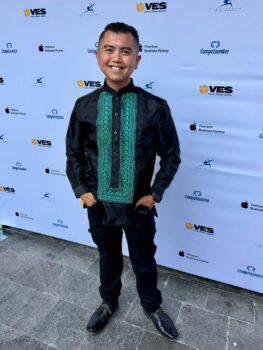
So, Mark, what challenges do you see you encounter in making this film?
Mark: As always, when we’re dealing with a cultural film, the challenges are to make a film that is distinctly Filipino American but yet is relatable enough for anybody to watch. That’s going to be something that has to rely on comedic tropes that not just people within our culture can understand, but anyone from any culture can understand.
So, while we’re making this with us in mind and our community in mind, the idea is that anyone with a toxic family member or wanting to escape to another reality should be able to watch it and relate to it in so many ways. I feel like it’s interesting because Myhraliza and I were actually often discussing the viability of the title, right? Because there’s Gossip Queens, but then there’s the word Tsismosa. And I’ve often been on the cautious side of, is everybody going to understand that? Should we go with just a more generalized title? But I think as we mentioned it in many different circles, whether at San Diego Comic-Con or at an event at the DGA, people seem to gravitate to the quirkiness of the word, but yet understood the context based on the full title itself. But it really does come down to getting the comedy right, getting the relatability right for a general audience.
I really like the title too. So, talk about the tsismosa part in your family or your friend circle; where did you get that inspiration for that tsismosa?
Myhraliza: So just to piggyback on what Mark said, anytime I’ve shared the title, people laugh and are already automatically like, oh my gosh, I have to watch this. And to be honest, my mom will probably kill me. But I didn’t have them in mind; maybe they were in the back. For a background in the back of my mind, I think it was more prevalent, unfortunately, when my godmother passed away and when we reflect on their lives, like my cousins and I would often joke about how my mom is. Oh, look at your mom and my mom going over there for Christmas.
And so, it’s funny, every time we were in the Philippines like last summer, I was laughing to myself because they would talk about so-and-so. It’s from that that I got this idea of Tsismosas that I didn’t realize until I was really listening to them because anytime they got together, they were always just gossiping.
And so, I said, this would be funny because we would always laugh at them talking about so and so, even talking about us. So that’s my inspiration for Tsismosas. My mom would kill me for saying that.
Mark: It’s funny that you say that. I’m realizing I can be very square. I can be a very serious person sometimes. Oftentimes, I think what really relates, like I said, what really relates to a lot of people, like in this movie, is that a lot of people in our culture would often say things that are almost rude and nonsensical, but somehow, they think it’s in good faith, or sometimes they think it’s what is the phrase that my mom would always use? She would say something like, I was just being honest or it’s constructive criticism that is the part that I hate. I’m just telling you the truth.
But they think it’s funny. I actually had to scold my mom as an example, because they were still living in the United Arab Emirates at the time where I grew up. She saw a classmate of mine who was a very pretty girl in high school. And she met her in college. And the first thing she said, and my sister actually scolded her, she goes, you were a lot prettier when you were in high school, when you were not fat.
My sister and I were shocked. My sister just lost her mind. Like, why would you say that? But to her, I guess it was just normal because she thought she was helpful. But I’m like, you do not say that. I’m pretty sure they know. They know how they are. They know that they’re not their best selves right now. But somehow our culture just has this very strange need and want to ask you the most inappropriate things in the most common ways and in the most random ways.
Like for instance, I hadn’t been to the Philippines and oh my God, almost 20 plus years up until 2024. Because my mom got sick. But when I got there, I got both compliments and insults. The first compliment was, oh, you’re 38, you look like you’re 20. And then I’m like, okay, great. That’s a compliment. And then the very next thing goes like, are you married? Do you have children? And then finally, I think like after being asked that for over a week, I actually just went divorced actually. And then they just didn’t know what to say.
We do have a very interesting culture, but at the same time, being American as well, we need to learn to navigate how that kind of factors in. Oftentimes, we learn to laugh with it because otherwise it gets fairly heavy.
Myhraliza, what’s your dream for this project?
Myhraliza: So, my dream, this is a proof of concept for a feature specially making it an all-Filipino cast. After we did the casting call for the ensemble cast, there’s just so many talented actors out there that I would love to work with.
It was proof of concept to be a feature film, but I just thought of bigger things for this because of the amazing talents. Let’s be honest, we cast a lot of the same people who are Filipino. And there are so many talented Filipinos out there that we were happy with who we finally selected, but I ran into some of them who auditioned during the film festival, and I was like, God, I really wanted to cast you, but we only have one role, you know? And so, my dream is to make a feature film and to have it really showcase all the talented Filipinos out there.
Mark, how do you plan to collaborate with Myhraliza on the direction for this?
Mark: For me, I often have two roles when I direct. My first rule is if I wrote it, I would prefer to direct it completely. But if I didn’t write it and if somebody else directed it, I am fine co-directing because I want the voice to feel genuine. So, this being female-led, written by a woman, I wanted to make sure that that voice and that personality and also that authenticity persisted.
So, I will definitely give my release of the latitude to be able to better define the emotional aspects of the film wherein we can certainly triage it by me being able to bring in a lot of the experience from the more fantastical elements of my work experience. And also, just the ability to be more over the top for them to be able to see beyond what’s possible. Because oftentimes when actors perform on green screen, they don’t necessarily have the full concept of what it is they’re supposed to do within that given moment. Whereas for me, coming into being in this industry for as long as I have at this point, it’s something that is second nature.
I can visualize the exact moment, the exact thing that is supposed to be happening, even when they don’t. So, that’s how we’re going to share the responsibility, and I want her to be wholeheartedly responsible for the emotional impact of the characters, wherein I’ll take care of the fantastical elements, and also being able to really shepherd the actors into seeing and performing to how best they can determine, or rather imagine what’s supposed to be around them or in front of them.
For both of you, what do you hope audiences will get after watching this movie?
Mark: Honestly, I hope they get a lot of laughs. Because the way that I’ve seen that I see this movie is it’s like, imagine if you took a little bit of south, a little bit of everything everywhere all at once, a little bit of Easter Sunday maybe, and then add a little bit of, I don’t know, a random Filipino movie. Like what was the one that I watched “Becky & Badette,” as an example? And then add a little bit of “Kung Fu Hustle.” You know what I mean? It’s a genre mix. We definitely want audiences to laugh, but we also want them to thoughtfully, maybe have some heartfelt moments, especially in the touching moments of the film.
Myhraliza: And I would agree with hoping that audiences laugh because I lean towards reading or writing in comedy because I found that laughter is healing. And so those who have experienced us, the similar tsismosa in our families, can feel seen and that they can laugh about it and take their power back. Because I think that is even just in the title; people were already laughing because they can already have that experience. I don’t think there’s been anything made that has showcased a Filipino family, but also in a fantastical way to escape the tsismis and drama that’s in their family.
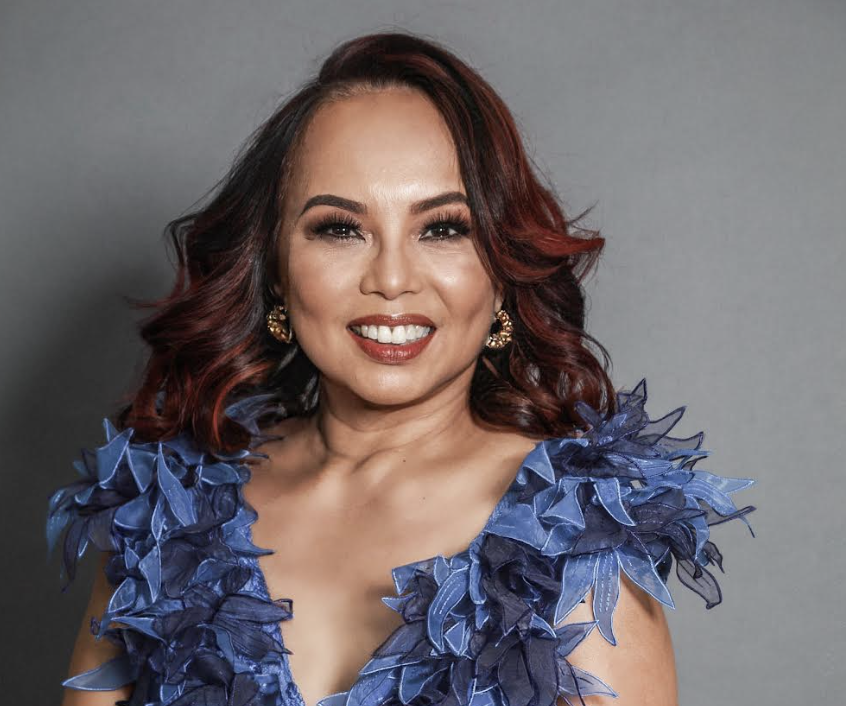
Janet Susan R. Nepales is an award-winning journalist and the first Filipina voting member and Associate of the Golden Globe Awards. She has been a member since 2008 and is the first Filipina to be elected to the Advisory Board. She is the author of the coffee table book “FASHION. Filipino. Hollywood. The World” and the co-author of the first FWN book “DISRUPT: Filipina Women: Proud. Loud. Leading Without A Doubt.” A graduate of UST (AB Journalism, cum laude), she is based in Los Angeles and is a Hollywood entertainment journalist and TV correspondent.