
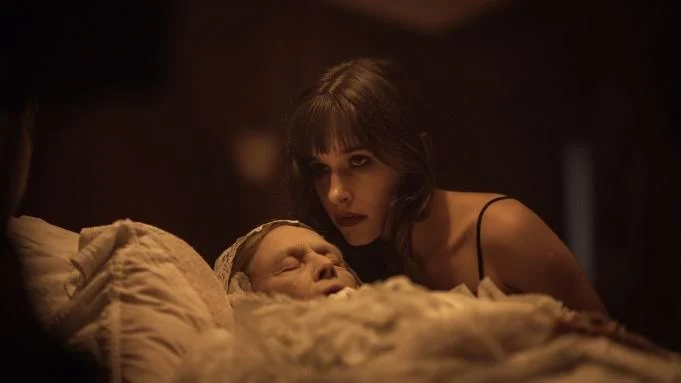
People will do almost anything for a story they believe is true. They’ll keep a ritual nobody remembers the reason for, avoid a road after dark, or decide a neighbor is dangerous because of something a grandmother said once. That impulse is where ÒPI lives, and it’s why I came out of Marta Giec’s feature debut more unsettled than scared. This is brutal Polish folk horror drawn from Kashubian lore, and it treats belief less as a doorway to the supernatural than as a pressure that bends everyone standing inside it.
The setup is simple. Shortly before her 18th birthday, Trina (Wiktoria Kruszczyńska) watches an already complicated home life come apart when an aunt and grandmother she has never met arrive, and three generations of women find themselves bound by a secret that runs through the whole family line. Giec wrote the script with Dominika Kłoczewiak and has said she approached horror through magical realism, letting ordinary life slowly give way to something else. You can feel that in how long the film keeps its feet on the ground, and it doesn’t show its hand until the third act. I won’t either.
What Gets Handed Down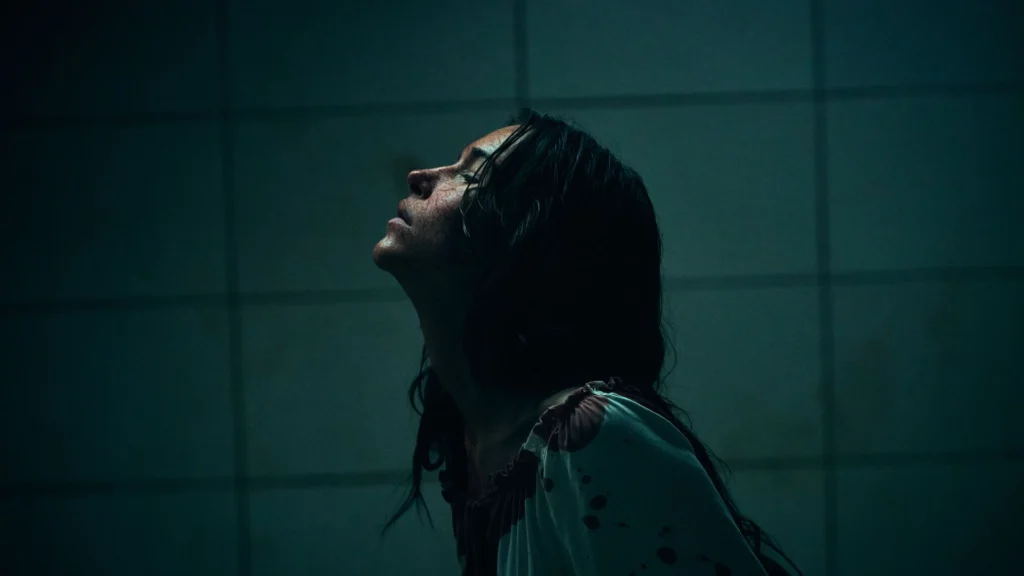
Folklore can be a gift. It keeps a language alive, gives a place its shape, and lets one generation hand the next something no classroom ever will. ÒPI never treats Kashubian tradition itself as the threat. What frightens it is how people use those stories to decide who belongs and who can be treated as dangerous. Watching it, I kept thinking about how quickly a tradition that holds a family together can turn into a reason someone outside it suffers.
Family is where that harm gets passed along. Children inherit more than bedtime stories. They inherit their parents’ fears and suspicions, along with obligations they never agreed to carry. Gabriela Muskała plays Trina’s mother, Ula, and hers is the performance I keep coming back to, the one that makes the cost of all that inheritance feel personal rather than theoretical. Magdalena Boczarska and Iwona Bielska round out a strong ensemble, and the production design makes this world feel lived in, which matters in a film asking us to believe these women have breathed this fear their entire lives.
The Wait, and Whether It’s Worth It
ÒPI is a true slow burn, and I mean that as a description before I mean it as a warning. There are long stretches between anything resembling a scare, and if you come in expecting something lurching out of the dark every ten minutes, you’ll probably reach for your phone. Much of that quiet is deliberate and earned, because it gives the performances and the dread room to build. The trouble comes when a scene keeps going after it has made its point, because tension that should be tightening starts to slacken, and the next sequence has to rebuild what that one let go.
That’s the line I kept drawing while watching. A film can be slow on purpose, and ÒPI often is, but patience only works when every extra minute is doing something, and here not all of them are. What kept me in my seat anyway were developments that are deeply disturbing, even when nothing on screen is trying to make me jump. ÒPI doesn’t need to convince us that its monsters are real. It only needs to show us what happens when people believe in them, and it does that well enough that I’d recommend it to anyone with the patience to let it work.
ÒPI makes its North American premiere at the Brooklyn Horror Film Festival, which runs October 15 to 22 at Nitehawk Cinema Williamsburg.