
Four years before the Memphis redistricting, Republicans used a similar strategy in drawing new maps for Nashville. They split the city, which had voted overwhelmingly Democratic for roughly 70 years, into three broader districts where Republicans can now easily prevail.
Battles over redistricting have long been intertwined with racism and political power, particularly in southern states like Tennessee. Sixty-four years ago, a federal court found Tennessee diluted voting power in urban areas where majority Black voters lived and ordered the legislature to redraw its congressional districts.
For decades, the Voting Rights Act of 1965 was a powerful tool for Black voters, particularly in the South, to challenge discrimination and protect political power among people of color to elect representatives who would advocate for their communities.
The act significantly increased Black and Hispanic representation in Congress by curtailing certain redistricting practices, including splitting people of color among many districts or concentrating them in some districts to limit their impact in others.
But those protections have been steadily weakened.
In 2013, when Democrat Barack Obama was president, the Supreme Court’s decision on the Alabama case Shelby County v. Holder gutted a provision requiring federal approval before states change voting laws or political maps. In April, the court narrowed the Voting Rights Act further in Louisiana v. Callais, making it harder to challenge new maps that dilute the voting power of communities of color. The court essentially required such challenges to prove that districts were drawn intentionally to discriminate on the basis of race, and not for other reasons.
Republicans argue their redistricting in Tennessee and elsewhere is about party politics, not race. They point out that Democrats regularly redraw districts in states they control to give their party easier election wins.
Democrats have done the same in California, for example, said Steve Hickey, chair of the Republican Party in Williamson County, a popular suburban area south of Nashville.
“This is part of a bigger game being played nationally, and I don’t think it’s fair to say that this was done to gut” the Voting Rights Act, he said.
Redistricting in the United States is generally controlled by state legislatures, which adjust voter maps after the once-a-decade census. Both parties have historically used the process to help their candidates win future elections. In 2025, at the urging of President Donald Trump, Texas launched an unusual mid-decade redistricting drive as part of a broader Republican push to gain congressional seats in half a dozen states, including Tennessee. Democrats responded with their own partisan redistricting in California and attempts that faltered in other states.
Civil rights activists say Tennessee’s congressional districts, all of which currently favor Republicans, are now a testing ground for dismantling voting rights protections across the United States.
“This lack of competition spills over and has racial implications,” said John Geer, a political science professor at Vanderbilt University who conducts polling in Tennessee.
Reuters sought to quantify the impact of redistricting on the voters of Tennessee, examining public funding, demographics and socioeconomic factors to show why it’s important to residents when a city is split up like this.
MemphisDistrict 9Suburbs of NashvilleDistrict 5District 8District 9
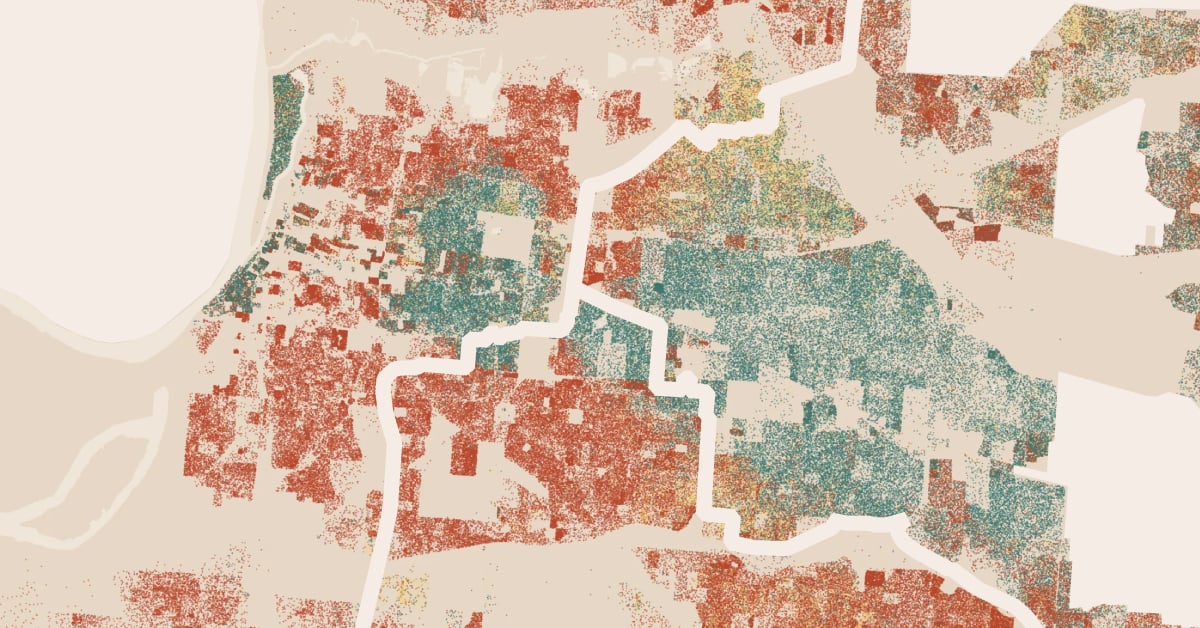
Population by race, one dot per person
Black residents White residents Other races and ethnicities
Memphis has the largest Black population in Tennessee. The city of some 630,000 people is 63% Black.
Memphis accounted for 78% of the former District 9’s population, making it the only majority-Black district in the state.
Earlier this year, the Tennessee legislature drew new district lines, splitting Memphis and its Black communities into three separate districts.
The pieces of the city are now grouped with rural and suburban Tennesseans in districts that reach halfway across the state.
Note: “White” and “Black” are non-Hispanic. “Other races and ethnicities” combines Hispanic or Latino residents of any race with the non-Hispanic categories Asian alone, American Indian and Alaska Native alone, Native Hawaiian and Other Pacific Islander alone, Some Other Race alone, and Two or More Races.
Sources: US Census Bureau (2020 census redistricting data; TIGER/Line boundaries); Tennessee Comptroller of the Treasury (2026 districts); All About Redistricting, Loyola Law School (2022 districts); State of Tennessee and the City of Memphis Engineering Division (city limits); Tennessee Department of Transportation (roads)
Reuters spoke to more than 35 redistricting scholars, political analysts, civic leaders, political candidates and voters about the consequences of redistricting for the most vulnerable communities in Tennessee’s two biggest cities. Cities faced the biggest impact because rural areas were already represented by a Republican and continue to be so after the redistricting, albeit in districts with different demographics.
Before redistricting, both Nashville and Memphis were overwhelmingly Democratic districts in an otherwise Republican state. In 2024, District 9, including most of Memphis, went 71% for Democrat Steve Cohen. In 2020, Jim Cooper, a Democrat, ran unopposed in Nashville’s District 5, winning more than 99% of votes cast. In 2022, the new District 5 flipped, with the Republican candidate winning 57%.
Tennessee’s new maps have combined city, suburban and rural populations that have widely varying needs and political preferences. The residents of Nashville and Memphis, for instance, are far more likely to struggle with poverty, housing, public safety and related issues.
Residents there could now struggle to elect Congress members who prioritize policies to address these issues, according to Odessa Kelly, executive director of Stand Up Nashville, a nonprofit community organization that advocates for racial and economic equality.
She said Black voters in Nashville no longer felt they had someone to stand up for them in Congress, from federal funding going to the city to critical votes on bills that directly affect city residents.
The US Centers for Disease Control and Prevention developed the Social Vulnerability Index to gauge how well a community can withstand and recover from an emergency, and to identify which communities may need the most support. Shelby County, home to Memphis, ranks among the most vulnerable of Tennessee’s 95 counties on various indicators such as housing cost burden and lack of access to a vehicle.
Memphis, Nashville residents rank higher in social vulnerability
A US government index compares Tennessee communities on socioeconomic and demographic factors gauging their resilience to unexpected hardships.
Racial or ethnic minority
Davidson County
(Nashville)
Housing and transportation
In structures of 10+ units
Household characteristics
Speaks English less than well
No high school diploma (25+)
Racial or ethnic minority
Davidson County
(Nashville)
Housing and transportation
In structures of 10+ units
Household characteristics
Speaks English less than well
No high school diploma (25+)
Racial or ethnic minority
Davidson County
(Nashville)
Housing and transportation
In structures of 10+ units
Household characteristics
Speaks English less than well
No high school diploma (25+)
Chart showing where Shelby County and Davidson County rank among Tennessee’s 95 counties on 16 measures of the CDC’s Social Vulnerability Index, grouped into four themes, on a scale from the 0 to the 100th percentile with the other 93 counties as faint ticks. Both rank high on most measures — Shelby at the 100th percentile for racial or ethnic minority share and housing cost burden, Davidson at the 100th for apartments in large buildings and for people who speak English less than well. Both drop to the middle or bottom on poverty, the 50th percentile for Shelby and the 23rd for Davidson, and on residents aged 65 and over.
Source: US Centers for Disease Control and Prevention and Agency for Toxic Substances and Disease Registry Social Vulnerability Index 2022
In 2024, just over a third of Tennessee voters picked Democratic presidential candidate Kamala Harris, and in 2020, Democrats won two congressional seats out of the state’s nine, carrying Nashville and Memphis. Now, every congressional district in Tennessee is considered “safe” for Republicans.
Sandi Wells, a self-described “very conservative” voter from Williamson County, just outside Nashville, said it was “kind of odd” to group Memphis in the same district with parts of Williamson County 200 miles away. But she rejected the notion that districts should be drawn to protect Black voting power.
“I don’t think we should have districts that are based on race,” she said. “I mean, that’s just ridiculous for anyone to even think that we should have that.”
Shane Tinnin, a 52-year-old small business owner who maintains homes in both cities and has voted mostly for Democrats, understands that parties seek political power through redistricting but called the Memphis maps a particularly striking setback for Black political power.
“In Nashville, it seemed really more like this is a political move,” he said, noting that it was not a Black-majority city. “When you do it in Memphis, where it’s an even more liberal district, but also a predominantly Black district, it just feels especially egregious to me.”

Odessa Kelly, executive director at Stand Up Nashville, points to topics of focus for her and her team at a meeting in July. REUTERS/Seth Herald
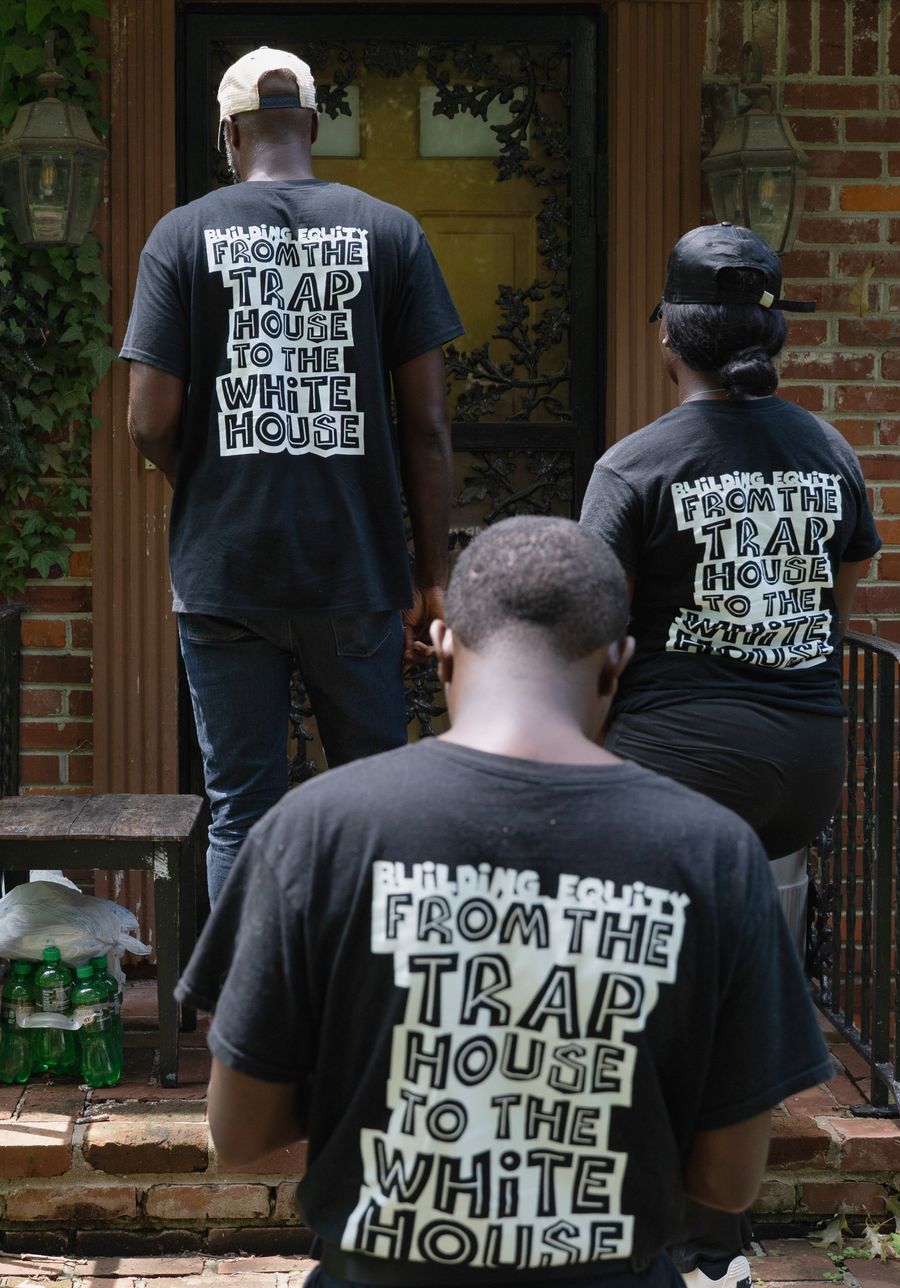
Volunteers for The Equity Alliance canvass through neighborhoods in Memphis to do “accountability” door knocks to speak with residents about elected officials following the GOP-led effort to redistrict the city. REUTERS/Seth Herald
Securing funding
Reuters examined how Nashville’s redistricting has impacted community project funding, under which lawmakers can seek federal money for local projects. Previously known as earmarks, community project funds returned to Congress with a more transparent process in fiscal year 2022 after a decade-long moratorium.
A Reuters analysis found a dramatic shift in funding for Nashville after the city was split among three districts.
Jim Cooper, a Democrat, steered most of the old 5th District’s project funding to Nashville in fiscal years 2022 and 2023. In the years since, only a small share of funding has gone toward projects in the city, including fiscal year 2027 requests still pending before Congress.
Funding can vary greatly between representatives. Only John Rose, who currently represents the 6th District, has requested funding among the three members whose districts included Nashville after redistricting. Matt Van Epps and Andy Ogles have not pursued community project funding for their districts at all, arguing against such spending on principle. All three did not provide a comment or did not respond to a request to comment.
Total Community Project Funding for districts that include Nashville
Two flow diagrams comparing Community Project Funds before and after redistricting. In the year before, when Nashville sat in a single district, District 5 received $18 million and $15.5 million of it went to Nashville, with $2.5 million going elsewhere. In the year after, with Nashville divided across three districts, Districts 5, 6 and 7 received $21 million between them but only $3 million reached Nashville, while $18 million went to areas outside the city.
Note: Data show the total funding for districts that include Nashville. Before the 2022 redistricting, Nashville was contained in District 5. After, it was split between Districts 5, 6 and 7.
Source: US Government Accountability Office
The shift away from community funding jeopardized future funding for projects like public housing, healthcare centers, buildings for the two historically Black colleges in the city and public transportation in Nashville.
For Memphis, a similar decline in earmark funding would be a big loss. Since 2022, District 9 Representative Steve Cohen, a Democrat, pulled in $52.6 million for projects based in Memphis, according to figures published by the US Government Accountability Office and the US House Committee on Appropriations. That’s 83% of all the community project funding for District 9 in that period.

District 7 State capitol
District 6 State House of Representatives
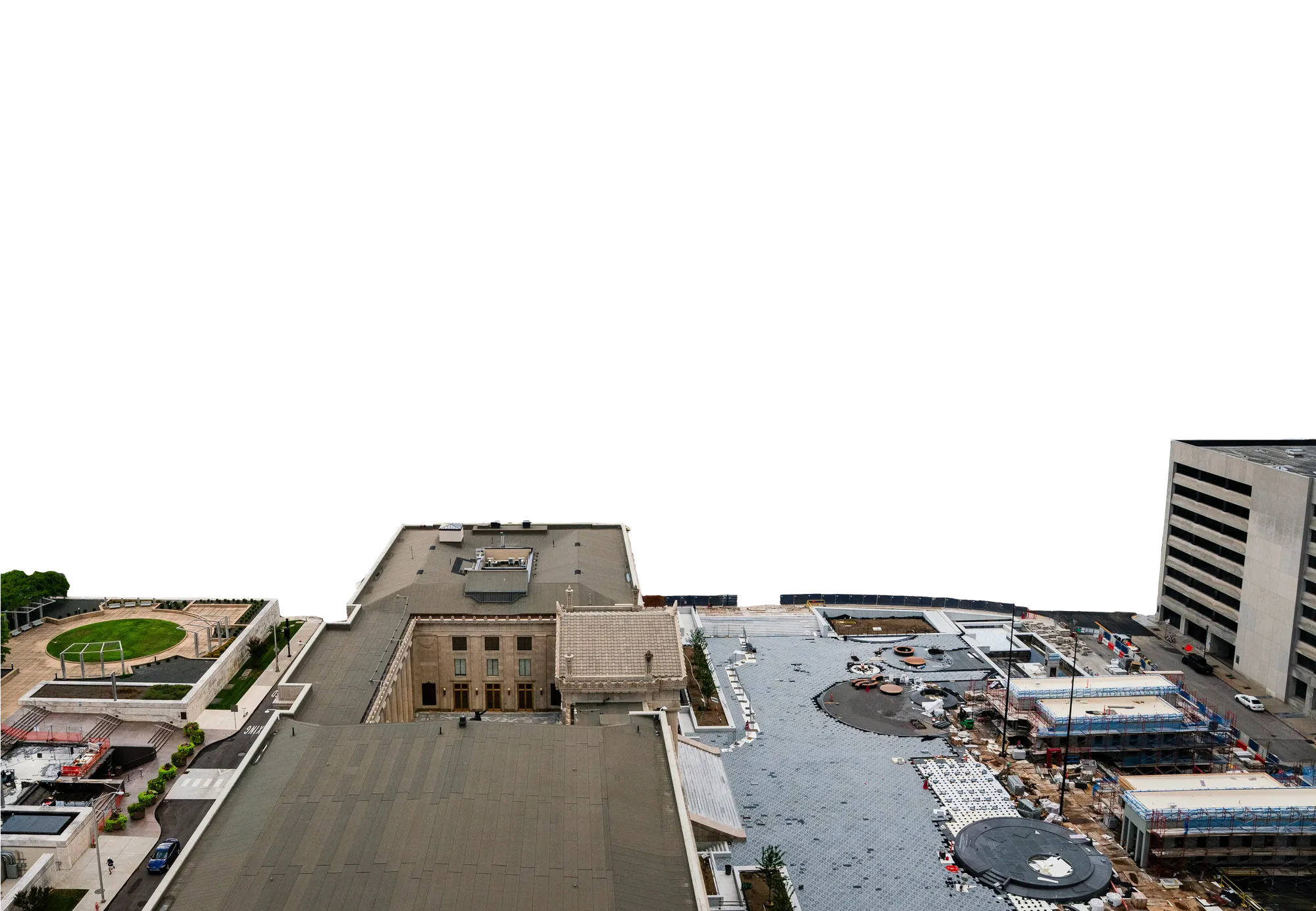
The Tennessee State Capitol building and Legislative Plaza, which is undergoing construction. REUTERS/Seth Herald
Another important role for a member of Congress is to act as a middleman between people in their district and the government, helping negotiate the bureaucracy of Washington.
When Cooper represented Nashville, he fielded calls about immigration paperwork, passports, Medicare, Social Security checks and more, said Tennessee State Senator Charlane Oliver, who worked as a community liaison and communications staffer in Cooper’s congressional office from 2017 to 2019.
“He would show up to the cookout, the fish fry, the parades, the meetings and the galas,” she said.
That kind of interaction is harder if the representative does not have a local office. When Nashville was split, only one representative, Mark Green of District 7, kept an office near the center of the city. That office was closed when Van Epps took over the seat in 2025, leaving no offices within the city limits.
Constituents in Nashville have to drive 36 miles on average to visit a congressional district office, a Reuters analysis found, compared with less than 10 miles when Cooper represented Nashville, the seat of Davidson County.
Average trip to Congressional district office
9 miles before redistricting
9 miles before redistricting
9 miles before redistricting
A chart of the average driving distance for Nashville residents to their closest congressional district office, shown for each of the three districts the city is now split among. A dark bar common to all three marks the 9-mile average from when Nashville sat in a single district, flagged on the scale as “9 miles before redistricting.” A lighter bar extends past it to each district’s new average: District 5 adds 39 miles, reaching about 47; District 6 adds 17, reaching about 25; and District 7 adds 16, reaching about 24 miles.
Note: Data shows the average driving distance for Nashville residents in each district to their closest district office. District 7’s offices are those open under Rep. Matt Van Epps, who won the seat after Mark Green resigned in 2025. Green kept an office in downtown Nashville; which put District 7’s average at 5 miles. That office no longer exists.
Source: Reuters analysis of congressional district office locations
Van Epps and the other two Republicans running this year in Nashville districts, Johnny Garrett and Charlie Hatcher, did not respond to Reuters requests for interviews for this story.
Most city buses don’t operate far enough outside the city to visit a congressional district office in Cookeville, more than an hour’s drive away.
Kyle Cook, who works in the public library, said Cooper’s office used to be just upstairs from his own in downtown Nashville. “Now, if I wanted to advocate just as a regular citizen for better busing, I would have to call this office in Cookeville and it’s just not the same kind of relationship,” Cook said.
Who speaks for Memphis?
Cohen represented Memphis for 19 years but stood down when new maps were passed, saying “these districts were drawn to beat me.”
State Representative Justin Pearson, a progressive Democrat, is campaigning to represent the 9th District. Pearson gained national attention in 2023 when he was temporarily expelled from the Tennessee House, for what Republicans described as a breach of decorum when he joined a protest on gun control.
Polls show him trailing Brent Taylor, a Republican state senator endorsed by President Donald Trump. But Pearson said Tennessee was “not a lost cause” for Democrats.
In an interview with Reuters, Pearson described the Memphis redistricting as “one of the most significant political deprivations of Black political power and accessibility to the ballot since the end of Reconstruction in Tennessee.”
Tennessee State Representative Justin Pearson stands for a portrait in the Cooper Young neighborhood in Memphis. REUTERS/Seth Herald
Taylor has defended redistricting efforts in Tennessee as a “compliance measure” in response to the 2026 US Supreme Court ruling that he says prohibits the consideration of racial data when redrawing political boundaries.
Asked about his top priorities in such a diverse district spanning downtown Memphis to rural Fayette County, Taylor pointed to inflation.
“Everybody feels the pain right now,” he said. “When I filled up my car the other day, it was $112. People feel the pinch at the gas pump. They feel higher prices when they go to the grocery store. Everything we do costs more.”
Civil Miller-Watkins, an eighth-grade math teacher in Fayette County who was drawn into District 9 and plans to vote for Pearson, said the needs of voters in her area differ from those in Memphis. Rural voters worry about access to broadband, ambulances, grocery stores and schools, she said.
“All of these interests are very legitimate,” Miller-Watkins said. “But I don’t know if any community can say they’re going to have effective representation.”
Pearson, the Democrat, says he’s campaigned in 15 counties that now come under the district and economic hardship is the common thread.
“That’s hurting people who are working class in Memphis, just like it’s hurting farmers in Savannah, Tennessee,” he said. “We have a lot more in common.”
Shelby County
737,000 people live in an urban county in District 9
Tipton County
31,000 live in a suburban county
Shelby County
737,000 people live in an urban county in District 9
Tipton County
31,000 live in a
suburban county
Shelby County
737,000 people live in an urban county in District 9
Tipton County
31,000 live in a
suburban county
Shelby County
737,000 people live in an urban county in District 9
Tipton County
31,000 live in a
suburban county
Two panels comparing the counties that make up Tennessee’s 9th Congressional District before and after the 2026 redraw, with each county drawn at an area proportional to its population. Before, the district is almost entirely one place: urban Shelby County, home to Memphis, fills the panel with roughly 737,000 people, beside a thin sliver for suburban Tipton County’s ~31,000. After, 767,872 people are spread across 15 counties in four groups. Urban counties make up 35% of the district; suburban counties comprise 27%, small towns 22% and rural counties 16%.
Note: Counties are grouped by the National Center for Health Statistics urban–rural classification. “Large central metro” was renamed to “Urban”, “Large fringe metro” to “Suburban”, “Micropolitan” to “Small towns” and “Noncore” was renamed “Rural” in this graphic.
Sources: US Census; NCHS Urban-Rural Classification Scheme; Tennessee Comptroller of the Treasury (2026 district); All About Redistricting, Loyola Law School (2022 district)
Pearson said he was concerned that some voters were confused about which district they were in and that this could hurt turnout.
Pearson’s advocacy for criminal justice reform and affordability has appealed to younger Democratic Party voters like 27-year-old Marko Jankov. But Jankov, who identifies as a Democratic Socialist, lives in a part of Memphis that was moved out of the 9th District and he said he was less motivated to vote for other Democrats when polls showed them unlikely to win.
“They want to make it a psychological thing, where you think you can’t win,” Jankov said.
The changes are exposing a rural-urban divide.
Debby Gould, president of the non-partisan League of Women Voters of Tennessee, said voters of all backgrounds had concerns. “This is a time when we really have to strengthen urban-rural links and to come up with shared values,” she said. “Because rural voters are also feeling left out on this.”
Hickey, the Williamson County Republican chair, said it was up to candidates to show they could work for all their constituents: “They’re going to have to put a lot of miles in their car.”
Elzey Avenue in Memphis, a dividing line between Congressional District 9 and Congressional District 5, following a Republican-led effort to redistrict Memphis. REUTERS/Seth Herald
US Census Bureau (2020 Census redistricting data, TIGER/Line); Tennessee Comptroller of the Treasury (2026 congressional districts); All About Redistricting, Loyola Law School (2022 congressional districts); State of Tennessee and the City of Memphis Engineering Division (city limits); Tennessee Department of Transportation (roads).
Additional contributions by
Travis Hartman, Ben Kellerman and Tiana McGee
Claudia Parsons, Kat Stafford and Julia Wolfe