
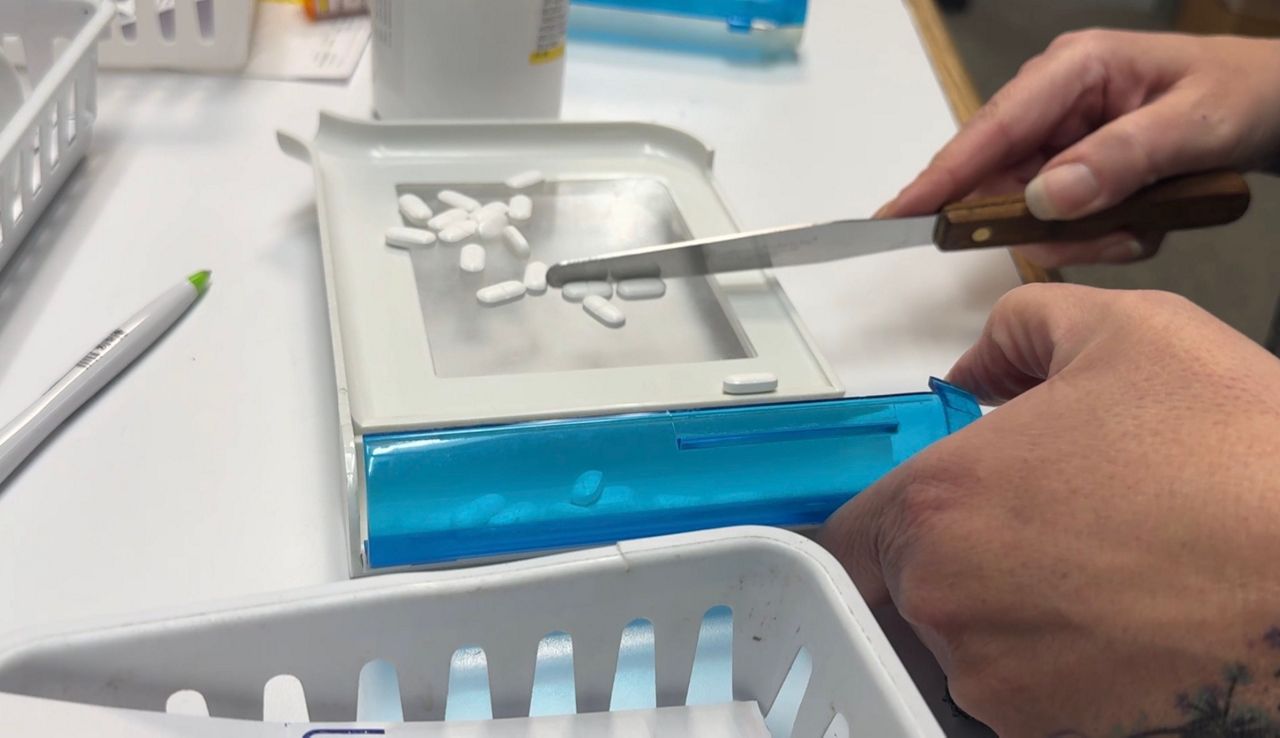
Slate Hill NeighboRx Pharmacist Al Squitieri says when he fills some prescriptions, he’s losing money.
“We’ve had to cut down on some of our services because we literally can’t afford to be doing it anymore,” he said. “So who loses out? It would be the patient.”
Specific prescriptions are costing him dollars because pharmacies can be paid less than the cost of certain drugs by pharmacy benefit managers, or PBMs. PBMs are the middlemen that are supposed to negotiate drug prices between pharmaceutical companies that set the prices and the pharmacies that buy and fill prescriptions with them. But the rebate that pharmacies get from filling prescriptions is sometimes just $3 or $4 more than they paid for it and sometimes can be significantly less.
A new bill that overwhelmingly passed in the state legislature, but is still awaiting Gov. Kathy Hochul’s signature, would change that.
The Patient Access to Pharmacy Act would require PBMs to pay the full cost of each prescription a pharmacy fills plus about a $10 dispensing fee.
The Pharmaceutical Care Management Association, or PCMA, represents PBMs. Their vice president of state affairs, Heather Cascone, says this would increase premium costs in New York.
“Requiring higher reimbursements in the form of payments to pharmacies doesn’t make drug manufacturers lower the prices for the products that they sell,” she said. “It creates additional costs for employers, health plans, patients that they will ultimately have to absorb.”
According to a spokesperson for PMCA, if this legislation becomes law, it “could increase prescription drug spending in New York by approximately $576 million in just one year.”
The Pharmacists Society of New York, or PSSNY, supports the bill and believes PBMs are bluffing when they say it will raise insurance costs.
“It might lower the profits of the PBMs, but it will not raise insurance premiums as we saw in many other states,” said PSSNY Executive Director Kelly McMahon. “West Virginia has done this. Georgia has done this. In fact, in Georgia, the PBMs told the state that it would cost them $17 million to implement a network plus model. In fact, it saved the state $15 million.”
Squitieri doubts it as well.
“What we’re asking for shouldn’t really justify what PBMs are stating,” he said. “It doesn’t have to increase costs. We just need a redistribution of what’s out there now, something that’s fair, relevant and reasonable.”
Something PMCA does support to assist independent pharmacies is increasing revenue options for pharmacists by expanding the scope of their services.
“Allowing them to vaccinate, give out immunizations in their store, and do additional counseling,” Cascone said. “These are all ways that pharmacies can be competitive.”
According to PSSNY, 930 pharmacies have closed in New York State between 2023 and 2025. Squitieri says his pharmacy can’t wait until 2027, 2028 or beyond for this legislation to take effect. He hopes the Gov. Hochul will sign the bill into law before the end of the year.
“I think it’s become a community fixture; I like the idea of being able to help people,” he said. “We don’t want to be leaving or packing it up because we just couldn’t do it anymore. But that’s a real concern right now is definitely the fact that a lot of pharmacies are under such constraint.”
Spectrum News 1 reached out to the governor’s office but has not yet received a response.
The governor has 10 days once the bill has been delivered, excluding Sundays, to sign it, but it has not yet been delivered.